
When you have coordination challenges, turn to Runsheng Transformer for help
It's all about making things easy, building partnerships, and providing a point of contact.
A transformer is the quiet workhorse of every electrical system. It steps voltage up for efficient transmission and steps it down again for safe, usable supply in factories, buildings, data centers and renewable energy plants. Because it runs 24 hours a day for decades, its efficiency and reliability directly affect operating cost, downtime risk and safety. Choosing the wrong unit is not a small mistake; it can mean higher electricity bills every month, frequent maintenance headaches, or an early replacement that wipes out any upfront saving.
This overview is written for buyers, engineers and project managers who want a clear, practical picture of the market before they request quotations.
Every credible transformer manufacturer should provide these values on the nameplate and in the type test report, not just verbally during negotiation.
In most markets, a distribution transformer passes through an exporter, an importer, a regional distributor and sometimes a trading company before it reaches the project site. Each layer adds margin, and none of them adds electrical performance. Buying directly from the production line typically removes 15 to 30 percent of the final price, and it also removes the blame game when a problem appears.
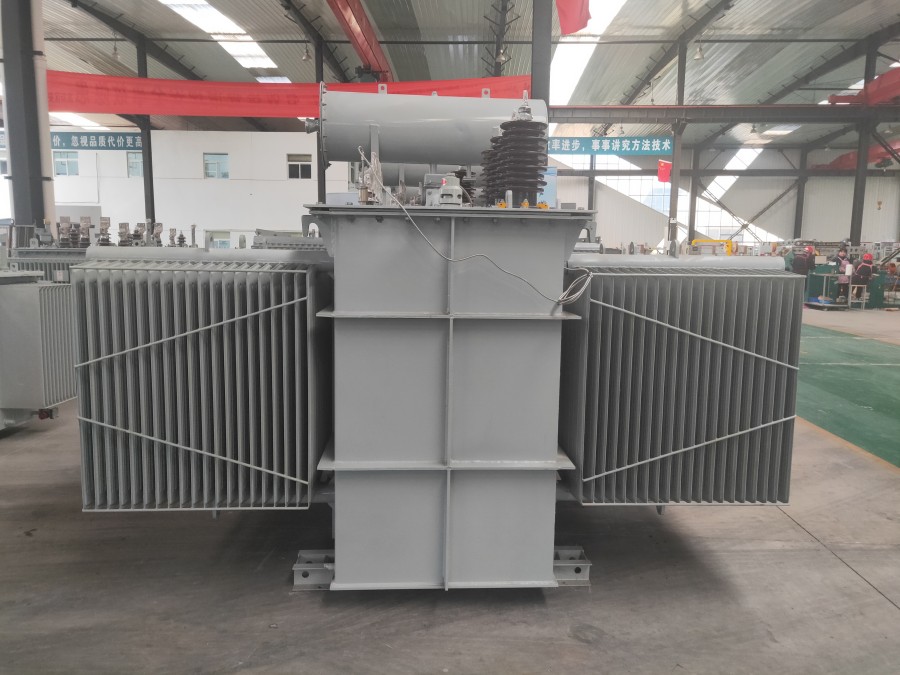
Runsheng Transformer Co., Ltd. is a power transformer manufacturer producing oil-immersed, dry-type and amorphous alloy transformers from 30 to 6300 kVA, along with preassembled substations, compact substations and high and low voltage switchgear. Units are delivered with manuals, inspection reports and test certificates, supported by lifelong quality tracking so buyers keep a documented trail long after commissioning.
Distribution transformer units sit at the end of the grid, feeding factories, commercial buildings and residential communities. Renewable energy transformer installations handle the variable output of solar and wind farms. Mining transformers tolerate dust, moisture and heavy load swings, while rectifier transformers supply electrolysis, plating and DC industrial processes. Compact substations, both European-style and American-style, package the transformer with switchgear for fast site installation, and preassembled substation equipment shortens project schedules considerably.
Whether the project needs an S13 or S22 oil-immersed transformer, an SCB14 or SCB18 dry-type transformer, an SH15 amorphous alloy unit, a 35kV transformer or a fully custom special transformer, the fastest way to control budget is to talk directly to the people who build it. Share your capacity, voltage ratio, installation environment and expected load profile, and a compliant configuration with full documentation can be prepared for your review.
Phone: +86 13406394988 | E-mail: runsheng@7813transformer.com | WhatsApp: 008613508930968

Runsheng Transformer Co., Ltd. is a professional manufacturer of power transformers, specializing in oil-immersed transformers (S20, S11, S13), SH15 amorphous alloy transformers, S13 series 10KV 3D magnetic path wound-core transformers, D10 single-phase wound-core transformers, as well as mining transformers, rectifier transformers, surge arrestor transformers, load-tap-changing transformers, and custom-engineered special transformers.
WhatsApp & Wechat

No. 6, Intersection of Mount Huangshan Road and Changjiang Road, Liaocheng High tech Industrial Development Zone, Shandong, China


