
When you have coordination challenges, turn to Runsheng Transformer for help
It's all about making things easy, building partnerships, and providing a point of contact.
A three phase power transformer transfers energy between two voltage levels across a three-phase network. Generation, transmission, distribution and the final step down to utilization voltage all depend on it, and because motors, rectifiers and grid connections are three-phase by nature, this is the standard configuration for industrial and commercial power. In practice the unit is judged on three things: it must hold voltage within the required band, it must survive fault current and thermal cycling, and it must keep losses low for twenty years or more. Everything else in a specification follows from those three requirements.
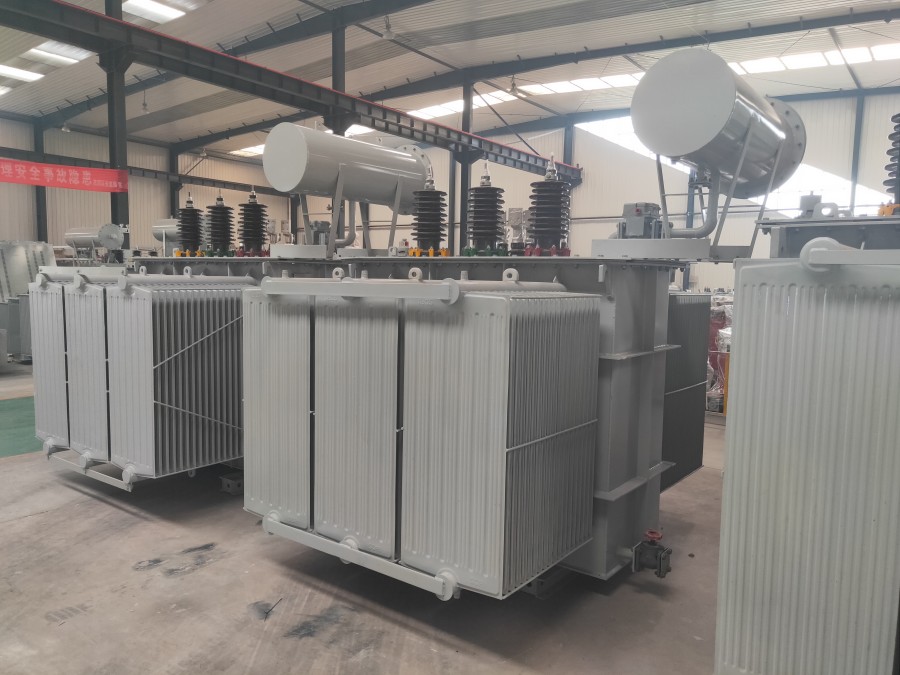
The cooling and insulation medium drives cost, footprint, fire risk and maintenance, so choose it first.
Wound-core designs, including S11-MR, S13-M.RL and the S13 series 10 kV three-dimensional magnetic path wound core transformer, reduce no-load loss and stray flux and are common where efficiency and low noise both matter.
A transformer is the rare purchase where the cheapest quotation can be the most expensive decision. Total owning cost is the purchase price plus the capitalized value of no-load loss, which comes from the core and runs 24 hours a day, plus load loss, which comes from the windings and scales with the square of the load. On a unit that is energized continuously, no-load loss dominates the electricity bill, which is why energy efficiency grades matter and why many markets now mandate higher-efficiency models. Buyers who select an older, cheaper grade to save a few percent on the invoice often find that the first two or three years of operation consume the difference, before any compliance issue is raised.
A simple check before ordering: obtain the guaranteed no-load loss and load loss figures, multiply them by your operating hours, load factor and local electricity tariff, and add the result to the quotation. The comparison will usually reorder the shortlist.
The defense is straightforward: ask for the routine test certificate for the actual serial number, the type test report for the model, an oil test report for oil-immersed units, and a written guarantee of the loss values. A manufacturer that hesitates on any of these points is telling you something useful.
Correct siting, ventilation and cable termination determine far more of the service life than most buyers expect. Dry-type units need clear airflow and clean air; oil-immersed units need bunding, oil containment, and a breather and silica gel that are actually maintained. Protection settings should be coordinated with the transformer impedance and the upstream device. For oil-immersed transformers, routine dissolved gas analysis is the cheapest early warning available, and for both types an annual thermal inspection and torque check on connections prevents the majority of failures.
For buyers sourcing internationally, working with the manufacturer shortens the chain and makes the test documents traceable. Runsheng Transformer Co., Ltd. produces oil-immersed transformers, dry-type transformers, amorphous alloy transformers, mining and rectifier transformers, and 35 kV and below preassembled substation equipment, and supplies each unit with a manual, inspection report and test certificate plus lifelong quality tracking. Comparing a factory quotation against a trading company offer on the same loss figures is usually the fastest way to see what the middle layer costs.
Contact: phone +86 13406394988, email runsheng@7813transformer.com, WhatsApp 008613508930968.

Runsheng Transformer Co., Ltd. is a professional manufacturer of power transformers, specializing in oil-immersed transformers (S20, S11, S13), SH15 amorphous alloy transformers, S13 series 10KV 3D magnetic path wound-core transformers, D10 single-phase wound-core transformers, as well as mining transformers, rectifier transformers, surge arrestor transformers, load-tap-changing transformers, and custom-engineered special transformers.
WhatsApp & Wechat

No. 6, Intersection of Mount Huangshan Road and Changjiang Road, Liaocheng High tech Industrial Development Zone, Shandong, China


