
When you have coordination challenges, turn to Runsheng Transformer for help
It's all about making things easy, building partnerships, and providing a point of contact.
An autotransformer is a transformer in which the primary and secondary circuits share at least part of a single common winding. Instead of two electrically separate coils, the autotransformer uses a tapped winding: the input voltage is applied across the full winding, and the output is taken from a portion of it for step-down duty, or applied to a portion and taken from the full winding for step-up duty. Because part of the power is transferred magnetically and part conductively, only a fraction of the throughput has to be transformed. That single design fact explains why an autotransformer is smaller, lighter, cheaper and more efficient than a two-winding transformer of the same kVA rating.
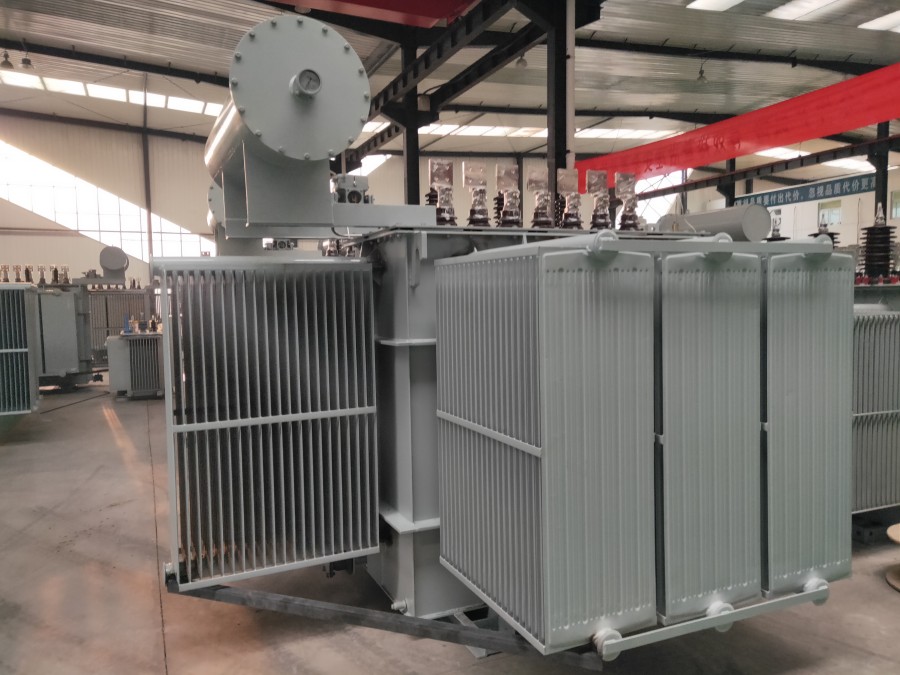
For procurement teams, the practical takeaway is simple: when the voltage ratio is close to 1:1, an autotransformer is usually the most economical way to move power between two voltage levels. When full galvanic isolation is mandatory for safety reasons, an isolation transformer is still the correct choice.
The share of power handled magnetically is roughly (Vh - Vl) / Vh, where Vh is the higher voltage and Vl the lower. At a 400/220 V or 35/10 kV ratio, a large part of the load is carried conductively by the common winding, so the core and winding only need to be sized for the remainder. A 1000 kVA autotransformer at a moderate ratio may therefore be built in a frame far smaller than a 1000 kVA two-winding unit. No-load and load losses drop accordingly, which matters on installations that run continuously.
The trade-off is equally important to understand: primary and secondary share a winding, so there is no electrical isolation between them, and the short-circuit impedance is typically lower than that of an equivalent two-winding transformer. Fault current withstand and downstream protective device coordination must be checked carefully during design.
Most of the price gap between quotations comes from supply chain layers rather than from copper and core steel. Buying from the manufacturer removes distributor margins and makes it possible to specify losses, tappings and enclosure honestly instead of accepting whatever a trading company has in stock. Runsheng Transformer Co., Ltd. manufactures S11, S13, S20 and S22 oil-immersed transformers, SCB10, SCB13, SCB14 and SCB18 dry-type transformers, SH15 and SCBH15 amorphous alloy transformers, mining, rectifier and other custom special transformers, plus preassembled compact substations and high and low voltage switchgear in the 30–6300 kVA range. Units ship with manuals, inspection reports, test certificates and lifelong quality tracking, which is what an EPC contractor needs at handover.
An autotransformer is a mature, well-understood product, yet the difference between a well-specified unit and a bargain unit shows up in losses, temperature rise and service life. Compare on total cost of ownership, insist on documented testing, and the savings are real rather than optical.
For specifications, drawings or a same-day quotation, contact us: phone +86 13406394988, e-mail runsheng@7813transformer.com, WhatsApp 008613508930968.

Runsheng Transformer Co., Ltd. is a professional manufacturer of power transformers, specializing in oil-immersed transformers (S20, S11, S13), SH15 amorphous alloy transformers, S13 series 10KV 3D magnetic path wound-core transformers, D10 single-phase wound-core transformers, as well as mining transformers, rectifier transformers, surge arrestor transformers, load-tap-changing transformers, and custom-engineered special transformers.
WhatsApp & Wechat

No. 6, Intersection of Mount Huangshan Road and Changjiang Road, Liaocheng High tech Industrial Development Zone, Shandong, China


