
When you have coordination challenges, turn to Runsheng Transformer for help
It's all about making things easy, building partnerships, and providing a point of contact.
A three phase power transformer is the workhorse of modern electrical distribution. It transfers energy between three-phase circuits at different voltage levels, stepping medium voltage down to the level that factories, commercial buildings, hospitals and residential communities can use, or stepping generator output up for transmission. Because three phases share a single magnetic core in most designs, the three phase power transformer delivers continuous, balanced power with far less material and floor space than three separate single-phase units of the same total rating.
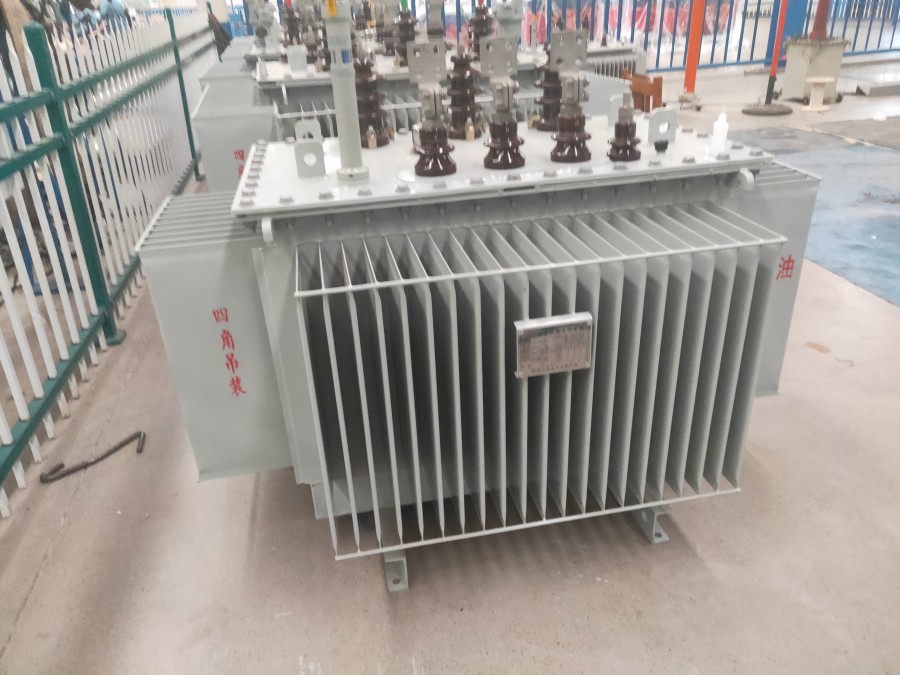
For procurement teams, the phrase is really a category rather than one product. Underneath it sit oil-immersed units, dry-type units, amorphous alloy designs, wound-core constructions and special-purpose machines for mining, rectification or renewable energy. Knowing which family fits your site is the first step toward a purchase that survives its first decade of service.
The two mainstream families differ mainly in how heat leaves the windings and where the unit can safely be installed.
A quick rule of thumb: if the site is outdoors and capacity is above roughly 800 kVA, oil-immersed is usually the better value; if the site is indoors with strict fire codes, dry-type earns its higher price through safety and simplified approvals.
Two transformers with the same nameplate rating can differ substantially in cost. The differences live in a handful of parameters, and each one should be written down before you request quotations.
Most disappointing transformer purchases trace back to a few avoidable errors rather than to manufacturing defects.
Underspecifying losses. Comparing only the purchase price ignores twenty years of electricity bills. A unit one efficiency grade lower can consume its own price difference in wasted energy within a few years, especially on a lightly loaded distribution circuit.
Ignoring the actual load profile. A transformer sized for a peak that never arrives runs at poor efficiency; one sized too closely to real demand overheats during start-up surges. Ask for the load curve before fixing the rating.
Skipping documentation checks. Insist on the routine test report, the type test certificate for the model, the nameplate data and the manual. Reputable suppliers ship these with every unit and can trace the serial number afterwards; a supplier who hesitates on paperwork is a supplier worth questioning.
Overlooking installation conditions. Altitude, ambient temperature, humidity, seismic zone and ventilation all change the specification. A standard catalogue unit installed in a hot, poorly ventilated basement room may need derating.
Buying from the manufacturing plant removes distributor margins and, more importantly, keeps technical questions in the hands of the people who build the unit. When evaluating a factory-direct offer, check that the manufacturer covers the full range you need — oil-immersed and dry-type, standard distribution units and custom special transformers — so that a single technical contact can handle your whole project. Runsheng Transformer Co., Ltd., for instance, produces S11, S13, S20 and S22 oil-immersed transformers, SCB13, SCB14 and SCB18 dry-type transformers, SH15 amorphous alloy units, mining and rectifier transformers, plus 35 kV and below preassembled substations and high/low-voltage switchgear, with products tested to national standards and delivered with manuals, inspection reports and lifelong quality tracking.
Practical verification steps before signing:
A three phase power transformer is a long-life asset whose true cost is purchase price plus two decades of losses plus maintenance. Choose oil-immersed for outdoor, higher-capacity duty and dry-type for indoor, fire-sensitive locations; write down capacity, voltage ratio, losses, vector group and cooling class before asking for prices; and buy from a manufacturer who hands over complete test documentation. Do that, and the specification meeting becomes a short conversation rather than a negotiation. For technical questions or a quotation, contact Runsheng Transformer Co., Ltd. at +86 13406394988, runsheng@7813transformer.com, or WhatsApp 008613508930968.

Runsheng Transformer Co., Ltd. is a professional manufacturer of power transformers, specializing in oil-immersed transformers (S20, S11, S13), SH15 amorphous alloy transformers, S13 series 10KV 3D magnetic path wound-core transformers, D10 single-phase wound-core transformers, as well as mining transformers, rectifier transformers, surge arrestor transformers, load-tap-changing transformers, and custom-engineered special transformers.
WhatsApp & Wechat

No. 6, Intersection of Mount Huangshan Road and Changjiang Road, Liaocheng High tech Industrial Development Zone, Shandong, China


