
When you have coordination challenges, turn to Runsheng Transformer for help
It's all about making things easy, building partnerships, and providing a point of contact.
Two suppliers quote the same capacity, the same voltage ratio and apparently the same product, yet the prices differ by 30 percent or more. That gap is rarely a coincidence. It usually comes from energy efficiency grade, conductor material, insulation class, loss levels and whether the unit is sold factory-direct or passed through two layers of traders. Because a three phase power transformer runs continuously for 20 to 30 years, the electricity it wastes can cost far more than the purchase price itself. Understanding the basics before you sign a purchase order is the simplest way to protect both your budget and your schedule.
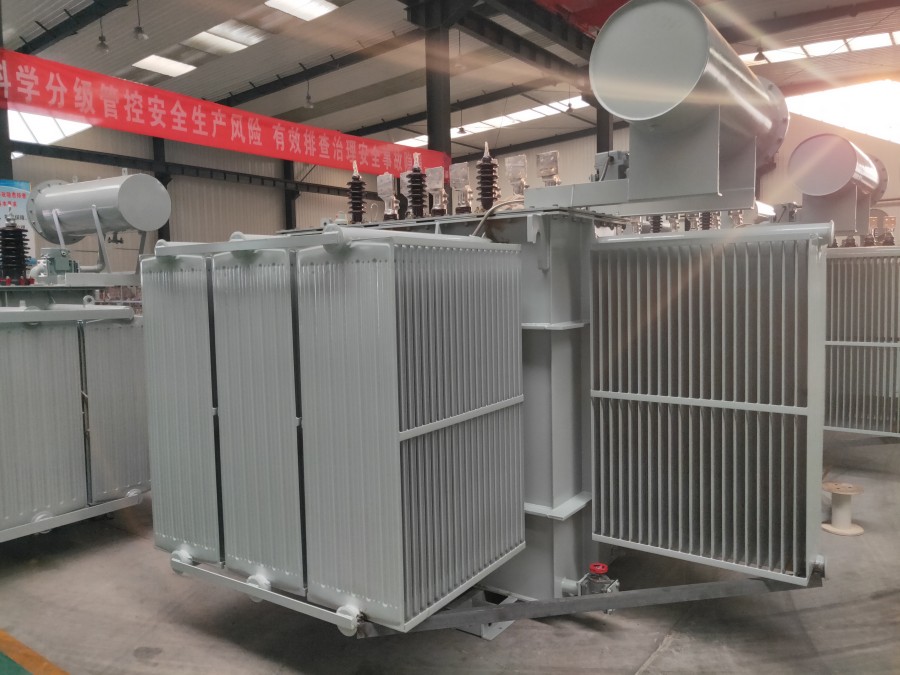
A three phase power transformer transfers electrical energy between two circuits at different voltage levels through electromagnetic induction, with no moving parts and no change in frequency. Three windings per side share a common magnetic core, which is why the design delivers smooth, balanced power for motors, production lines, data centres and distribution networks.
In practice the unit sits between the utility supply and the load. It steps 10 kV or 35 kV down to 400 V for low-voltage equipment, or steps generation voltage up for transmission and renewable energy collection. Typical rated capacity for distribution duty ranges from 30 kVA to 6300 kVA, with impedance usually in the 4 to 6 percent range for standard distribution units.
Oil-immersed transformers use insulating oil for both insulation and heat transfer. They offer excellent overload capability, high efficiency at large capacities and the lowest cost per kVA, which is why they dominate outdoor distribution, substations and industrial plants. Standard platforms include the S11, S13, S20 and S22 series, along with amorphous alloy SH15 units that deliver very low no-load loss for lightly loaded or intermittently operated networks.
Dry-type transformers replace oil with cast resin and air cooling. They are fire-retardant and self-extinguishing, need no oil pit or fire wall, and are preferred for indoor locations such as commercial buildings, hospitals, tunnels, metro stations and densely built urban substations. The SCB10, SCB13, SCB14 and SCB18 series cover this category, with higher numbers indicating progressively better energy efficiency.
When comparing quotations, put these items side by side rather than looking only at the headline price:
A unit that looks 20 percent cheaper often carries a lower efficiency grade, thinner conductor cross-section or reduced insulation margin. Those savings come back as losses, derating and shorter service life.
Modern efficiency standards classify transformers into grades, with grade 1 being the most efficient. Moving from a conventional S11 platform to an S13, S20 or S22 design, or from SCB10 to SCB14 and SCB18, measurably reduces no-load and load losses. On a continuously energised distribution transformer the difference frequently repays the price premium within a few years, especially where electricity tariffs are high or load factors are moderate. Amorphous alloy cores push no-load loss even lower, which suits rural networks, renewable energy collection systems and sites with long idle periods.
Manufacturers such as Runsheng Transformer Co., Ltd. supply S11, S13, S20 and S22 oil-immersed transformers, SCB10, SCB13, SCB14 and SCB18 dry-type transformers, SH15 amorphous alloy units, 35 kV and below preassembled substations and high and low voltage switchgear, so a single specification conversation can cover the transformer and the substation around it.
Correct siting matters as much as correct selection. Keep dry-type units in ventilated rooms with adequate clearance, protect oil-immersed units with a proper oil pit and fire separation, and torque terminal connections to specification during commissioning. Once energised, schedule annual checks of oil level and dielectric strength, infrared scans of joints, cleaning of bushings, and verification of cooling fan and alarm circuits. Most premature failures trace back to moisture ingress, loose connections or persistent overloading rather than to the core-and-coil assembly itself.
A three phase power transformer is a long-term asset, not a commodity line item. Choose the right type for the environment, lock the efficiency grade and loss values into the contract, buy from a manufacturer who can show you the test bench, and calculate lifetime energy cost rather than sticker price. Do that, and the 30 percent you save is real rather than borrowed from your future electricity bill.
For specifications, drawings or a factory-direct quotation, contact Runsheng Transformer Co., Ltd. at phone +86 13406394988, email runsheng@7813transformer.com, or WhatsApp 008613508930968.

Runsheng Transformer Co., Ltd. is a professional manufacturer of power transformers, specializing in oil-immersed transformers (S20, S11, S13), SH15 amorphous alloy transformers, S13 series 10KV 3D magnetic path wound-core transformers, D10 single-phase wound-core transformers, as well as mining transformers, rectifier transformers, surge arrestor transformers, load-tap-changing transformers, and custom-engineered special transformers.
WhatsApp & Wechat

No. 6, Intersection of Mount Huangshan Road and Changjiang Road, Liaocheng High tech Industrial Development Zone, Shandong, China


