
When you have coordination challenges, turn to Runsheng Transformer for help
It's all about making things easy, building partnerships, and providing a point of contact.
An autotransformer is a power transformer that uses a single continuous winding with at least one tap point. The primary and secondary circuits share part of that winding, so the two sides are electrically connected rather than galvanically isolated. This construction lets an autotransformer step voltage up or down while using less core steel, less conductor material, and a more compact tank than an isolation transformer of the same throughput.
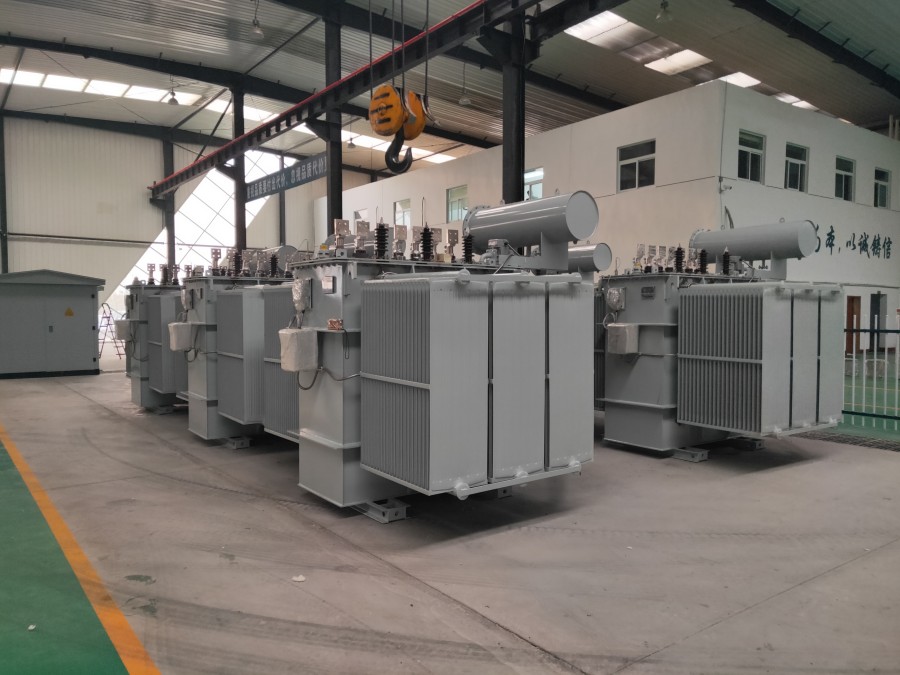
For procurement teams, the practical appeal is straightforward: lower initial cost, lower no-load and load losses in many designs, smaller footprint, and easier installation in space-limited substations. The trade-off is equally important to understand: an autotransformer does not provide isolation, and fault current can pass from one side to the other. That is why selection must match the application, protection scheme, and local grid code.
The input voltage is applied across a portion of the winding, and the output voltage is taken from a larger or smaller portion. The shared section is called the common winding, while the remaining section is the series winding. Because the voltage per turn is essentially constant, the ratio of output to input voltage follows the ratio of turns. Only part of the power is transferred by transformer action; the rest is conducted directly through the common winding. This is why an autotransformer can be smaller and more efficient than a two-winding transformer of equivalent rating.
An autotransformer is often the better economic choice when the load does not require galvanic isolation and the system protection can handle the electrical connection between primary and secondary. An isolation transformer is preferred where safety, noise decoupling, or separation of grounded systems is essential. Buyers should compare the two on total owning cost, fault level, protection coordination, and installation space rather than purchase price alone.
A reliable quotation should be based on a complete technical data sheet, not a headline price. Confirm the following parameters in writing before placing an order:
Price differences between suppliers often come from hidden material choices, loss guarantees, and documentation. A factory-direct purchase can remove middleman markup, but the real savings come from specifying the right losses and materials for the load profile. Use a structured checklist:
Runsheng Transformer Co., Ltd. is a China transformer supplier with a broad inventory and factory-direct pricing across S11, S13, S20, and S22 oil-immersed transformers, SCB10, SCB13, SCB14, and SCB18 dry-type transformers, SH15 and SCBH15 amorphous alloy transformers, 35 kV transformers, mining and rectifier transformers, and preassembled substations. A direct manufacturer relationship helps buyers control cost, but the most reliable savings still come from matching the autotransformer specification to the actual load and protection scheme.
An autotransformer is a compact, efficient, and cost-effective voltage conversion solution when galvanic isolation is not required. Buyers get the best value by matching the type to the application, comparing losses and materials rather than headline price, and purchasing from a manufacturer that provides full test documentation and lifelong quality tracking. For technical selection or a factory-direct quotation, contact Runsheng Transformer Co., Ltd. by phone at +86 13406394988, e-mail at runsheng@7813transformer.com, or WhatsApp at 008613508930968.

Runsheng Transformer Co., Ltd. is a professional manufacturer of power transformers, specializing in oil-immersed transformers (S20, S11, S13), SH15 amorphous alloy transformers, S13 series 10KV 3D magnetic path wound-core transformers, D10 single-phase wound-core transformers, as well as mining transformers, rectifier transformers, surge arrestor transformers, load-tap-changing transformers, and custom-engineered special transformers.
WhatsApp & Wechat

No. 6, Intersection of Mount Huangshan Road and Changjiang Road, Liaocheng High tech Industrial Development Zone, Shandong, China


