
When you have coordination challenges, turn to Runsheng Transformer for help
It's all about making things easy, building partnerships, and providing a point of contact.
An autotransformer is a transformer whose primary and secondary windings share at least one common section of a single continuous winding. Instead of two electrically separate coils, the autotransformer uses one winding divided into a series section and a common section, with the output taken from a tap. Because part of the winding carries both the input and the output current, the electromagnetic portion of the power transfer is only a fraction of the total through-power — which is exactly why an autotransformer is smaller, lighter, cheaper, and more efficient than a two-winding transformer of the same rating.
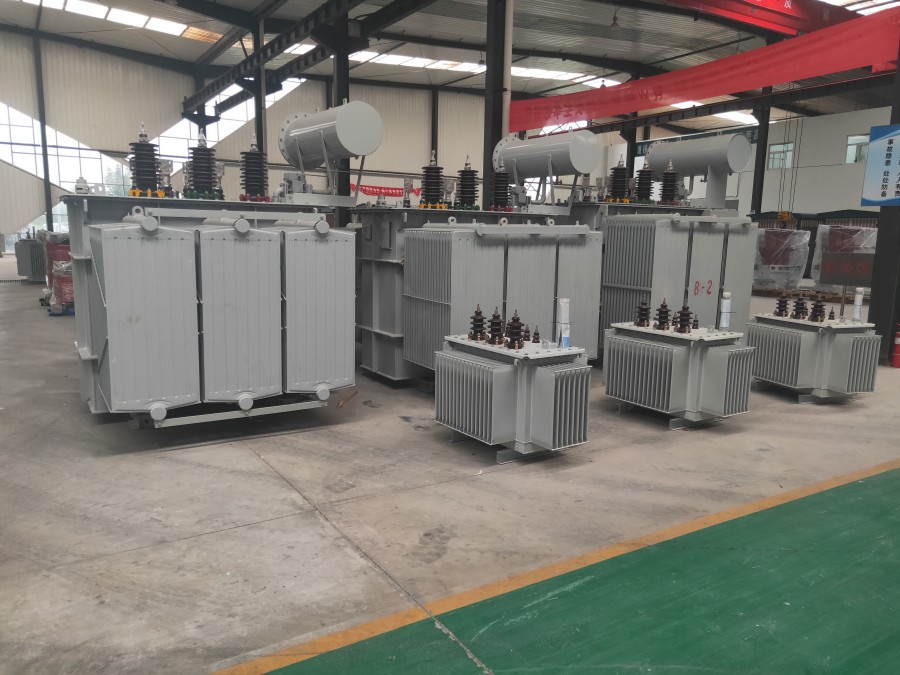
The keyword to remember is "shared." Sharing the winding is the autotransformer's great economic advantage, and it is also the reason it provides no galvanic isolation between input and output. Understanding both sides of that coin is the foundation of smart procurement.
An autotransformer is defined by its transformation ratio. When the ratio is close to 1:1 — for example stepping 10 kV down to 6.3 kV — only a modest share of the through-power is actually transformed electromagnetically, while the rest is conducted directly through the common winding. As a rule of thumb, the transformed portion equals the rated through-power multiplied by (1 − 1/K), where K is the voltage ratio. The closer the input and output voltages are, the smaller and less expensive the autotransformer becomes for the same kVA throughput. This is why autotransformers dominate applications where two nearby voltage levels must be linked, and why they are rarely used for large step ratios.
An autotransformer does not isolate the secondary from the primary. A fault or insulation failure can couple the higher voltage onto the lower-voltage side, and the neutral/grounding arrangement must be engineered accordingly. Use an autotransformer where the two systems may share a common neutral and grounding reference, and specify a two-winding isolation transformer wherever protective separation, patient/medical safety, or personnel protection on floating circuits is required. Any supplier who does not raise this question during technical review is not doing a proper job of specification.
Most autotransformer price differences on the market are not really price differences — they are specification differences. Two quotations that look 25% apart are often an aluminum-winding, high-loss unit being compared with a copper-winding, low-loss unit. Compare like with like: same kVA, same loss level, same insulation class, same tap range, same enclosure and cooling. Then ask for the routine test report and the type-test report. A manufacturer that maintains comprehensive inventory and factory-direct supply can genuinely remove dealer markup, but the specification must still be nailed down before the saving is real.
Runsheng Transformer Co., Ltd. is a power transformer manufacturer producing oil-immersed, dry-type, amorphous alloy, mining, rectifier, and custom special transformers, including S11, S13, S20, and S22 oil-immersed units, SCB10/SCB13/SCB14/SCB18 dry-type units, SH15/SCBH15 amorphous alloy transformers, and 35 kV and below preassembled and compact substations with high- and low-voltage switchgear. Products are manufactured to national standards and delivered with manuals, inspection reports, and test certificates, backed by lifelong quality tracking — a useful benchmark when you evaluate an autotransformer supplier on documentation and after-sales follow-through rather than on headline price alone.
An autotransformer is one of the most cost-effective tools in medium-voltage distribution — provided it is specified for the right duty and sourced from a manufacturer that documents its quality. Get the specification right, buy factory-direct, and the savings are real rather than theoretical.
Contact: phone +86 13406394988 | e-mail runsheng@7813transformer.com | WhatsApp 008613508930968

Runsheng Transformer Co., Ltd. is a professional manufacturer of power transformers, specializing in oil-immersed transformers (S20, S11, S13), SH15 amorphous alloy transformers, S13 series 10KV 3D magnetic path wound-core transformers, D10 single-phase wound-core transformers, as well as mining transformers, rectifier transformers, surge arrestor transformers, load-tap-changing transformers, and custom-engineered special transformers.
WhatsApp & Wechat

No. 6, Intersection of Mount Huangshan Road and Changjiang Road, Liaocheng High tech Industrial Development Zone, Shandong, China


