
When you have coordination challenges, turn to Runsheng Transformer for help
It's all about making things easy, building partnerships, and providing a point of contact.
A single phase transformer is a static electrical device that transfers energy between two circuits through a shared magnetic core, changing AC voltage from one level to another at the same frequency. Unlike three-phase units, it operates on a single alternating waveform, which makes it the default choice for low-voltage distribution, rural feeders, control circuits, instrument supplies and small industrial loads. Its working principle is straightforward: an alternating current in the primary winding creates a varying magnetic flux in the laminated core, and that flux induces a voltage in the secondary winding. The turns ratio between the two windings defines the voltage ratio, while the core material and winding design define efficiency, losses and noise.
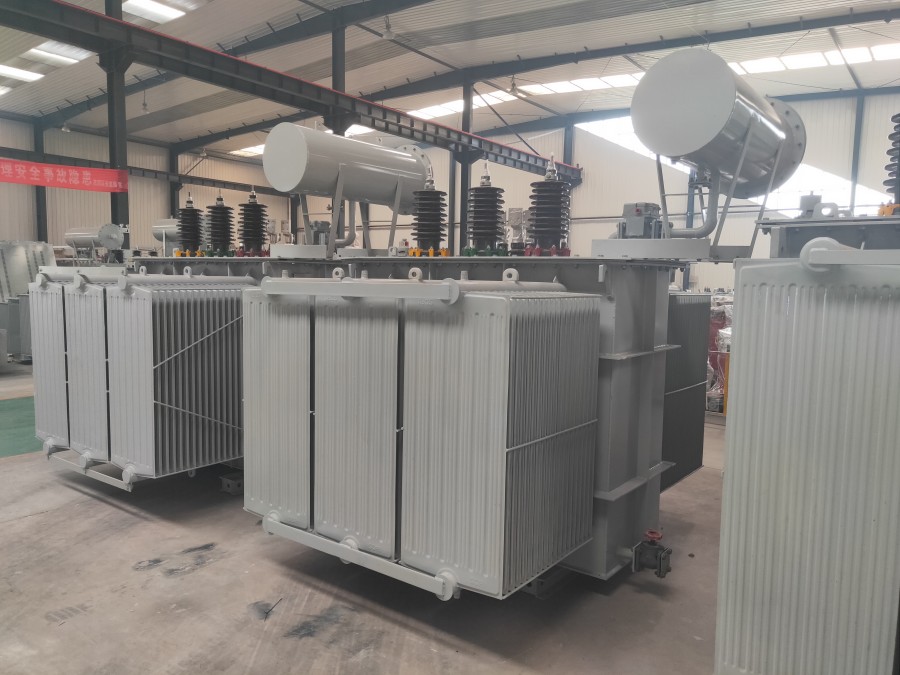
Because the concept is simple, buyers sometimes assume every unit on the market is equivalent. In practice, the difference between a low-cost single phase transformer and a properly engineered one shows up in no-load loss, temperature rise, insulation margin and service life — the exact points where a cheap purchase becomes an expensive one.
When comparing quotations, never compare capacity and price alone. The following data on the nameplate and test certificate is what actually determines whether a single phase transformer will still be performing in fifteen years:
Typical applications include residential and rural distribution feeders, small commercial buildings, agricultural pumping and irrigation, street lighting circuits, control and protection panels, railway signalling, battery charging, test benches and renewable energy interfaces such as small solar or storage inverters. In many of these cases the load is genuinely single phase, so installing a three-phase unit means paying for capacity that is never used — one of the simplest ways to waste budget on a project.
Most procurement problems trace back to a handful of avoidable mistakes:
Reputable suppliers design and test to recognised standards such as IEC 60076 for power transformers, GB 1094 and GB/T 6451 for Chinese-market distribution transformers, and IEEE C57 series where applicable. Referencing a standard in the purchase order gives you an objective basis for acceptance testing and dispute resolution.
Working directly with a manufacturer removes distributor margin and, more importantly, keeps the technical conversation close to the people who actually design the winding. As a China transformer supplier with a broad inventory, Runsheng Transformer Co., Ltd. produces S11, S13, S20 and S22 oil-immersed transformers, SCB10/SCB13/SCB14/SCB18 dry-type transformers, SH15 amorphous alloy transformers, and D10 series single-phase wound core transformers, alongside 35 kV and below compact substations and high/low-voltage switchgear. Oil-immersed units are offered at factory-direct prices, and every delivery includes manuals, inspection reports, test certificates and lifelong quality tracking. For buyers with non-standard requirements, custom-designed special transformers can be engineered to the load profile.
Getting these six points right at the enquiry stage is the difference between a single phase transformer that quietly does its job for decades and one that becomes a recurring maintenance item.
Contact: phone +86 13406394988 | e-mail runsheng@7813transformer.com | WhatsApp 008613508930968

Runsheng Transformer Co., Ltd. is a professional manufacturer of power transformers, specializing in oil-immersed transformers (S20, S11, S13), SH15 amorphous alloy transformers, S13 series 10KV 3D magnetic path wound-core transformers, D10 single-phase wound-core transformers, as well as mining transformers, rectifier transformers, surge arrestor transformers, load-tap-changing transformers, and custom-engineered special transformers.
WhatsApp & Wechat

No. 6, Intersection of Mount Huangshan Road and Changjiang Road, Liaocheng High tech Industrial Development Zone, Shandong, China


