
When you have coordination challenges, turn to Runsheng Transformer for help
It's all about making things easy, building partnerships, and providing a point of contact.
A three phase transformer is the quiet engine behind almost every industrial and commercial power supply. It steps medium voltage down to the 400V or 480V a facility actually uses, feeds motor control centres, drives, HVAC plant and lighting loads, and does it continuously for decades. Because it sits at the front of the electrical chain, the specification decisions made at procurement quietly set the energy bill and the maintenance workload for the next twenty years. This overview covers the essentials buyers should understand before requesting quotations.
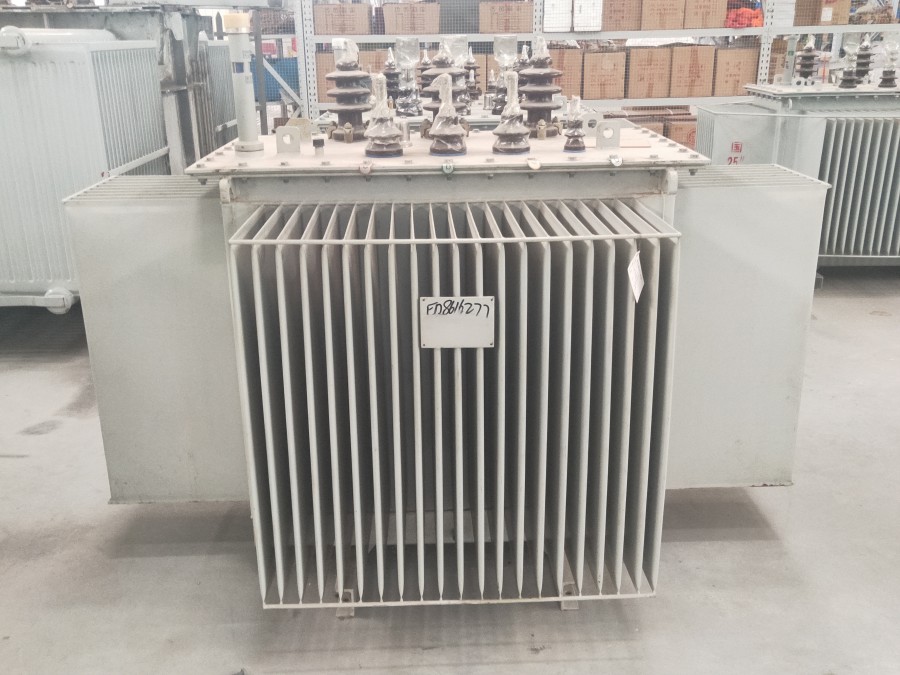
A three phase transformer transfers electrical energy between two voltage levels through magnetic coupling, with no rotating parts and no change in frequency. Three windings per side share a laminated magnetic core; the primary windings create a rotating flux field, and the secondary windings deliver power at the required voltage. Compared with three single-phase units banked together, one three phase transformer is smaller, lighter, cheaper per kVA and shares a common core, which improves efficiency and balance.
Key building blocks include the core (CRGO silicon steel, or amorphous alloy for lower no-load loss), the windings (copper or aluminium, foil or round wire), insulation, the tank or enclosure, bushings, tap changer and cooling system. Each of these is a cost and performance lever, which is why two units rated at the same kVA can differ substantially in price and in lifetime losses.
Almost every three phase transformer project starts with this choice, and it is driven by location more than by budget.
Within these families, efficiency grades and applications multiply. Typical distribution grades include S11, S13, S20 and S22 oil-immersed transformers, SCB10, SCB13, SCB14 and SCB18 dry-type transformers, and SH15 / SCBH15 amorphous alloy transformers where very low no-load loss matters most, such as lightly loaded rural distribution circuits.
Buyers should be able to read a nameplate fluently before comparing quotations, because price only means something at a defined specification.
Tap changers matter too. An off-circuit tap changer is enough for stable networks; an on-load tap changing transformer is needed where voltage must be held while energised, such as in utility feeders or long distribution runs.
Two transformers with the same kVA can differ by several thousand in lifetime energy cost. No-load loss is consumed 24 hours a day whether or not the plant is running; load loss scales with the square of the load. Regulated markets set minimum efficiency classes, and buyers comparing options should evaluate quoted losses against local energy prices using the standard capitalisation formula rather than looking at purchase price alone.
Practical levers that reduce lifetime cost include higher core grade in the same frame size, an amorphous alloy core for low-load duty, correctly sized conductors to cut load loss, and a rating that matches the real load profile instead of the sum of every nameplate in the building. Oversizing for comfort is not free: it raises purchase price and no-load loss.
Applications determine configuration as much as ratings do. Common duties include utility distribution feeders, industrial plant substations, mining transformers exposed to dust and frequent movement, rectifier transformers feeding DC processes, renewable energy transformer duties at wind and solar sites, and preassembled compact substations that package the transformer with high and low voltage switchgear in one factory-built unit.
Middlemen add margin but not performance. Sourcing directly from the manufacturer keeps the price close to the material and labour content of the unit, and it keeps the person who built the transformer reachable after installation. Runsheng Transformer Co., Ltd. manufactures S11, S13, S20 and S22 oil-immersed transformers, SCB10, SCB13, SCB14 and SCB18 dry-type transformers, SH15 amorphous alloy transformers and custom special units from 30-6300kVA, together with European-style and American-style compact substations and high and low voltage switchgear. Each unit ships with a manual, inspection report, test certificate and lifelong quality tracking, which is the practical difference between a purchase order and a long-term power supply.
Before placing an order, prepare four items: the load profile and expected growth, the available system voltages and fault level, the installation environment including ambient temperature and altitude, and any efficiency class mandated by the local utility. With these in hand, a technical quotation should come back within a day and will be genuinely comparable across suppliers.
Contact for specifications, drawings and factory-direct pricing: phone +86 13406394988, e-mail runsheng@7813transformer.com, WhatsApp 008613508930968.

Runsheng Transformer Co., Ltd. is a professional manufacturer of power transformers, specializing in oil-immersed transformers (S20, S11, S13), SH15 amorphous alloy transformers, S13 series 10KV 3D magnetic path wound-core transformers, D10 single-phase wound-core transformers, as well as mining transformers, rectifier transformers, surge arrestor transformers, load-tap-changing transformers, and custom-engineered special transformers.
WhatsApp & Wechat

No. 6, Intersection of Mount Huangshan Road and Changjiang Road, Liaocheng High tech Industrial Development Zone, Shandong, China


