
When you have coordination challenges, turn to Runsheng Transformer for help
It's all about making things easy, building partnerships, and providing a point of contact.
A low voltage transformer is a static electrical device that converts alternating current from one voltage level to a lower, more usable level — typically stepping down a 10 kV or 35 kV distribution line to 400 V/230 V for end users, or adjusting voltage inside industrial control, rectifier and renewable energy systems. Inside a low voltage transformer, the core and windings work together through electromagnetic induction: the primary winding receives the incoming voltage, the magnetic core channels the flux, and the secondary winding delivers a reduced voltage at a higher current.
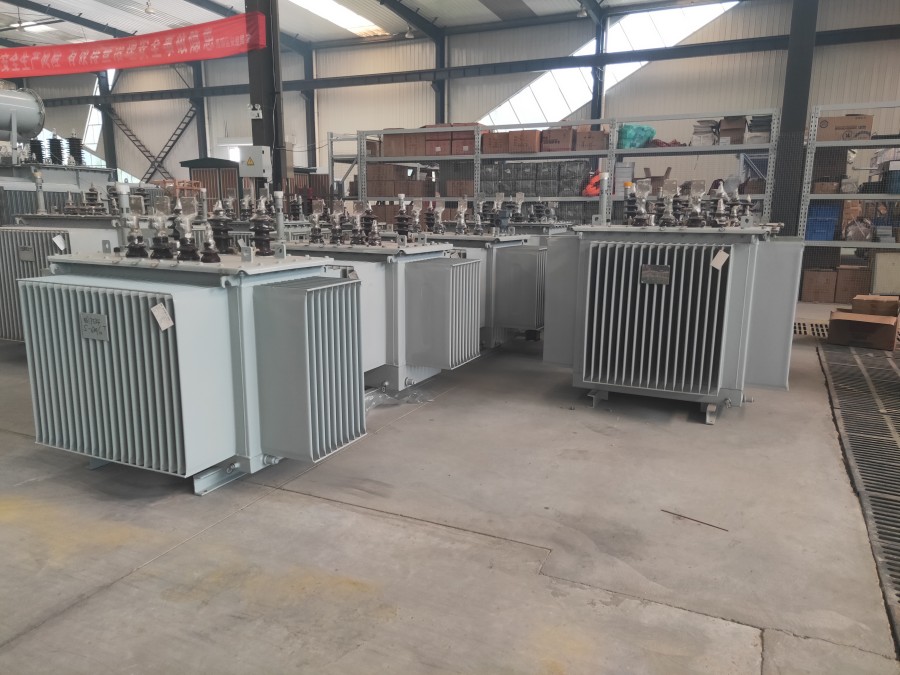
Because it sits at the very end of the power chain, the performance of a low voltage transformer directly decides whether motors start smoothly, whether production equipment runs stably, and whether your electricity bill stays under control. That is why procurement engineers treat it as a long-term asset rather than a simple commodity.
Before comparing quotations, buyers should understand which family of equipment they are actually pricing.
Specifications decide both the purchase price and the total cost of ownership. Confirm every item below on the nameplate and in the test report:
The application list is broader than most buyers expect. A low voltage transformer is installed in power plants and substations, manufacturing plants, commercial complexes, hospitals, airports and rail systems, mining operations, water treatment facilities, agricultural irrigation networks, EV charging hubs, and solar or wind renewable energy transformer stations. Each environment imposes different demands: dust and humidity favour sealed oil-immersed designs, indoor fire-safety rules favour dry-type units, and long-hour continuous loads favour amorphous alloy cores.
Price alone is a poor guide. A dependable supplier should provide verifiable evidence at every step:
Most disappointing purchases trace back to the same shortcuts: aluminium windings quietly substituted for copper, thinner cores that fail to meet the declared loss level, downgraded insulation that shortens service life, and quotations that exclude tap changers, temperature controllers or protection accessories. The safest defence is to demand the nameplate data, loss figures and test certificates in writing before payment, and to compare quotations on an identical specification basis rather than on headline price.
Buying from the manufacturer removes distributor mark-ups and, more importantly, removes ambiguity about what is inside the tank. As a power transformer manufacturer, Runsheng Transformer Co., Ltd. produces S11, S13, S20 and S22 oil-immersed transformers, SCB10/SCB13/SCB14/SCB18 dry-type transformers, SH15 and SCBH15 amorphous alloy transformers, mining and rectifier transformers, plus 35 kV and below preassembled substations, compact substations and high/low voltage switchgear. Units are offered at factory-direct prices with manuals, inspection reports and test certificates included, supported by lifelong quality tracking.
What is the difference between a low voltage transformer and a distribution transformer? A distribution transformer is defined by its role in the network, while a low voltage transformer describes the voltage level it serves. Many distribution units are also low voltage transformers, since they step medium voltage down to 400 V.
How long does a low voltage transformer last? With correct loading, clean cooling and normal maintenance, oil-immersed units commonly serve 20 years or more, and dry-type units similarly when kept free of dust and moisture.
Can a low voltage transformer be customised? Yes. Voltage ratio, capacity, impedance, enclosure, cooling and protection can all be engineered for specific projects, including mining, rectifier and renewable energy duties.
For specification support, price enquiries or custom designs, contact Runsheng Transformer Co., Ltd. — phone: +86 13406394988, e-mail: runsheng@7813transformer.com, WhatsApp: 008613508930968.

Runsheng Transformer Co., Ltd. is a professional manufacturer of power transformers, specializing in oil-immersed transformers (S20, S11, S13), SH15 amorphous alloy transformers, S13 series 10KV 3D magnetic path wound-core transformers, D10 single-phase wound-core transformers, as well as mining transformers, rectifier transformers, surge arrestor transformers, load-tap-changing transformers, and custom-engineered special transformers.
WhatsApp & Wechat

No. 6, Intersection of Mount Huangshan Road and Changjiang Road, Liaocheng High tech Industrial Development Zone, Shandong, China


