
When you have coordination challenges, turn to Runsheng Transformer for help
It's all about making things easy, building partnerships, and providing a point of contact.
Almost every commercial building, factory, data centre and renewable energy plant you walk into is fed by a three phase power transformer. Its job is simple to describe and demanding to execute: take the medium-voltage supply from the grid, typically 10 kV or 35 kV, and step it down to the 400 V or 415 V that motor drives, HVAC plant, lighting and IT loads actually use. Because three-phase power delivers a constant torque and a balanced load, the three phase power transformer has become the default building block of modern distribution systems from 30 kVA up to 6300 kVA.
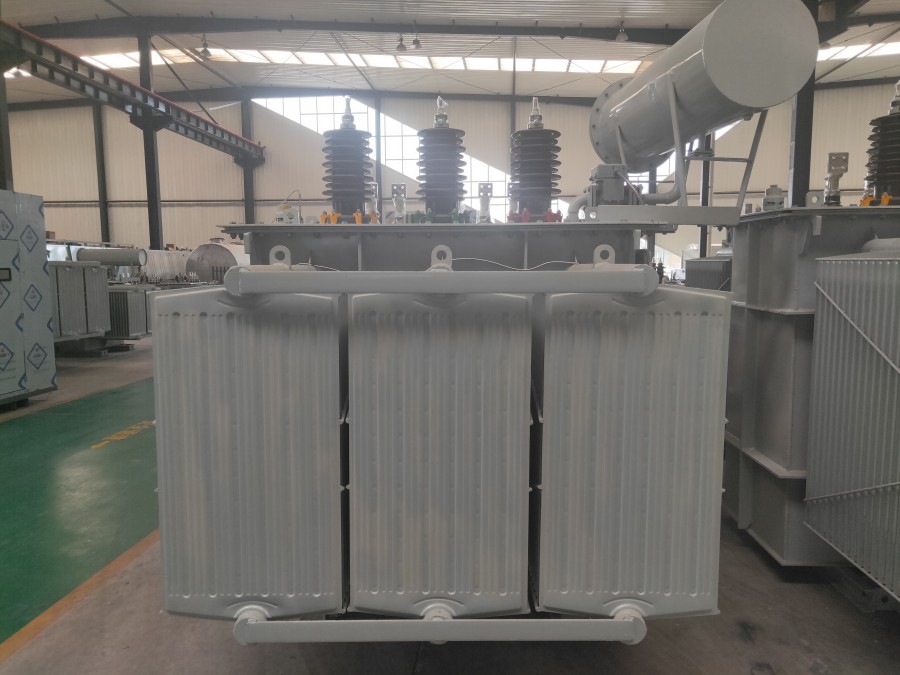
For buyers, the practical question is rarely what a transformer is, but which one to specify, what a fair price looks like, and how to tell a genuine factory from a trading company that simply resells. This overview covers the fundamentals from a procurement point of view.
A transformer works on electromagnetic induction: two windings share a magnetic circuit, and the turns ratio between them sets the voltage ratio. In a three phase unit there are three such winding sets, usually arranged on a three-limb laminated core and connected in star (Y) or delta (D) configuration.
Transformer nomenclature looks cryptic at first, but each prefix maps to a design family and a loss class. The most common families quoted for distribution duty are:
Two offers can look identical on a one-line diagram and differ by 40 percent in price. These are the fields that explain the gap:
Purchase price is only the entry ticket. Over a 20 to 25 year service life, a distribution transformer that runs near full load can consume energy worth several times its own cost. That is why efficiency classes such as those defined in GB 20052 and the IEC 60076 family, together with the US DOE rules for distribution transformers, keep pushing no-load loss downward.
A simple rule for buyers: if a supplier cannot show you measured no-load loss and load loss figures from a routine test report, the apparent saving is probably being funded by an undersized core or less copper. Both quietly transfer the cost to your electricity bill.
Most of the price difference between suppliers comes down to how many hands the unit passes through. A factory-direct source typically includes the routine test certificate, nameplate data, an operation and maintenance manual, a packing list and a quality tracking record with the shipment. Ask for these documents before you compare prices; a serious manufacturer issues them as standard, and their absence is the clearest early warning sign.
Established manufacturers such as Runsheng Transformer Co., Ltd. build oil-immersed, dry-type, amorphous alloy and special-purpose transformers at their own plant and ship them with full test documentation, which is the simplest way to remove reseller margin from the quotation.
A three phase power transformer is a long-life asset, not a commodity box. Get the capacity, voltage ratio, vector group and loss level right, insist on measured test data, and buy from the factory where the unit is actually built. That combination controls both today's invoice and the next two decades of energy cost. For specifications, drawings or a factory-direct quotation, contact the team on +86 13406394988, e-mail runsheng@7813transformer.com or WhatsApp 008613508930968.

Runsheng Transformer Co., Ltd. is a professional manufacturer of power transformers, specializing in oil-immersed transformers (S20, S11, S13), SH15 amorphous alloy transformers, S13 series 10KV 3D magnetic path wound-core transformers, D10 single-phase wound-core transformers, as well as mining transformers, rectifier transformers, surge arrestor transformers, load-tap-changing transformers, and custom-engineered special transformers.
WhatsApp & Wechat

No. 6, Intersection of Mount Huangshan Road and Changjiang Road, Liaocheng High tech Industrial Development Zone, Shandong, China


