
When you have coordination challenges, turn to Runsheng Transformer for help
It's all about making things easy, building partnerships, and providing a point of contact.
If you are sourcing an electrical transformer for a distribution project, a factory expansion, a solar farm or a mining site, the quotation you receive can vary by 30% or more for what looks like the same equipment. The difference is rarely random. It usually comes down to winding material, core grade, energy-efficiency level, test documentation and how many hands the unit passes through before it reaches your site. This overview explains the basics of the electrical transformer and shows you what to check before you sign a purchase order.
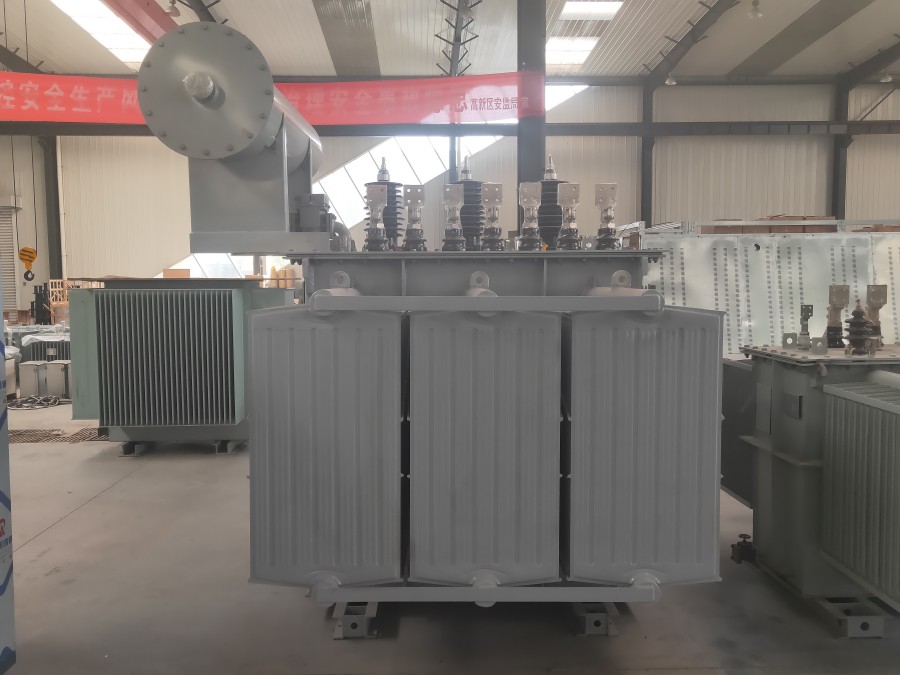
An electrical transformer is a static device that transfers electrical energy between two or more circuits through electromagnetic induction. It changes voltage and current levels while keeping frequency unchanged, which is why power can be generated at a moderate voltage, transmitted at high voltage to reduce line losses, and then stepped down again for actual use. Because there are no moving parts in the main magnetic circuit, a well-built transformer can run for 20 to 30 years with routine inspection.
Every unit is built around three essentials:
Distribution and power transformers fall into two broad families, and each family has its own model series with different loss levels.
Standard capacity ranges run from 30 kVA up to 6300 kVA, with 10kV and 35kV as the most common voltage classes for distribution duty.
When you compare two quotations, read the nameplate data rather than the headline price.
Most procurement mistakes are avoidable with a short checklist:
A transformer is purchased once and paid for continuously through its losses. A cheap unit with high no-load loss can consume more in wasted electricity over a decade than the price difference against an efficient model. Loading also matters: transformers running continuously between roughly 50% and 75% of rated capacity tend to balance no-load and load losses most economically. Choosing the right efficiency level and the right capacity is therefore a financial decision, not just a technical one.
Reputable manufacturers design and test to recognised standards such as GB 1094, GB/T 6451, GB 20052 and IEC 60076, with IEC 60076-11 applying specifically to dry-type units. A complete delivery should include an operation and maintenance manual, an inspection report, a test certificate and traceable quality records, so that the unit can be audited years later. As a power transformer manufacturer, Runsheng Transformer Co., Ltd. supplies S11, S13, S20 and S22 oil-immersed transformers, SCB10 to SCB18 dry-type transformers, SH15 and SCBH15 amorphous alloy transformers, 35kV units, mining and rectifier transformers, plus preassembled substations and high/low-voltage switchgear, all backed by lifelong quality tracking.
Buying direct from the production line removes distributor markups and shortens the communication chain between your specification and the person building the unit. That single change is often where the 20% to 30% saving in a transformer budget actually comes from.
For specifications, drawings or a quotation: phone +86 13406394988, e-mail runsheng@7813transformer.com, WhatsApp 008613508930968.

Runsheng Transformer Co., Ltd. is a professional manufacturer of power transformers, specializing in oil-immersed transformers (S20, S11, S13), SH15 amorphous alloy transformers, S13 series 10KV 3D magnetic path wound-core transformers, D10 single-phase wound-core transformers, as well as mining transformers, rectifier transformers, surge arrestor transformers, load-tap-changing transformers, and custom-engineered special transformers.
WhatsApp & Wechat

No. 6, Intersection of Mount Huangshan Road and Changjiang Road, Liaocheng High tech Industrial Development Zone, Shandong, China


