
transformer Factory Direct: How Smart Buyers Cut 30% Off Costs and Avoid Common Procurement Pitfalls

What a transformer Actually Does

A transformer is a static electrical device that transfers electrical energy between two or more circuits through electromagnetic induction. It raises or lowers alternating-current voltage and current levels without changing frequency, which is why it sits at the heart of every generation, transmission and distribution network. Step-up transformers raise voltage for long-distance transmission so that line losses stay low; step-down transformers bring voltage down to the level required by industrial equipment, commercial buildings and households. Because a transformer has no moving parts, its service life is decided mainly by design margin, insulation quality, winding material and operating load.
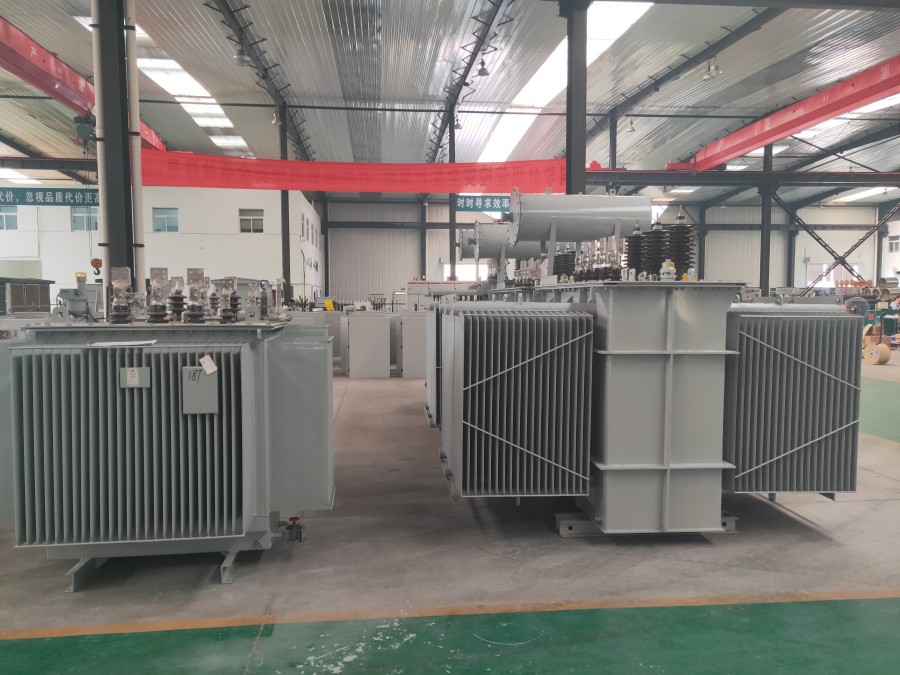
transformer Factory Direct: How Smart Buyers Cut 30% Off Costs and Avoid Common Procurement Pitfalls

For anyone buying one, the practical question is not what a transformer is, but which type, which capacity and which manufacturer will deliver the lowest total cost of ownership over 20 to 30 years of service.

The Main transformer Categories You Meet in Procurement

  • Oil-immersed transformer - S11, S13, S20 and S22 series, plus S11-MR and S13-M.RL variants. Oil provides insulation and cooling, giving excellent overload capacity and efficiency at higher capacities. Common in distribution networks, industrial plants and outdoor installations.
  • Dry-type transformer - SCB10, SCB13, SCB14, SCB18 and SGB10 series. No oil means no fire risk from leaking fluid and no oil containment, so these are preferred inside buildings, hospitals, data centres, tunnels and underground substations.
  • Amorphous alloy transformer - SH15 and SCBH15 series. The amorphous metal core dramatically reduces no-load loss, which pays back quickly in installations that run continuously at low load.
  • 35kV transformer and above - three-phase units for sub-transmission and larger industrial loads.
  • Special-purpose units - mining transformer, rectifier transformer, lightning arrester transformer, capacity-regulating transformer, load tap changing transformer and custom special transformer designs built to a customer specification.
  • Complete substation solutions - European-style and American-style compact substation, preassembled substation and high low voltage switchgear, supplied as a coordinated package.

Key Parameters Buyers Should Compare Line by Line

  • Rated capacity - the standard range runs from 30-6300 kVA for distribution duty. Oversizing wastes capital and raises no-load loss; undersizing leads to overheating and premature failure.
  • Voltage class and ratio - match the primary and secondary voltage exactly to the network, including the tap range you need for voltage regulation.
  • No-load loss and load loss - these two figures determine your electricity bill for decades. A cheaper transformer with high losses is rarely the cheaper choice.
  • Impedance voltage - affects short-circuit current and protection coordination.
  • Cooling method - ONAN for standard oil units, AN or AF for dry-type, depending on ambient temperature and duty cycle.
  • Tap changer - off-circuit for stable networks, on-load for systems where voltage moves during operation.
  • Insulation class, temperature rise and enclosure protection - driven by the installation environment, indoor or outdoor.

Oil-Immersed or Dry-Type: A Simple Decision Rule

If the installation is outdoor, the capacity is large, and cost per kVA matters most, an oil-immersed transformer is normally the answer. If the unit goes inside a building, near people, or in a fire-sensitive area, a dry-type transformer removes the oil hazard and simplifies approvals. Where energy cost is the dominant factor across a long duty cycle, an amorphous alloy transformer often wins on lifetime cost even at a higher purchase price.

Where transformer Units Are Used

  • Utility and industrial distribution transformer installations on poles, pads and in package substations
  • Renewable energy transformer duty for solar farms and wind projects, including inverter and collector step-up duty
  • Mining transformer service underground and at pit head, where moisture, dust and continuous load are normal
  • Rectifier transformer duty for electrolysis, metallurgy, plating and DC drives
  • Commercial and infrastructure projects using compact substation and preassembled substation packages with integrated high low voltage switchgear

Why Factory-Direct Sourcing Saves Real Money

Most of the price difference between suppliers is not technology, it is the length of the chain between the factory and the site. Buying directly from a manufacturer removes distributor margin, shortens lead time and gives you direct access to the engineering team that actually built the unit. As a China transformer supplier, Runsheng Transformer Co., Ltd. produces oil-immersed, dry-type and amorphous alloy transformers and holds a comprehensive inventory so that standard ratings can ship quickly, with all products complying with national standards.

Every unit is delivered with a manual, inspection report and test certificate, backed by lifelong quality tracking. That documentation matters at handover, during insurance review and later when an extension or replacement is planned.

Procurement Pitfalls to Watch For

  • Quotations that do not state winding material, core grade or loss values, leaving room for substitution
  • Missing type test data and no verifiable test certificate
  • Undersized cores that meet the nameplate but overheat under real load
  • Voltage ratio or tap range mismatched to the site network
  • Ignoring freight, oil filling, bushings and switchgear scope when comparing prices
  • No clear after-sales commitment or spare part availability

A Practical transformer Buying Checklist

  • Confirm capacity in kVA, voltage ratio, frequency and phase
  • State the required no-load and load loss level
  • Specify indoor or outdoor installation and enclosure protection
  • Decide oil-immersed, dry-type or amorphous alloy based on environment and duty cycle
  • Request the inspection report, test certificate and manual with the offer
  • Confirm delivery schedule against your project milestones
  • Ask about lifelong quality tracking and warranty terms in writing

Summary

A transformer is a long-life capital asset, so it should be bought on lifetime cost rather than headline price. Understand the difference between oil-immersed transformer and dry-type transformer designs, compare loss figures instead of only capacity, and buy factory direct from a manufacturer that can prove compliance and support the unit through its whole service life. Doing that simple homework typically saves far more than the discount a middleman can offer.

For specifications, factory-direct pricing or a custom special transformer requirement, contact Runsheng Transformer Co., Ltd. - phone: +86 13406394988, e-mail: runsheng@7813transformer.com, WhatsApp: 008613508930968.

When you have coordination challenges, turn to Runsheng Transformer for help
It's all about making things easy, building partnerships, and providing a point of contact.