
When you have coordination challenges, turn to Runsheng Transformer for help
It's all about making things easy, building partnerships, and providing a point of contact.
An autotransformer is a transformer in which the primary and secondary windings share at least part of one common winding. Instead of two electrically separate coils, a single continuous winding is tapped at one or more points, so part of the winding carries both the input and the output current. That single design choice is the source of everything buyers like about the autotransformer: smaller size, lower material consumption, higher efficiency and a lower price for the same throughput.
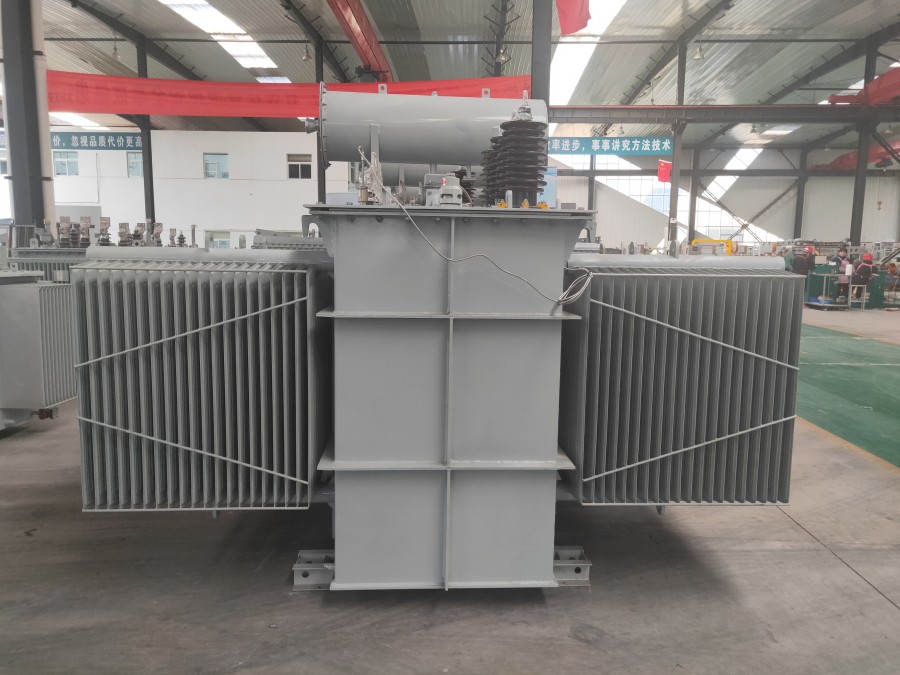
Because the shared winding carries only the difference between input and output voltage, an autotransformer of a given kVA rating can transfer far more power than an isolation transformer built from the same amount of copper and core steel. In practice this means a 500 kVA autotransformer may be physically smaller and considerably cheaper than a 500 kVA two-winding transformer. The trade-off is equally important to understand: an autotransformer does not provide galvanic isolation, and its short-circuit current on the secondary side is higher than that of an isolation unit.
The winding is connected across the supply, and the load is taken from a tapped section. The voltage per turn is constant along the winding, so the output voltage is set purely by the position of the tap. A tap at 80% of the winding gives roughly 80% of the input voltage; a tap above the input gives a step-up ratio. Transformation still happens through electromagnetic induction, exactly as in any transformer, but only the voltage difference is transformed magnetically while the rest is conducted directly.
A practical design rule is that the ratio should normally stay within about 3:1. Beyond that, the fault current contribution and insulation stress grow quickly and a two-winding transformer becomes the more economical and safer choice.
The autotransformer family covers a wide range of hardware. Knowing which configuration fits the duty is the first step in a sound procurement decision.
Runsheng Transformer Co., Ltd. builds autotransformer units alongside its oil-immersed, dry-type and amorphous alloy ranges, and also engineers custom special transformers when a standard tap arrangement does not fit the site.
Two autotransformers with the same kVA label can behave very differently. The following data should appear on the nameplate and in the type test report before you release payment.
Autotransformers appear wherever the voltage change is modest and efficiency or space matters more than isolation.
Price differences between quotations usually come from four places: conductor content, core grade, loss level and the number of stages between the factory and you. A genuine factory-direct quotation removes the trading margin, but it should never come from thinner conductors or a lower grade of core steel. Ask for the design sheet, not just the price.
Runsheng Transformer Co., Ltd. supplies autotransformer and distribution transformer units at factory-direct prices, with products tested to national standards and delivered with manuals, inspection reports and test certificates.
Because an autotransformer does not isolate, the secondary side must be treated with the same respect as the primary. Earthing of the common point, protective relaying settings and short-circuit ratings of downstream switchgear all need review before commissioning. Oil-immersed units require oil level, oil temperature and dissolved gas monitoring; dry-type units need clean airflow and periodic removal of dust from the winding surface. Torque-check terminal connections after the first thermal cycle and record the results so later comparisons are meaningful.
For technical questions, drawings or a factory-direct quotation on an autotransformer or a custom special transformer, contact Runsheng Transformer Co., Ltd. at phone +86 13406394988, e-mail runsheng@7813transformer.com, or WhatsApp 008613508930968.

Runsheng Transformer Co., Ltd. is a professional manufacturer of power transformers, specializing in oil-immersed transformers (S20, S11, S13), SH15 amorphous alloy transformers, S13 series 10KV 3D magnetic path wound-core transformers, D10 single-phase wound-core transformers, as well as mining transformers, rectifier transformers, surge arrestor transformers, load-tap-changing transformers, and custom-engineered special transformers.
WhatsApp & Wechat

No. 6, Intersection of Mount Huangshan Road and Changjiang Road, Liaocheng High tech Industrial Development Zone, Shandong, China


