
Buying a two winding transformer? Factory-direct tips to cut costs and avoid quality traps for buyers

What a two winding transformer really is

A two winding transformer is an electromagnetic device built around a magnetic core with two separate winding sets: a primary winding that receives power and a secondary winding that delivers it at a different voltage. Energy moves from one winding to the other through the core by electromagnetic induction, with no rotating parts and no direct electrical connection between the circuits. Because there is only one input and one output circuit, the two winding transformer is the workhorse of power distribution: the vast majority of transformers installed on poles, in substations, in factories and inside buildings fall into this category.
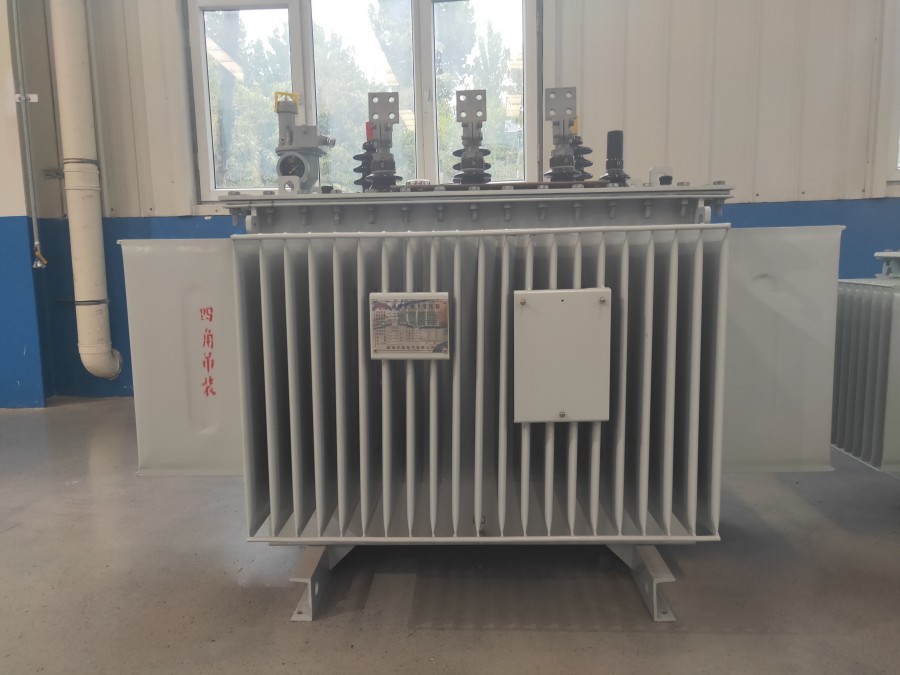
Buying a two winding transformer? Factory-direct tips to cut costs and avoid quality traps for buyers

It is worth separating the term from its neighbours. A three winding transformer has a third winding for a different voltage level, and an autotransformer shares part of a single winding between input and output. Neither is what buyers usually mean when they specify a two winding transformer. Units can be single-phase or three-phase, and the term covers both oil-immersed transformers and dry-type transformers across the usual range of 30 to 6300 kVA at voltage levels of 10 kV, 20 kV and 35 kV, at 50 Hz or 60 Hz.

How it works and which parameters actually matter

An alternating current in the primary winding creates a varying magnetic flux in the laminated core, and that flux induces a voltage in the secondary winding. The ratio of turns between the two windings sets the voltage ratio. Everything else on the nameplate describes how well the unit performs that job in practice.

  • Rated capacity (kVA): the continuous apparent power the transformer can deliver within its temperature limits.
  • Voltage ratio and tap range: for example 10/0.4 kV with plus or minus 2 x 2.5 percent off-circuit taps to compensate for supply voltage variation.
  • Vector group: Dyn11, Yyn0 or Yd11, which determines phase shift and how the neutral is handled downstream.
  • Short-circuit impedance: affects fault current levels and voltage regulation; it must match the protection study.
  • No-load loss and load loss: the two figures that decide how much energy the unit wastes over its 20 to 30 year life.
  • Temperature rise, cooling class and insulation level: ONAN or AN/AF cooling, Class A or Class H insulation, and the associated fire and ventilation requirements.
  • Enclosure and environmental rating: IP code, altitude, ambient temperature and whether an outdoor tank or an indoor enclosure is needed.

Oil-immersed or dry-type: matching the unit to the site

Both are two winding transformer designs; the difference lies in how heat leaves the windings and where the unit can safely be installed.

  • Oil-immersed transformer: the core and windings sit in mineral oil inside a sealed tank, with radiators for cooling. Typical series include S11, S13, S20 and S22. These units offer the lowest cost per kVA, excellent overload capability and proven outdoor reliability. They suit pole-mounted and pad-mounted distribution, industrial plants, mining sites and preassembled substations. Oil containment, fire separation and periodic oil testing are part of ownership.
  • Dry-type transformer: windings are cast in epoxy resin or impregnated and cooled by air, with no oil to leak or burn. Typical series include SCB10, SCB13, SCB14 and SCB18. These units are preferred for hospitals, high-rise buildings, tunnels, metro systems, data centres and other indoor locations where fire load and maintenance access are critical. They cost more per kVA and need clean, ventilated rooms.
  • Amorphous alloy option: SH15 and SCBH15 series use amorphous metal cores that cut no-load loss dramatically, which pays back quickly on installations that run lightly loaded or energised around the clock.

Where the money goes: what drives a factory-direct price

Two quotations for the same capacity and voltage ratio can differ by 30 percent or more, and the gap is almost never arbitrary. The main cost drivers are:

  • Winding conductor: copper versus aluminium, and the actual cross-section used. Copper carries more current per unit area and behaves far better under short-circuit stress.
  • Core material: grade of grain-oriented silicon steel, lamination thickness and step-lap cutting all influence no-load loss and price.
  • Design margin: whether the unit is built to the nominal rating or squeezed to the minimum to win on price.
  • Tap changer: off-circuit tap links versus an on-load tap changer, which adds cost and complexity.
  • Tank, cooling and finish: radiator area, paint system and corrosion protection for coastal or chemical environments.
  • Testing and documentation: full routine tests, type test reports and traceability are real costs that cut-price suppliers often skip.

A useful habit is to compare quotations on total cost of ownership, not purchase price alone. Over a 25 year life, the cost of losses in a heavily loaded distribution transformer frequently exceeds the original purchase price.

The checks that separate a reliable supplier from a cheap one

Every credible two winding transformer should come with a routine test report traceable to its serial number, covering at minimum winding resistance, voltage ratio and vector group, short-circuit impedance and load loss, no-load loss and current, applied voltage and induced voltage withstand, plus oil dielectric strength for oil-immersed units. Type tests such as temperature rise, lightning impulse and short-circuit withstand confirm the design rather than just the individual unit.

  • Nameplate data versus test report data, item by item.
  • Conductor material and weight stated in writing, not just verbally.
  • Core type and grade, especially when low loss figures are promised.
  • Manual, inspection report, test certificate and warranty terms supplied with delivery.
  • Lifelong quality tracking and a clear response route for after-sales issues.

Common traps buyers meet, and how to sidestep them

  • Aluminium substituted for copper while the price stays the same. Ask for the conductor specification in the contract.
  • Undersized core or conductor that meets the nameplate on paper but runs hot and loses more energy.
  • Loss figures copied from a catalogue rather than measured on the delivered unit.
  • Recycled or untreated oil in oil-immersed units, which shows up in dissolved gas analysis months later.
  • Missing type test reports for a design that has never been verified at temperature rise or short-circuit.
  • Vague warranty language that excludes the components most likely to fail.

A practical selection checklist before ordering

  • Confirm the load profile and add a realistic 20 to 30 percent capacity margin for future growth.
  • Fix the voltage ratio, tap range, vector group and impedance to match the upstream protection and downstream equipment.
  • Decide indoor or outdoor, ambient temperature, altitude and pollution level.
  • Flag non-linear or harmonic-rich loads, which call for derating or a purpose-built rectifier transformer.
  • Check whether the application is mining, renewable energy, capacity regulation or another special duty that needs a custom design.
  • Specify the energy efficiency grade required by local regulation and weigh it against loss cost.
  • Agree on test reports, documentation and delivery schedule in writing.

Why factory-direct sourcing usually pays

Buying from the manufacturer removes distributor markup and, more importantly, shortens the chain of responsibility when something needs clarifying. A manufacturer that holds stock across the S11, S13, S20 and S22 oil-immersed ranges and the SCB10, SCB13, SCB14 and SCB18 dry-type ranges, plus SH15 amorphous alloy units from 30 to 6300 kVA and 35 kV preassembled substations, can usually match a design to the actual site conditions instead of forcing the buyer into a catalogue compromise. Runsheng Transformer Co., Ltd. supplies oil-immersed transformers at factory-direct prices with manuals, inspection reports and test certificates, along with lifelong quality tracking. That combination of documentation and traceability is what turns a low quotation into a genuinely low-cost installation.

For specification support, drawings or a quotation on a two winding transformer for your project, contact the team directly: phone +86 13406394988, e-mail runsheng@7813transformer.com, WhatsApp 008613508930968.

When you have coordination challenges, turn to Runsheng Transformer for help
It's all about making things easy, building partnerships, and providing a point of contact.