
When you have coordination challenges, turn to Runsheng Transformer for help
It's all about making things easy, building partnerships, and providing a point of contact.
A distribution transformer is the last piece of equipment between the transmission grid and the socket on your wall. It steps medium-voltage power, usually 10 kV or 35 kV, down to the 400 V / 230 V level that factories, commercial buildings, hospitals, and residential communities actually use. Because it sits closest to the load, its efficiency, reliability, and purchase price directly affect both your monthly electricity bill and your overall project budget.
Every distribution transformer follows the same principle of electromagnetic induction. Alternating current in the primary winding creates a changing magnetic flux in the core, and that flux induces a voltage in the secondary winding. The turns ratio between the two windings sets the voltage ratio, which is why a 10 kV / 0.4 kV unit is essentially a 25:1 step-down device.
Two design choices dominate real-world performance and running cost:
Suppliers quote by series name. Knowing what each series means prevents overpaying for capacity or efficiency you do not need.
A distribution transformer is a 20-year asset. These are the figures worth comparing line by line in every quotation:
The application decides the type far more than the price tag does.
If the unit goes outdoors, the budget is tight, and the capacity is large, an oil-immersed transformer from the S11, S13, S20, or S22 family is almost always the economical answer. If the unit goes indoors, sits near people, or the local fire code forbids oil, choose a dry-type transformer such as SCB13, SCB14, or SCB18. If electricity cost is the dominant concern and the load profile is light for long periods, compare an SH15 or SCBH15 amorphous alloy transformer against a conventional unit and calculate the no-load loss savings over ten years. That calculation often changes the decision.
Material cost dominates: copper windings, grain-oriented silicon steel, and amorphous ribbon. Two units with identical nameplate ratings can differ significantly in price simply because one uses more copper or a better grade of core steel. That is why the cheapest quote is rarely the cheapest asset over its service life. Buying directly from a manufacturer removes distributor markups and usually shortens delivery time, particularly for standard ratings that are already in stock.
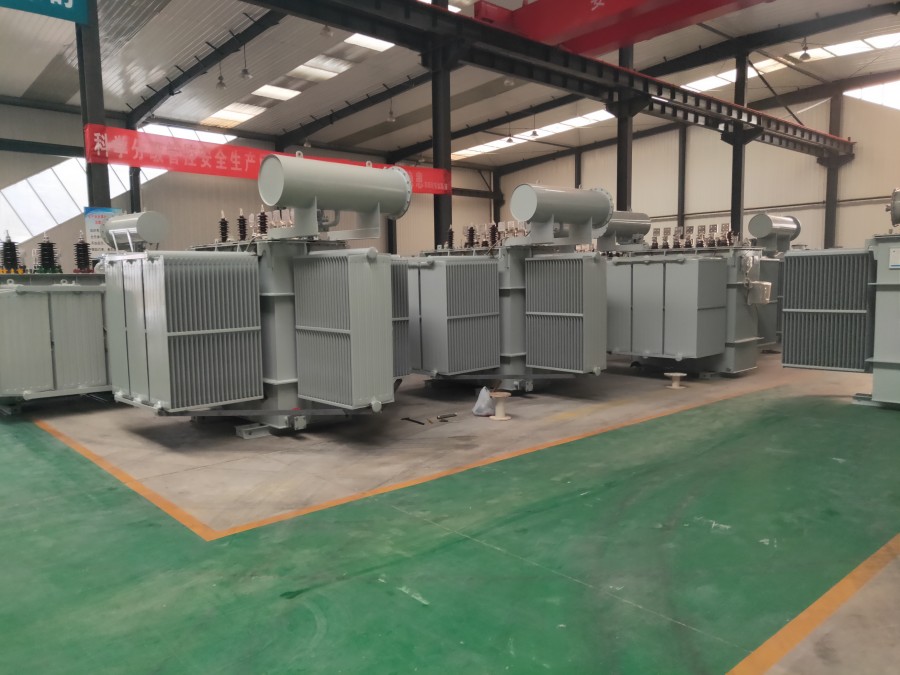
Runsheng Transformer Co., Ltd. manufactures S22, S20, S11, and S13 oil-immersed transformers, SCB13, SCB14, and SCB18 dry-type transformers, SH15 amorphous alloy transformers, 10 kV three-dimensional wound core units, single-phase wound core transformers, and custom-designed special transformers, along with 35 kV and below preassembled substation equipment including European-style and American-style compact substations and high/low voltage switchgear. The company states that all products comply with national standards and ship with manuals, inspection reports, test certificates, and lifelong quality tracking, backed by its quality policy that customer satisfaction is Runsheng's mission.
A distribution transformer is not a commodity purchase. Match the type to the application, verify the loss figures against the standard, size the capacity honestly, and compare quotes on a full lifecycle basis rather than on sticker price alone. Do that, and you avoid the two most expensive mistakes in transformer procurement: buying too much capacity, and buying too little efficiency.
For specifications, current pricing, or a tailored recommendation on a 30-6300 kVA distribution transformer, contact Runsheng Transformer directly. Phone: +86 13406394988 | E-mail: runsheng@7813transformer.com | WhatsApp: 008613508930968.

Runsheng Transformer Co., Ltd. is a professional manufacturer of power transformers, specializing in oil-immersed transformers (S20, S11, S13), SH15 amorphous alloy transformers, S13 series 10KV 3D magnetic path wound-core transformers, D10 single-phase wound-core transformers, as well as mining transformers, rectifier transformers, surge arrestor transformers, load-tap-changing transformers, and custom-engineered special transformers.
WhatsApp & Wechat

No. 6, Intersection of Mount Huangshan Road and Changjiang Road, Liaocheng High tech Industrial Development Zone, Shandong, China


