
Transformer Factory Direct: How to Choose Oil-Immersed or Dry-Type and Save 30%

What a Transformer Actually Does

A transformer is a static electrical device that transfers electrical energy between two or more circuits through electromagnetic induction. It changes voltage and current levels without changing frequency, which is why it sits at the heart of every generation, transmission, and distribution network. Step-up transformers raise voltage for long-distance transmission to reduce line losses; step-down and distribution transformers bring that voltage back down to levels that factories, buildings, and equipment can safely use.
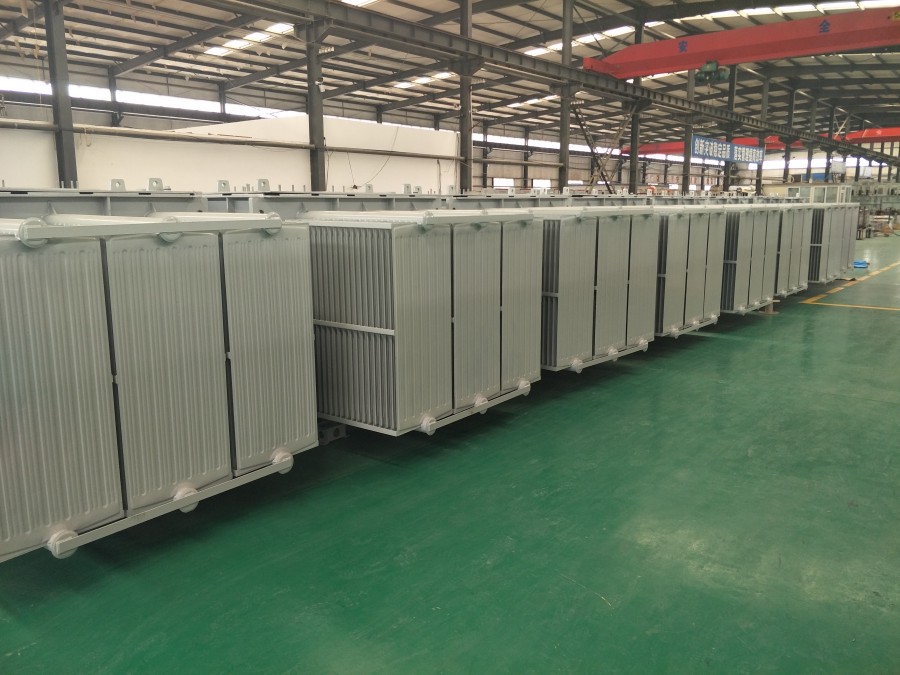
Transformer Factory Direct: How to Choose Oil-Immersed or Dry-Type and Save 30%

Because the device has no moving parts, its reliability depends almost entirely on design, materials, and manufacturing quality — grain-oriented silicon steel for the core, high-conductivity copper for the windings, and consistent insulation and impregnation processes. Those are exactly the details that separate a low-cost unit from a transformer that still runs quietly after fifteen years. For procurement teams, understanding a few basics up front is the fastest way to avoid overpaying or under-specifying.

The Main Transformer Categories on the Market

  • Oil-immersed transformer — the core and windings are immersed in insulating oil, which both insulates and carries heat away. Typical series include S11, S13, S20, and S22. These units are usually the most economical per kVA, handle higher capacities well, and are suited to outdoor installation, distribution substations, and industrial sites.
  • Dry-type transformer — no liquid insulation. Cast-resin models such as SCB10, SCB13, SCB14, and SCB18 offer excellent fire safety and are preferred indoors: high-rise buildings, hospitals, shopping centers, metro stations, data centers, and clean production areas where oil leakage is unacceptable.
  • Amorphous alloy transformer — series SH15 and SCBH15 use an amorphous alloy core with extremely low no-load loss. They pay back quickly wherever the transformer stays energized for long periods but carries a light or intermittent load.
  • Special-purpose transformer — mining transformer, rectifier transformer, load tap changing transformer, lightning arrester transformer, capacity-regulating transformer, and fully custom-designed special transformer for non-standard voltage, impedance, or environment requirements.

How to Read a Model Number: S11, S13, S20, S22, SCB14, SH15

Model codes look cryptic but follow a consistent logic. Reading them correctly tells you the phase, insulation system, core material, and efficiency level before you ever open a datasheet.

  • S indicates a three-phase unit; D indicates single-phase, as in the D10 series single-phase wound core transformer.
  • SCB identifies a cast-resin dry-type transformer; the letter B typically refers to the low-voltage foil-winding design used in this series.
  • H signals an amorphous alloy core, which is why SH15 delivers very low no-load loss.
  • The number (10, 11, 13, 14, 15, 18, 20, 22) is the performance level — the higher the number, the lower the no-load and load losses, and generally the higher the purchase price but the lower the lifetime energy cost.
  • Suffix letters describe construction: M for a sealed tank, R for wound core, and L for three-dimensional wound-core construction, as in S13-M.RL. A three-dimensional magnetic path wound core reduces loss and noise while keeping the unit compact.

Parameters That Decide Price and Performance

Two transformers with the same capacity can differ substantially in price because of the parameters below. Send these to any supplier and you will get an accurate quotation instead of a placeholder number.

  • Rated capacity — commonly 30-6300 kVA for distribution duty; oversized capacity wastes money, undersized capacity causes overheating.
  • Voltage class — 10 kV and 35 kV are the most common distribution levels; 35 kV transformer designs are used for larger substation feeds.
  • No-load loss and load loss — these determine the energy efficiency grade. Selection heavily influences long-term operating cost, not just the invoice.
  • Impedance voltage — affects short-circuit current and voltage regulation; it must match the upstream protection design.
  • Vector group — for example Dyn11 or Yyn0, chosen to suit the load mix and paralleling requirements.
  • Tap range and tap changer type — off-circuit taps for occasional seasonal adjustment, or a load tap changing transformer where voltage must be regulated under load.
  • Cooling and insulation class — ONAN or forced cooling for oil units; insulation class and temperature rise limits for dry-type units.
  • Enclosure and environment — indoor or outdoor, IP rating, ambient temperature, altitude, and humidity all change the required design.

Typical Applications

  • Utility and commercial distribution networks — S13, S20, and S22 oil-immersed transformer units.
  • Buildings, tunnels, and public infrastructure — SCB13, SCB14, and SCB18 dry-type transformer units.
  • Energy-saving retrofit projects and long-idle-load sites — SH15 and SCBH15 amorphous alloy transformer units.
  • Mines, smelters, and rectifier systems — mining transformer and rectifier transformer designs built for harsh duty and harmonic-rich loads.
  • Solar and wind farms — renewable energy transformer solutions matched to inverter and collector-system voltages.
  • Compact installations — 35 kV and below preassembled substation equipment, including European-style and American-style compact substations with high and low voltage switchgear.

Why Buying Factory Direct Changes the Price

Distribution transformers are heavy, standardized products, so the cost structure is transparent once you know the components. Between the manufacturer and the end user there are often one or two trading layers, each adding margin, freight handling, and delayed delivery. Buying factory direct removes those layers — commonly a meaningful double-digit percentage of the quoted price — and it also means technical questions reach the engineers who actually designed the unit.

Established manufacturers also hold inventory, which shortens lead time and reduces the risk of project delays. Runsheng Transformer Co., Ltd., for example, maintains comprehensive stock across S11, S13, S20, and S22 oil-immersed transformer series, SCB10, SCB13, SCB14, and SCB18 dry-type transformer series, and SH15 amorphous alloy transformer units, and ships them with manuals, inspection reports, and test certificates for lifelong quality tracking.

Documentation, Testing, and After-Sales Checks

Never accept a transformer without paperwork. At minimum, confirm that the unit has passed routine tests covering winding resistance, voltage ratio, impedance, no-load loss, load loss, insulation resistance, power frequency withstand voltage, and induced overvoltage. Ask for the routine test report, the certificate of conformity, the nameplate data, and the installation and maintenance manual before shipment. A supplier that complies with national standards and IEC requirements will provide all of this as standard practice, not as an extra.

Quick Selection Checklist Before You Request a Quote

  • Rated capacity in kVA and required voltage ratio
  • Phase and vector group
  • Installation location — indoor or outdoor, ambient conditions
  • Required efficiency level and acceptable loss values
  • Tap range, and whether on-load regulation is needed
  • Cooling method, enclosure, and IP rating
  • Required standards, test reports, and delivery schedule

If you are comparing options for a specific project, send your parameters and load profile for a tailored recommendation. Phone: +86 13406394988, e-mail: runsheng@7813transformer.com, WhatsApp: 008613508930968.

When you have coordination challenges, turn to Runsheng Transformer for help
It's all about making things easy, building partnerships, and providing a point of contact.