
When you have coordination challenges, turn to Runsheng Transformer for help
It's all about making things easy, building partnerships, and providing a point of contact.
A low voltage transformer is a static electrical device that changes one AC voltage level into another at the low voltage side of a power system, typically working with rated voltages of 1000 V and below. In most industrial, commercial and residential projects, the low voltage transformer is the final link between the medium voltage distribution network and the equipment that actually consumes electricity — motors, lighting, control panels, charging piles, machine tools and building services.
In practice, the term usually refers to the distribution transformer that steps 10 kV or 35 kV down to 0.4 kV (400 V / 230 V), the voltage level used by end users. Because it sits closest to the load, its efficiency, temperature rise and reliability directly affect electricity bills and production uptime.
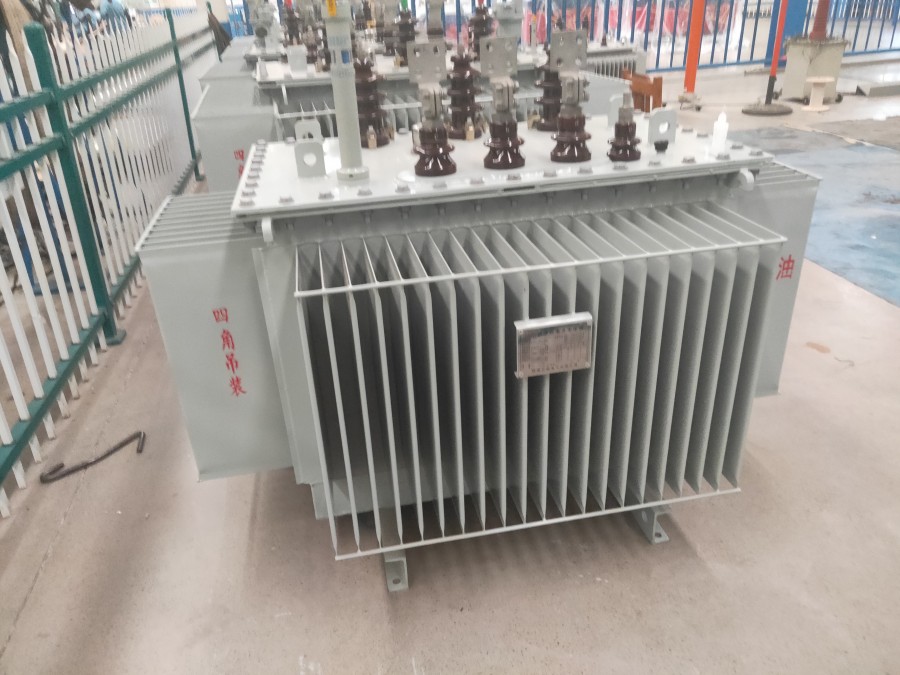
Many purchasers treat a low voltage transformer as a simple commodity and compare only the price per kVA. That is exactly where money is lost. Two units with the same nameplate capacity can differ greatly in copper content, core material, loss level, insulation system and manufacturing process. A cheaper unit may use aluminium windings instead of copper, thinner silicon steel or reclaimed core material, which increases no-load loss and shortens service life.
Common traps include:
Working directly with a transformer manufacturer removes most of these risks, because the design, winding, assembly and testing are all under one roof and can be verified on site.
Choosing the right construction is the first real cost decision. The two mainstream families are oil-immersed and dry-type.
Rated capacity across these families generally covers 30 kVA to 6300 kVA, with higher capacities available on request.
A professional procurement checklist should always include the following:
Typical applications include factory power distribution, commercial buildings, water treatment plants, mines, tunnels, ports, railway and metro systems, renewable energy projects such as solar and wind farms, and preassembled or compact substations combining a transformer with high and low voltage switchgear in one enclosure.
Correct installation protects the investment. Keep adequate clearance for ventilation, mount on a level foundation, tighten and re-check terminal connections after the first load cycle, and confirm the earthing arrangement. For oil-immersed units, monitor oil level and oil temperature; for dry-type units, keep the windings clean and ensure forced-air fans, where fitted, operate correctly. Periodic insulation resistance measurement and a comparison of recorded temperatures will reveal most developing faults early.
Buying from the source factory typically removes one or more layers of distribution margin, allows non-standard voltage ratios and dimensions to be produced without a brokered quotation, and gives direct access to the people who actually built and tested the unit. As a transformer manufacturer, Runsheng Transformer Co., Ltd. produces S11, S13, S20 and S22 oil-immersed transformers, SCB13, SCB14 and SCB18 dry-type transformers, SH15 amorphous alloy transformers, mining and rectifier transformers, plus 35 kV and below preassembled substation equipment and high/low voltage switchgear. Units are supplied with manuals, inspection reports and test certificates, together with lifelong quality tracking.
If you are comparing quotations for a low voltage transformer, ask for the loss data, winding material and test documents — then compare total cost of ownership rather than the headline price. For specifications, drawings or a factory-direct quotation, contact us at phone: +86 13406394988, e-mail: runsheng@7813transformer.com, or WhatsApp: 008613508930968.

Runsheng Transformer Co., Ltd. is a professional manufacturer of power transformers, specializing in oil-immersed transformers (S20, S11, S13), SH15 amorphous alloy transformers, S13 series 10KV 3D magnetic path wound-core transformers, D10 single-phase wound-core transformers, as well as mining transformers, rectifier transformers, surge arrestor transformers, load-tap-changing transformers, and custom-engineered special transformers.
WhatsApp & Wechat

No. 6, Intersection of Mount Huangshan Road and Changjiang Road, Liaocheng High tech Industrial Development Zone, Shandong, China


