
Electrical Transformer Buying Guide: How to Buy Factory-Direct, Avoid Overpaying, and Save up to 30% on Every Unit

What an Electrical Transformer Really Does

An electrical transformer moves electrical energy between two or more circuits through electromagnetic induction. Its job is simple to describe and critical in practice: raise voltage so power can travel long distances with low loss, then lower voltage again so it can be used safely by machines, buildings and homes. Every factory, hospital, data center, metro line, mine and residential district depends on a properly specified unit. Get the specification right and it runs quietly for 20 to 30 years. Get it wrong and you pay for it in losses, downtime and premature replacement.
Electrical Transformer Buying Guide: How to Buy Factory-Direct, Avoid Overpaying, and Save up to 30% on Every Unit

This overview is written for buyers and project engineers who need to understand what they are ordering before they sign a purchase contract.

The Main Types of Electrical Transformer on the Market

Transformers are usually grouped by cooling and insulation method, because that choice drives fire safety, installation location, maintenance cost and price.

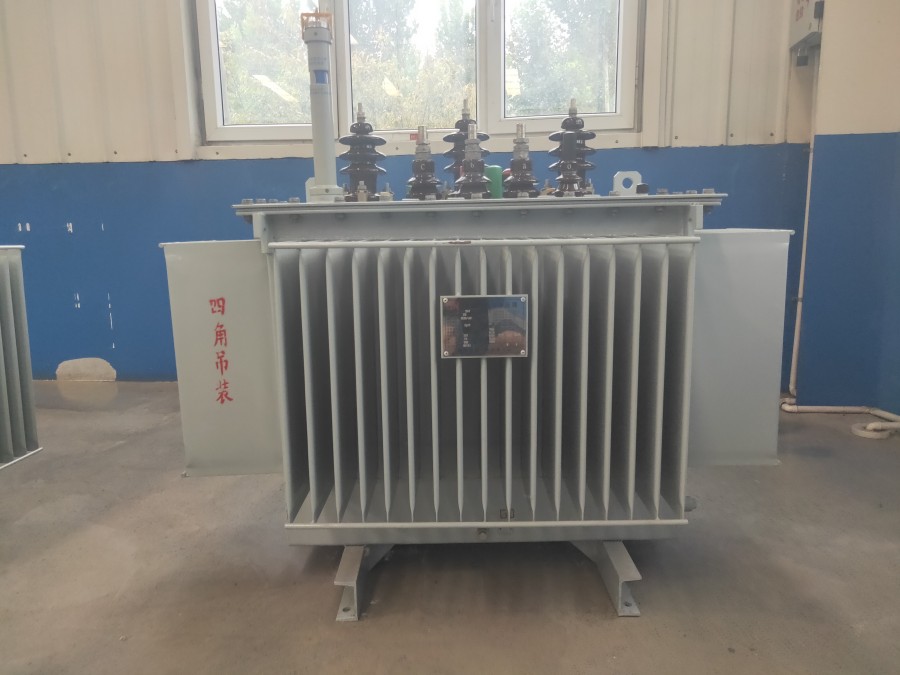
  • Oil-immersed transformer — S11, S13, S20 and S22 series. The core and windings are immersed in insulating oil that both cools and insulates. These units handle high capacity, tolerate outdoor conditions and offer strong overload capability. Newer S20 and S22 designs use lower-loss core materials to cut no-load loss substantially.
  • Dry-type transformer — SCB10, SCB13, SCB14 and SCB18 series. No oil means no fire risk from leaking fluid and no oil containment pit. They are the standard choice for indoor substations in high-rise buildings, hospitals, shopping centers, subways, tunnels and clean production workshops.
  • Amorphous alloy transformer — SH15 and SCBH15 series. The amorphous metal core reduces no-load loss dramatically compared with conventional silicon steel, which makes these units attractive for renewable energy transformer projects, rural grids and installations that run lightly loaded for long periods.
  • Special-purpose units — mining transformer, rectifier transformer, lightning arrester transformer, capacity-regulating transformer and load tap changing transformer, all engineered for particular duty cycles and environments.
  • Complete substation equipment — 35kV and below preassembled substation sets, European-style and American-style compact substation packages, plus high and low voltage switchgear, so a project can be delivered as one coordinated system rather than separate purchases.

Parameters That Decide Whether You Bought the Right Unit

Capacity and voltage are only the beginning. A quotation that lists just kVA and voltage class is incomplete, and comparing two such quotations is guesswork.

  • Rated capacity: the 30–6300 kVA range covers most distribution duties; size the unit on real load profile, not on a round number.
  • Voltage class and tapping: 10kV and 35kV are the common distribution levels; tap range such as ±2 x 2.5% allows adjustment as grid voltage drifts.
  • Loss data: no-load loss and load loss determine your electricity bill for decades. Ask for calculated values against a recognized standard, not a verbal assurance.
  • Impedance, vector group and temperature rise: these must match the upstream protection scheme and downstream load behavior.
  • Cooling and insulation class: ONAN or forced cooling for oil units; class F or H insulation with adequate IP rating for dry-type units.
  • Compliance: national standard or IEC compliance, verified by a type test report and routine test certificate.

The Pitfalls That Quietly Inflate Your Cost

Most bad transformer purchases are not caused by bad luck. They follow a few predictable patterns.

  • Undersizing to save budget: the unit runs hot, ages fast and fails early. Oversizing is just as costly because no-load loss is paid for every hour of every day.
  • Comparing on price alone: winding material, core grade and insulation system explain most price gaps. A cheaper quotation almost always has a technical reason behind it.
  • Ignoring loss evaluation: a slightly higher purchase price with lower losses can pay for itself within a few years of operation.
  • Accepting incomplete documentation: without manuals, inspection reports and test certificates, you cannot verify what you received, and warranty claims become difficult.
  • Buying through multiple intermediaries: every layer adds margin without adding engineering value.

Why Factory-Direct Purchasing Saves Money

When you buy from the production line rather than from a reseller, three things change. First, margin is removed from the chain. Second, technical questions reach the people who actually build the unit, which reduces specification errors. Third, customization becomes practical: a custom special transformer built to your impedance, vector group or enclosure requirement is routine for a manufacturer and awkward for a trader.

As a transformer manufacturer, Runsheng Transformer Co., Ltd. produces S22, S20, S11 and S13 oil-immersed transformers, SCB13, SCB14 and SCB18 dry-type transformers, SH15 amorphous alloy transformers, S13 series 10KV three-dimensional magnetic path wound core transformers, D10 series single-phase wound core transformers, and specialized units including mining transformers, rectifier transformers and capacity-regulating transformers. All products comply with national standards and ship with manuals, inspection reports, test certificates and lifelong quality tracking.

Typical Applications

  • Utility and industrial distribution transformer installations
  • Renewable energy transformer duties in solar and wind farms
  • Mining, metallurgy and heavy-duty industrial loads
  • Commercial buildings, hospitals, data centers and rail transit
  • Electrolysis, rectifier and other special process power supplies

A Short Supplier Checklist

  • Can they state loss values and test standards in writing?
  • Do they offer both oil-immersed and dry-type options, so their advice is not biased?
  • Will they provide factory test documentation with delivery?
  • Do they support custom design rather than only catalogue models?
  • Is after-sales tracking genuinely lifelong, or just a slogan?

Final Thoughts

An electrical transformer is a long-term asset, not a one-off purchase. Define your load, verify the loss figures, insist on complete documentation and buy from the source. That combination is what keeps capital cost and lifetime operating cost under control at the same time.

For specifications, drawings or a factory-direct quotation, contact Runsheng Transformer Co., Ltd.: phone +86 13406394988, e-mail runsheng@7813transformer.com, WhatsApp 008613508930968.

When you have coordination challenges, turn to Runsheng Transformer for help
It's all about making things easy, building partnerships, and providing a point of contact.