
When you have coordination challenges, turn to Runsheng Transformer for help
It's all about making things easy, building partnerships, and providing a point of contact.
Factories, commercial buildings, hospitals, data centers and solar farms all have one thing in common: power finally reaches the point of use through a low voltage transformer. It is the last link in the electrical chain and the one that runs continuously, day after day, for 20 to 25 years. Its efficiency, winding material and manufacturing quality quietly decide whether your electricity bill and maintenance budget stay under control — or keep climbing year after year.
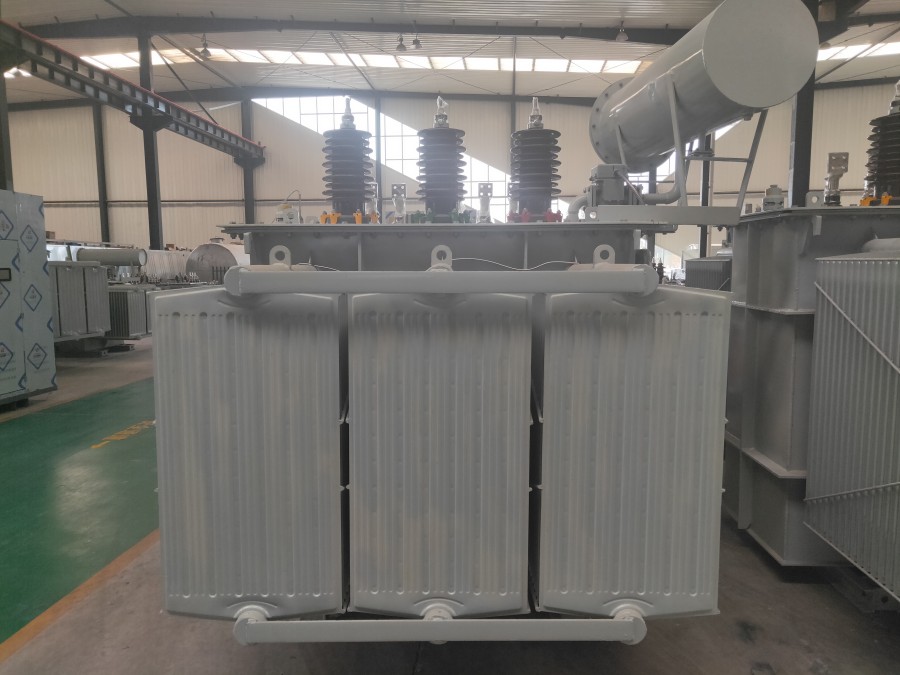
This overview explains what a low voltage transformer actually is, which types are available, which parameters a serious buyer must check, and where the hidden costs usually hide.
A low voltage transformer is a static electrical device that converts one AC voltage level into another and delivers power at low voltage — typically 1000 V and below on the secondary side, most commonly a 400 V / 230 V three-phase four-wire system. In a standard distribution chain, a 10 kV or 35 kV medium-voltage feeder is stepped down by a distribution transformer to 400 V, which is then distributed by low voltage switchgear to motors, lighting, HVAC systems, charging stations and other loads.
Because it sits closest to the load, the low voltage transformer is where losses accumulate fastest. A unit that is one efficiency grade lower than required can waste thousands of kilowatt-hours every year — a cost that far exceeds the initial price difference.
When you buy from a manufacturer rather than a trading company, several costs simply disappear: intermediary markup, duplicate warehousing, and the risk of mis-specified units being resold. You also gain direct access to the engineering team, which means non-standard voltage ratios, specific vector groups or special enclosures can be reviewed and quoted accurately instead of being approximated.
As a power transformer manufacturer, Runsheng Transformer Co., Ltd. produces S22, S20, S11 and S13 oil-immersed transformers, SCB13, SCB14 and SCB18 dry-type transformers, SH15 amorphous alloy transformers and custom-designed special transformers, together with 35 kV and below preassembled substation equipment. All products comply with national standards and are delivered with manuals, inspection reports, test certificates and lifelong quality tracking.
Prepare these details before contacting a supplier: rated capacity, primary and secondary voltage, vector group, impedance voltage, cooling method, indoor or outdoor installation, ambient temperature and altitude, and any required certification. With this information, a factory can usually return a firm quotation and drawing within one working day — and you avoid the most common cause of project delay, which is a change order after the order is already placed.
Choosing the right low voltage transformer is not about finding the cheapest nameplate. It is about matching efficiency grade, winding quality and documentation to a service life measured in decades. Buy factory direct, verify the test reports, and the savings take care of themselves.
Contact us for a quotation or technical consultation:
Phone: +86 13406394988
E-mail: runsheng@7813transformer.com
WhatsApp: 008613508930968

Runsheng Transformer Co., Ltd. is a professional manufacturer of power transformers, specializing in oil-immersed transformers (S20, S11, S13), SH15 amorphous alloy transformers, S13 series 10KV 3D magnetic path wound-core transformers, D10 single-phase wound-core transformers, as well as mining transformers, rectifier transformers, surge arrestor transformers, load-tap-changing transformers, and custom-engineered special transformers.
WhatsApp & Wechat

No. 6, Intersection of Mount Huangshan Road and Changjiang Road, Liaocheng High tech Industrial Development Zone, Shandong, China


