
When you have coordination challenges, turn to Runsheng Transformer for help
It's all about making things easy, building partnerships, and providing a point of contact.
A transformer is the quiet workhorse of every electrical power system. It moves electrical energy between circuits by electromagnetic induction, raising voltage for efficient long-distance transmission and lowering it again for safe use in factories, commercial buildings, data centers and homes. If you are sourcing one, understanding the basics of a transformer is the fastest way to get reliable equipment at a fair price — and to avoid the traps that quietly inflate project budgets.
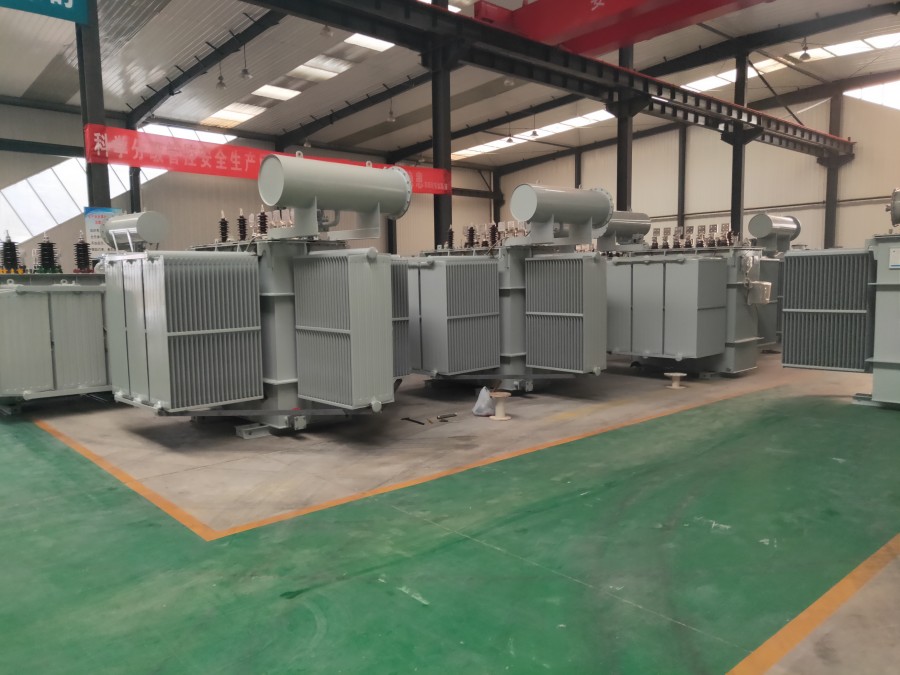
A transformer has no moving parts. Its core and windings simply convert one AC voltage level into another with very high efficiency, often between 95% and 99%. Because power losses are converted into heat, cooling is the main design challenge: oil-immersed units rely on insulating oil, while dry-type units rely on air circulation. Choosing between these two families is usually the first and most important decision a buyer makes.
Regardless of type, a professional procurement review should cover the following parameters before any order is confirmed:
Distribution transformer units sit at the end of the grid, feeding residential neighborhoods, industrial parks and commercial complexes. Renewable energy transformer applications support solar and wind farms, where stable voltage conversion is critical to grid connection. Mining transformer and rectifier transformer designs serve harsh or specialized loads, while a complete preassembled substation, including European-style and American-style compact substation designs and high/low-voltage switchgear, packages the transformer with switching and protection equipment for faster installation.
Start with load calculation and future expansion, then match the environment to the cooling type: outdoor and heavy-duty sites usually favor an oil-immersed transformer, while indoor and fire-sensitive sites favor a dry-type transformer. Where running hours are long and energy cost matters, an amorphous alloy transformer can repay its higher purchase price through lower no-load loss. Finally, check the manufacturer's production range, inventory and documentation rather than comparing price alone.
Trading companies add margin without adding technical value. Buying directly from the source removes that layer, shortens lead time and gives you direct access to engineering support. Runsheng Transformer Co., Ltd., for example, maintains a comprehensive inventory with assured quality and offers oil-immersed transformers at factory-direct prices, with all products complying with national standards and delivered with manuals, inspection reports, test certificates and lifelong quality tracking. The same factory-direct logic applies across the range, whether you need a 30-6300 kVA distribution transformer or a custom special transformer built to your drawings.
Correct installation — proper ventilation, grounding, cable sizing and protection coordination — prevents most early failures. After commissioning, routine attention to oil level and oil quality for oil-immersed units, dust removal for dry-type units, and continuous temperature monitoring will keep efficiency high. Lifelong quality tracking from the manufacturer makes this easier, because each unit can be traced back to its test records and design data.
Whether you are replacing an ageing unit or equipping a new substation, the right transformer is the one that matches your load profile, environment and budget — supplied by a manufacturer who stands behind it for life. Runsheng Transformer Co., Ltd. supplies oil-immersed transformer, dry-type transformer and amorphous alloy transformer ranges, along with 35kV transformer, mining transformer, rectifier transformer, load tap changing transformer, preassembled substation, compact substation and high/low-voltage switchgear, plus custom-designed special transformer solutions.
Contact us for pricing and technical selection support: phone +86 13406394988, e-mail runsheng@7813transformer.com, WhatsApp 008613508930968.

Runsheng Transformer Co., Ltd. is a professional manufacturer of power transformers, specializing in oil-immersed transformers (S20, S11, S13), SH15 amorphous alloy transformers, S13 series 10KV 3D magnetic path wound-core transformers, D10 single-phase wound-core transformers, as well as mining transformers, rectifier transformers, surge arrestor transformers, load-tap-changing transformers, and custom-engineered special transformers.
WhatsApp & Wechat

No. 6, Intersection of Mount Huangshan Road and Changjiang Road, Liaocheng High tech Industrial Development Zone, Shandong, China


