
When you have coordination challenges, turn to Runsheng Transformer for help
It's all about making things easy, building partnerships, and providing a point of contact.
A 66kv transformer is a power transformer whose rated system voltage is 66 kV. It sits between the bulk transmission network (220 kV and above) and the medium-voltage distribution network (35 kV, 10 kV and 0.4 kV), which is why it is widely described as a sub-transmission transformer. In many regional grids, large industrial parks, mining sites and renewable energy collection systems, 66 kV is a standard voltage level, and the 66kv transformer is the core equipment that steps voltage up or down at that level.
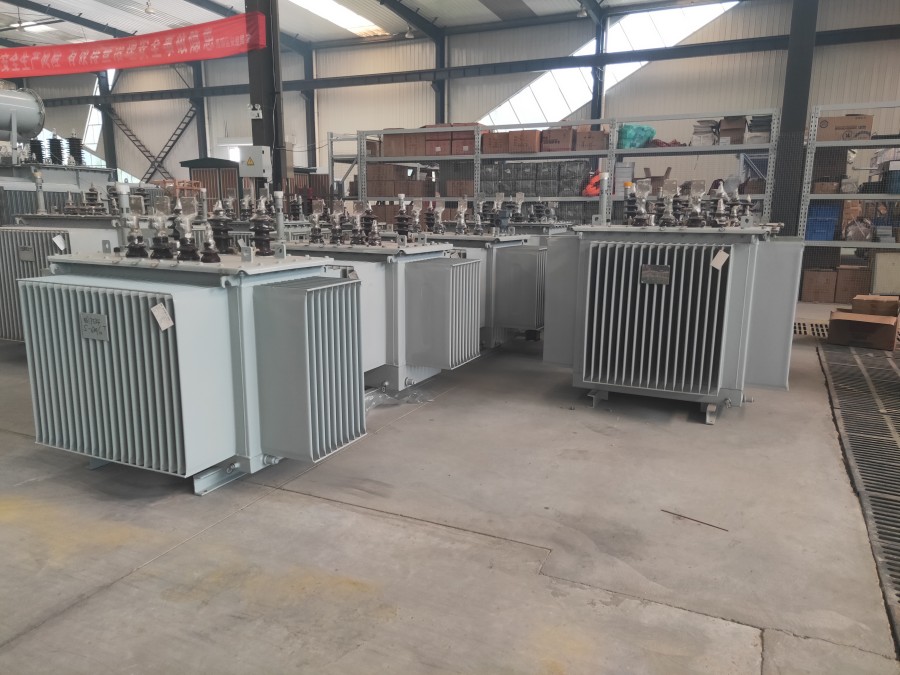
Depending on the project, a 66kv transformer can be oil-immersed or dry-type, three-phase or single-phase, and fitted with either an off-circuit tap changer or an on-load tap changing transformer for voltage regulation while the unit remains energised. Understanding these basic options is the fastest way to avoid ordering the wrong unit and paying twice.
Specification errors are the single most expensive mistake in transformer procurement. A correct 66kv transformer datasheet should state:
Buyers often compare quotations and find differences of 20 to 40 percent for the same nominal rating. The gap almost always comes down to material and configuration:
When comparing 66kv transformer price offers, always compare the same loss level, the same tap changer type and the same accessory list. A cheap quotation with a stripped accessory package is not a saving.
Choose an oil-immersed 66kv transformer when the unit is installed outdoors, when the highest capacity per unit is needed, and when budget efficiency matters most. Choose a dry-type 66kv transformer when the installation is indoors, in a fire-sensitive location, or where an oil containment and fire suppression system would be impractical. In both cases, verify the cooling class against the actual load profile rather than the nameplate alone.
A reputable transformer manufacturer will issue routine test reports covering winding resistance, voltage ratio, impedance and short-circuit impedance, no-load loss and load loss, insulation resistance, applied voltage and induced voltage tests, plus oil tests for oil-immersed units. Type test reports for temperature rise, impulse and short-circuit withstand should be available for the design family. Every shipment should include the operation manual, inspection report, test certificate and a traceable serial number, which is what lifelong quality tracking is built on.
For a project of this size, the procurement channel directly affects both price and after-sales response. Buying through a trading company usually adds a margin, lengthens the delivery chain and can obscure who actually performed the tests. Sourcing directly from the factory keeps the technical discussion between your engineers and the people who wind the coils.
Runsheng Transformer Co., Ltd. is a power transformer manufacturer producing oil-immersed transformers, dry-type transformers, amorphous alloy transformers, mining and rectifier transformers, along with preassembled substation equipment and high and low voltage switchgear. Units are supplied with manuals, inspection reports and test certificates, together with lifelong quality tracking. If your project needs a custom special transformer or a 66kv transformer design matched to a specific load profile, the factory can quote against your datasheet directly.
A complete enquiry should include rated capacity, voltage ratio, vector group, impedance, tapping range, loss level, cooling method, installation environment, accessory list and required test standard. With those details, a factory can return a firm 66kv transformer price and a realistic delivery schedule instead of a vague estimate. Sending a partial specification usually results in revised quotations and delayed schedules, which is where projects lose both time and money.
For technical selection support, drawings or a quotation, contact: phone +86 13406394988, e-mail runsheng@7813transformer.com, WhatsApp 008613508930968.

Runsheng Transformer Co., Ltd. is a professional manufacturer of power transformers, specializing in oil-immersed transformers (S20, S11, S13), SH15 amorphous alloy transformers, S13 series 10KV 3D magnetic path wound-core transformers, D10 single-phase wound-core transformers, as well as mining transformers, rectifier transformers, surge arrestor transformers, load-tap-changing transformers, and custom-engineered special transformers.
WhatsApp & Wechat

No. 6, Intersection of Mount Huangshan Road and Changjiang Road, Liaocheng High tech Industrial Development Zone, Shandong, China


