
When you have coordination challenges, turn to Runsheng Transformer for help
It's all about making things easy, building partnerships, and providing a point of contact.
A 110kv power transformer is the core equipment of the medium-to-high voltage layer of an electrical network. It connects the 110 kV transmission system with lower-voltage sub-transmission and distribution networks, typically stepping 110 kV down to 35 kV, 10 kV or 6 kV, and in power plants or renewable energy projects stepping generator output up to 110 kV for grid connection. Because it sits between bulk transmission and end users, its efficiency and reliability have a direct influence on the operating economics of the whole network.
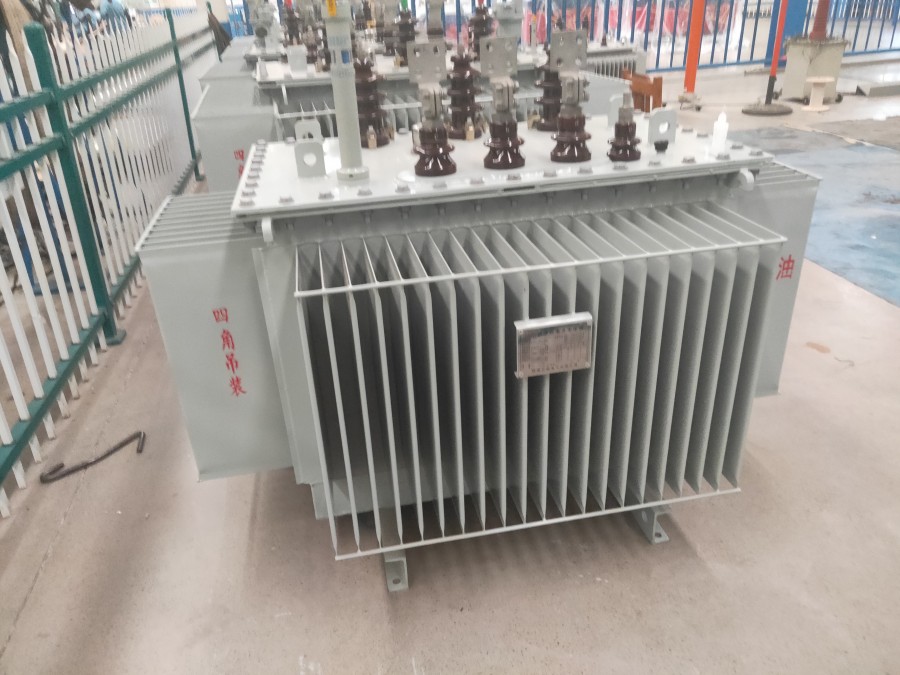
In most projects the 110kv power transformer is a three-phase oil-immersed unit, with common rated capacities in the range of 6.3 MVA to 180 MVA, and voltage regulation provided either by an off-circuit tap changer or an on-load tap changer (OLTC). Two-winding designs are the norm for simple step-down duty, while three-winding designs are used where a station needs to feed two different voltage levels at the same time.
Although dry-type transformers dominate indoor distribution duties, the 110 kV class is almost exclusively oil-immersed because of insulation strength, heat dissipation and cost per MVA.
Understanding the build helps buyers compare quotations fairly, because two units with the same nameplate rating can differ substantially in material content and service life.
Procurement should always be tied to recognised standards. For the 110 kV class the usual references are IEC 60076 and the GB 1094 series, together with national energy efficiency limits that set maximum no-load and load loss values. A supplier that cannot state which efficiency grade it is offering, or that quotes a loss figure below any realistic value, is usually cutting material content somewhere.
Every unit should arrive with the following documentation:
Independent third-party inspection can be arranged for larger contracts and is a normal expectation in international tenders.
Purchase price is only part of the story. Loss evaluation is standard practice in serious procurement, because a 110kv power transformer runs continuously for decades. The two figures to compare are no-load loss, which occurs 24 hours a day, and load loss, which follows the load curve. A unit with a slightly higher price but lower loss can repay the difference within a few years of operation.
After delivery, the unit should be inspected for transport damage, oil level and gas accumulation before energisation. During service, routine checks cover oil level and leakage, silica gel condition, bushing cleanliness, tap changer operation counts, and dissolved gas analysis (DGA) of the oil. Periodic DGA and oil dielectric testing are the most effective early warnings of internal faults, and planned maintenance of the OLTC prevents most forced outages.
Buying directly from the production facility removes intermediary mark-ups and shortens the communication chain on technical clarifications. Working with an established power transformer manufacturer also makes it easier to obtain complete documentation, customised designs and consistent spare parts support.
Runsheng Transformer Co., Ltd. manufactures oil-immersed transformers, dry-type transformers, amorphous alloy transformers, mining and rectifier transformers, custom special transformers, compact substations and high/low-voltage switchgear, and supplies each unit with manuals, inspection reports and test certificates backed by lifelong quality tracking. Units are built to national standards and offered at factory-direct prices, which makes a useful reference point when comparing quotations for your project.
If you are preparing a specification or need a budget figure for a transformer project, contact the team for technical data and pricing: phone +86 13406394988, e-mail runsheng@7813transformer.com, WhatsApp 008613508930968.

Runsheng Transformer Co., Ltd. is a professional manufacturer of power transformers, specializing in oil-immersed transformers (S20, S11, S13), SH15 amorphous alloy transformers, S13 series 10KV 3D magnetic path wound-core transformers, D10 single-phase wound-core transformers, as well as mining transformers, rectifier transformers, surge arrestor transformers, load-tap-changing transformers, and custom-engineered special transformers.
WhatsApp & Wechat

No. 6, Intersection of Mount Huangshan Road and Changjiang Road, Liaocheng High tech Industrial Development Zone, Shandong, China


