
When you have coordination challenges, turn to Runsheng Transformer for help
It's all about making things easy, building partnerships, and providing a point of contact.
An 11kv transformer is a medium-voltage distribution transformer designed with a rated primary (high-voltage) winding of 11 kV. It steps the 11 kV supply coming from a 33 kV or 66 kV primary substation down to the low-voltage level used by end users, most commonly 433 V or 400 V, and occasionally 240 V for single-phase service. Because 11 kV is one of the most widely adopted distribution voltages in Asia, the Middle East, Africa, the UK and parts of Europe, the 11kv transformer has become the standard workhorse of industrial parks, commercial buildings, residential estates, agricultural pumping stations and renewable energy projects.
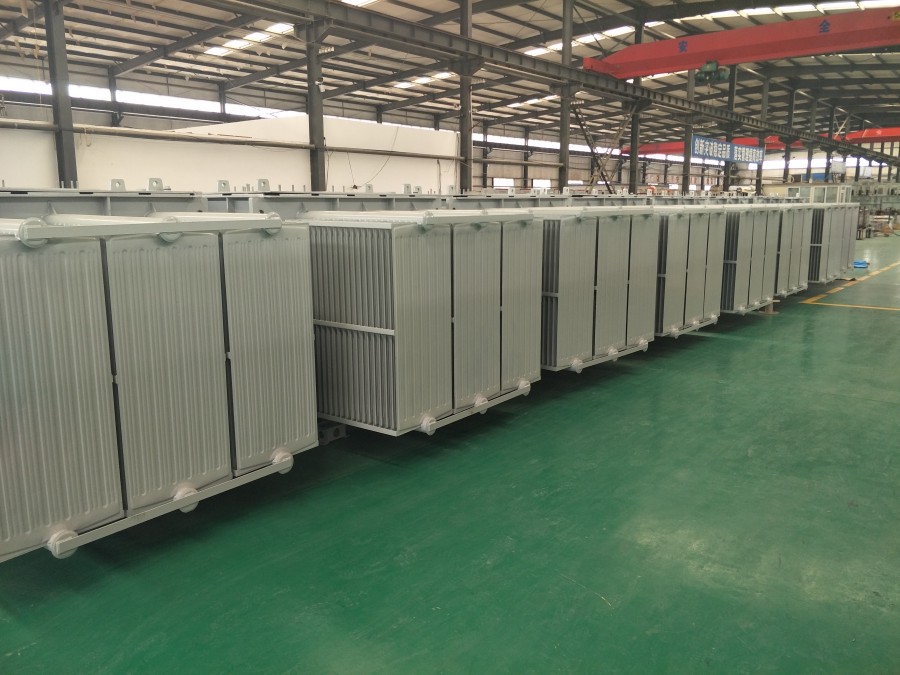
In simple terms, the 11kv transformer is the last voltage conversion step before electricity reaches your meter. Its efficiency, loss level and reliability directly determine how much you pay for electricity over the next 20 to 25 years.
Although the voltage class is the same, 11kv transformers are built in several constructions, each suited to different sites and budgets.
When comparing quotations for an 11kv transformer, price alone is meaningless unless the technical specification is identical. Confirm the following points in writing:
Oversizing wastes capital and increases no-load loss; undersizing causes overheating and premature ageing. Calculate the total connected load, apply a realistic demand factor, allow for future expansion of roughly 20 percent, and consider ambient temperature and altitude, since both affect cooling. For sites above 1000 metres, derating or a larger unit is usually required. If the load contains rectifiers, arc furnaces or large motors, mention it at the enquiry stage so the designer can specify a suitable impedance and harmonic withstand.
As a power transformer manufacturer, Runsheng Transformer Co., Ltd. supplies S11, S13, S20 and S22 oil-immersed transformers, SCB10, SCB13, SCB14 and SCB18 dry-type transformers, SH15 and SCBH15 amorphous alloy transformers, mining and rectifier transformers, plus 35 kV and below preassembled substations, compact substations and high and low voltage switchgear. Buying directly from the production line removes trading-company mark-ups, and every unit ships with manuals, an inspection report, a test certificate and lifelong quality tracking. A typical 11kv transformer order therefore costs noticeably less than the same specification bought through a reseller, while the documentation and warranty remain fully traceable.
Four factors dominate: rated capacity, conductor material and core grade, loss level, and enclosure or accessory requirements such as protection degree, bushings, surge arresters and temperature control. Freight, packing and any third-party inspection add to the landed cost. Because loss level is the variable most often traded away for a lower quote, always compare total owning cost rather than first cost alone.
For specifications, drawings or a quotation on an 11kv transformer, contact Runsheng Transformer Co., Ltd. — phone: +86 13406394988, e-mail: runsheng@7813transformer.com, WhatsApp: 008613508930968. Our engineers will match the right capacity, loss level and construction to your actual load profile and site conditions.

Runsheng Transformer Co., Ltd. is a professional manufacturer of power transformers, specializing in oil-immersed transformers (S20, S11, S13), SH15 amorphous alloy transformers, S13 series 10KV 3D magnetic path wound-core transformers, D10 single-phase wound-core transformers, as well as mining transformers, rectifier transformers, surge arrestor transformers, load-tap-changing transformers, and custom-engineered special transformers.
WhatsApp & Wechat

No. 6, Intersection of Mount Huangshan Road and Changjiang Road, Liaocheng High tech Industrial Development Zone, Shandong, China


