
When you have coordination challenges, turn to Runsheng Transformer for help
It's all about making things easy, building partnerships, and providing a point of contact.
A 33kv transformer sits at the heart of medium-voltage power distribution. It takes 33kV from a transmission or sub-transmission line and steps it down to the 11kV, 6.6kV, 400V or 415V that factories, mines, commercial buildings and renewable energy plants actually use. Because it is the single most important interface between the grid and the load, the choice of a 33kv transformer directly affects reliability, losses, energy bills and the total cost of ownership over the next 20 to 30 years. This overview explains the basics in plain terms and shows how smart buyers evaluate specification, price and supplier before they place an order.
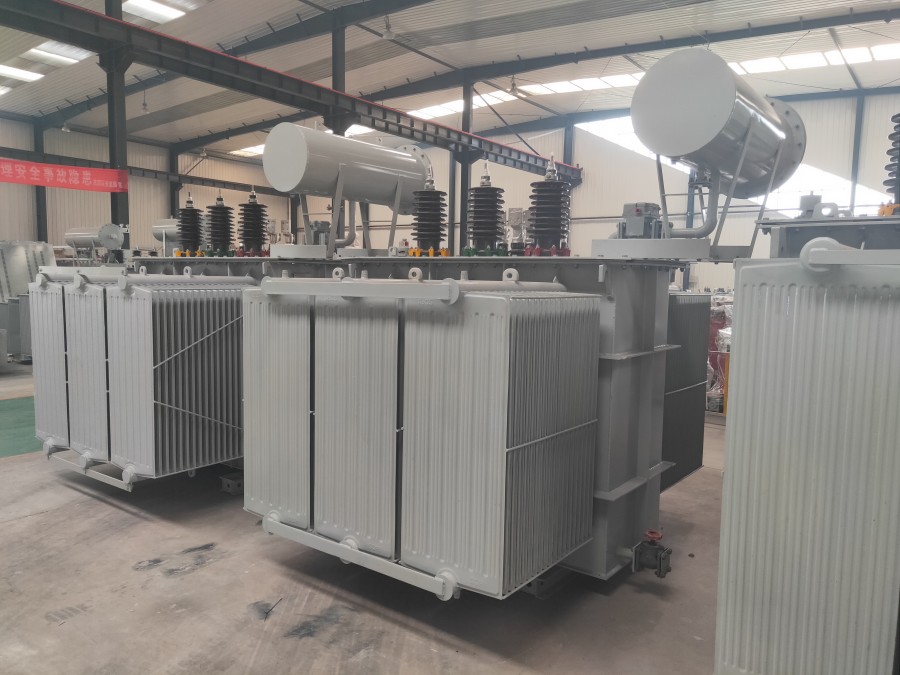
A 33kv transformer is a static electrical device designed with a rated high-voltage winding of 33kV (or a 33kV nominal system voltage class, with taps typically covering ±2 × 2.5% or ±5%). Its job is simple but demanding: convert electrical energy from one voltage level to another through electromagnetic induction, with maximum efficiency and minimum loss. In a typical network, a 33kv transformer works as a distribution transformer at a zone substation, or as a step-up transformer at the outlet of a wind farm, solar park or small hydro station.
Three physical principles govern every unit:
33kV is widely used in the United Kingdom, Australia, Africa, the Middle East, South Asia and many island networks. It offers a practical balance: high enough to carry substantial power over useful distances with acceptable voltage drop, yet low enough that insulation, clearances and switchgear remain affordable. A single 33kv transformer rated 5 MVA can supply an entire industrial park, while a 500 kVA unit can serve a remote pumping station. That scalability is why utilities and project developers keep returning to this voltage class.
33kv transformers appear wherever medium voltage meets real load: utility distribution feeders, cement and steel plants, mining hoists and conveyors, water treatment works, airports, hospitals, commercial complexes, offshore platforms, and increasingly wind farms, solar parks and battery storage stations, where they act as the grid-connection interface. Each application shifts the priority — fire safety for indoor urban sites, corrosion resistance for coastal and mining sites, low no-load loss for renewable energy, and rugged mechanical strength for heavy industry.
A dependable 33kv transformer should be built and tested against recognised standards such as IEC 60076 or equivalent national codes, with routine tests covering turns ratio, winding resistance, insulation resistance, no-load loss, load loss, impedance and dielectric strength, plus separate tests on oil where applicable. Ask for the inspection report, test certificate, nameplate photograph and routine test data before shipment — and confirm the warranty and lifetime traceability terms in writing.
For projects that cannot tolerate downtime, working with an established manufacturer rather than a reseller shortens the supply chain, keeps pricing transparent and makes spare parts and technical support easier to obtain. Runsheng Transformer Co., Ltd. produces oil-immersed, dry-type and amorphous alloy 33kv transformers alongside preassembled substations and high/low voltage switchgear, with units delivered together with manuals, inspection reports, test certificates and lifelong quality tracking. Factory-direct supply keeps the cost structure clear, and a broad standard inventory helps compress delivery times for urgent replacement or expansion work.
Get the specification right, buy from the source, and a 33kv transformer becomes one of the most reliable and cost-effective assets in your electrical network for decades. For technical drawings, quotations or custom designs, contact Runsheng Transformer Co., Ltd. at phone +86 13406394988, e-mail runsheng@7813transformer.com, or WhatsApp 008613508930968.

Runsheng Transformer Co., Ltd. is a professional manufacturer of power transformers, specializing in oil-immersed transformers (S20, S11, S13), SH15 amorphous alloy transformers, S13 series 10KV 3D magnetic path wound-core transformers, D10 single-phase wound-core transformers, as well as mining transformers, rectifier transformers, surge arrestor transformers, load-tap-changing transformers, and custom-engineered special transformers.
WhatsApp & Wechat

No. 6, Intersection of Mount Huangshan Road and Changjiang Road, Liaocheng High tech Industrial Development Zone, Shandong, China


