
When you have coordination challenges, turn to Runsheng Transformer for help
It's all about making things easy, building partnerships, and providing a point of contact.
A 220kv power transformer is a high-capacity, extra-high-voltage unit that connects the 220 kV transmission grid with lower-voltage networks such as 110 kV, 35 kV or 10 kV. In a transmission substation it steps voltage down; at a generating station it steps voltage up, so bulk electricity can travel long distances with limited line losses before being distributed safely to cities, industrial parks and rail networks.
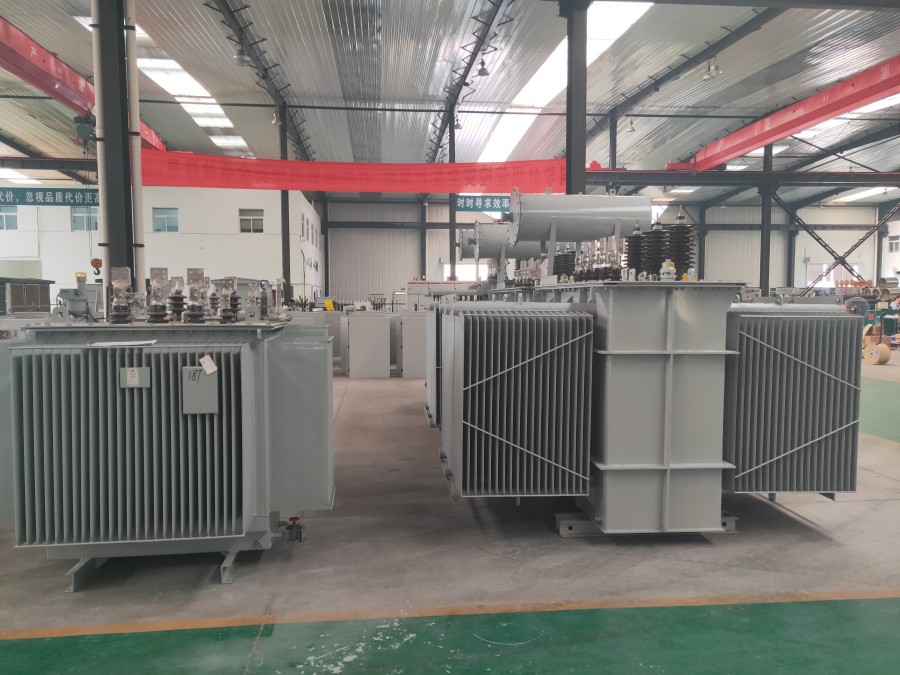
Because 220 kV falls in the extra-high-voltage range, these units are almost always oil-immersed and oil-cooled, and most are fitted with an on-load tap changer (OLTC) so the output voltage stays stable while load fluctuates. Unlike a small distribution transformer, a 220kv power transformer is engineered around three priorities: dielectric strength, thermal capacity and 25 to 30 years of continuous reliability. Every design decision, from core material and winding conductor to oil circulation and bushing type, directly affects the total cost of ownership.
A 220kv power transformer works on the same electromagnetic induction principle as any transformer, but the scale and insulation system are far more demanding. The magnetic circuit is built from laminated grain-oriented silicon steel, usually in a three-phase three-limb or five-limb core. Windings are normally copper, insulated with oil-impregnated paper and cellulose materials, and immersed in high-grade transformer oil that provides both insulation and heat transfer.
Two-winding units are typical for simple step-down duty, while three-winding designs feed 110 kV and 35 kV or 10 kV networks from one transformer. Autotransformers are often chosen for 220/110 kV links because they reduce material and loss. For renewable energy projects, a 220kv power transformer that collects wind or solar output must be specified with wider tapping ranges and higher short-circuit withstand, since inverter-based generation behaves differently from conventional plants.
Price differences between suppliers of the same rating are rarely accidental. Common traps include undersized copper conductors, thinner core laminations, unverified loss figures, refurbished cores sold as new, and test reports copied from another project. Before signing, ask for routine test data (turns ratio, winding resistance, insulation resistance, no-load and load loss, temperature rise, dielectric and impulse tests), type test reports, and third-party inspection such as SGS or BV if your project requires it.
Many utilities also apply a loss capitalization formula that converts no-load and load losses into money. A unit quoted 10 percent cheaper but with higher guaranteed losses can cost more within five years of operation. Always compare total evaluated cost, not invoice price.
When you buy through layers of agents, part of your budget pays commission rather than copper, oil and testing. Buying factory-direct keeps the margin in the product, shortens the technical communication chain for customization, speeds up spare parts supply and lets your engineers witness the factory acceptance test. As a power transformer manufacturer based in China, Runsheng Transformer Co., Ltd. supplies S22, S20, S11 and S13 oil-immersed transformers, SCB13, SCB14 and SCB18 dry-type transformers, SH15 amorphous alloy transformers, mining and rectifier transformers, 30 to 6300 kVA distribution transformers, plus European-style and American-style compact substations and high and low voltage switchgear for 35 kV and below projects, all tested to national standards and delivered with manuals, inspection reports, test certificates and lifelong quality tracking.
After delivery, a 220kv power transformer should be inspected for oil leaks, nitrogen pressure and impact recorder data before unloading. During installation, oil dielectric strength, moisture content and chromatographic analysis should be checked, bushings torqued to specification, and protection relays calibrated. Periodic dissolved gas analysis, oil testing and infrared scanning of connections will catch most developing faults early and protect your investment for decades.
Send us your rated capacity, voltage ratio, impedance, cooling requirement and destination port, and we will return a technical proposal with a transparent price. Phone: +86 13406394988, e-mail: runsheng@7813transformer.com, WhatsApp: 008613508930968.

Runsheng Transformer Co., Ltd. is a professional manufacturer of power transformers, specializing in oil-immersed transformers (S20, S11, S13), SH15 amorphous alloy transformers, S13 series 10KV 3D magnetic path wound-core transformers, D10 single-phase wound-core transformers, as well as mining transformers, rectifier transformers, surge arrestor transformers, load-tap-changing transformers, and custom-engineered special transformers.
WhatsApp & Wechat

No. 6, Intersection of Mount Huangshan Road and Changjiang Road, Liaocheng High tech Industrial Development Zone, Shandong, China


