
When you have coordination challenges, turn to Runsheng Transformer for help
It's all about making things easy, building partnerships, and providing a point of contact.
If you are specifying a medium-voltage distribution project, the 33kv transformer you select will shape your losses, your footprint and your total cost of ownership for the next twenty to thirty years. This overview explains what a 33kv transformer actually is, which designs are available, the parameters that genuinely matter at the procurement stage, and how to buy at factory-direct prices without giving up quality control.
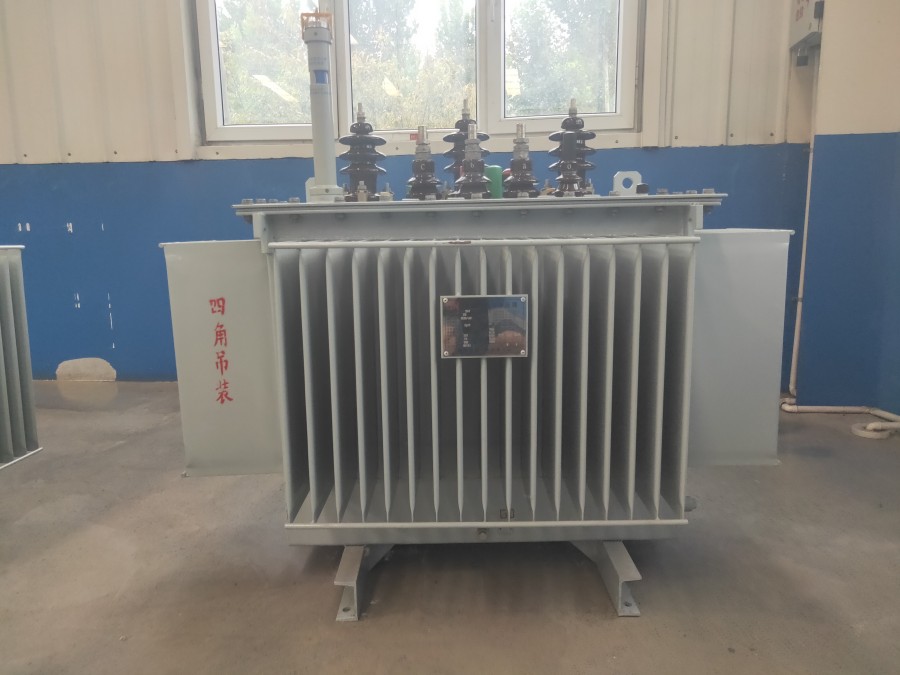
A 33kv transformer is a power or distribution transformer with a nominal system voltage of 33 kV on at least one winding. In most networks it operates as a step-down unit inside a 33/11 kV or 33/0.4 kV substation, converting the 33 kV sub-transmission level down to the 11 kV, 6.6 kV or 400 V level that local feeders and industrial loads actually use. It can equally be configured as a step-up unit for generator or renewable-energy applications.
Rated capacities in this voltage class usually run from 30 kVA up to 6300 kVA, in single-phase or three-phase construction, at 50 Hz or 60 Hz. Units are typically designed and type-tested against IEC 60076, GB/T 1094 or IEEE C57.12.00, depending on the destination market and the utility specification attached to the project.
Choose an oil-immersed 33kv transformer when the unit will be installed outdoors or in a dedicated transformer bay, when the highest possible capacity and lowest cost per kVA are priorities, and when you can manage oil containment and periodic oil testing. Choose a dry-type 33kv transformer when the installation is indoors, when fire safety and environmental regulations rule out flammable liquid, or when maintenance access is difficult. Many projects mix both: dry-type indoors for the plant room, oil-immersed outdoors for the main incoming substation.
The price of a 33kv transformer is driven mainly by copper, electrical steel and the labour content of winding and tank fabrication — not by the sales channel. When you buy through importers and trading layers, you pay for inventory holding, administration and margin that add nothing to the equipment itself. Buying directly from the manufacturer removes those layers and usually shortens the delivery route as well, because the factory controls the winding schedule rather than waiting on a distributor order.
What matters just as much is documentation. A serious manufacturer supplies the operation manual, routine inspection report, type test certificate and a lifelong quality tracking record with every unit, so that the specification you signed off is the specification that arrives on site.
Runsheng Transformer Co., Ltd. manufactures oil-immersed, dry-type and amorphous alloy transformers as well as 35 kV and below preassembled substation equipment, including European-style and American-style compact substations, high-voltage and low-voltage switchgear and custom special transformers. Every unit is shipped with a manual, inspection report, test certificate and lifelong quality tracking.
A precise enquiry gets you a precise price. When you contact a supplier, include the rated capacity, voltage ratio, vector group, tap range, cooling method, impedance requirement, installation environment and the standard you are working to. With those details, a factory can respond with a compliant design and a firm price rather than a broad estimate. If you are comparing budgets, remember that the cheapest first cost is rarely the cheapest lifetime cost: no-load loss runs every hour of every day for decades.
For pricing, drawings or technical advice on a 33kv transformer, contact Runsheng Transformer Co., Ltd. directly: phone +86 13406394988, e-mail runsheng@7813transformer.com, or WhatsApp 008613508930968.

Runsheng Transformer Co., Ltd. is a professional manufacturer of power transformers, specializing in oil-immersed transformers (S20, S11, S13), SH15 amorphous alloy transformers, S13 series 10KV 3D magnetic path wound-core transformers, D10 single-phase wound-core transformers, as well as mining transformers, rectifier transformers, surge arrestor transformers, load-tap-changing transformers, and custom-engineered special transformers.
WhatsApp & Wechat

No. 6, Intersection of Mount Huangshan Road and Changjiang Road, Liaocheng High tech Industrial Development Zone, Shandong, China


