
When you have coordination challenges, turn to Runsheng Transformer for help
It's all about making things easy, building partnerships, and providing a point of contact.
A 66kv transformer is a power transformer designed to operate on a 66 kV system, the voltage level that commonly serves as the subtransmission link between a high-voltage transmission grid and local distribution networks. Its job is straightforward but demanding: step 66 kV down to 35 kV, 10 kV, 6 kV or 0.4 kV for industrial and municipal loads, or step generation voltage up to 66 kV for grid connection. Because it sits in the middle of the electrical chain, a 66kv transformer must deliver high insulation reliability, strong short-circuit withstand capability, low losses and stable temperature rise under continuous duty.
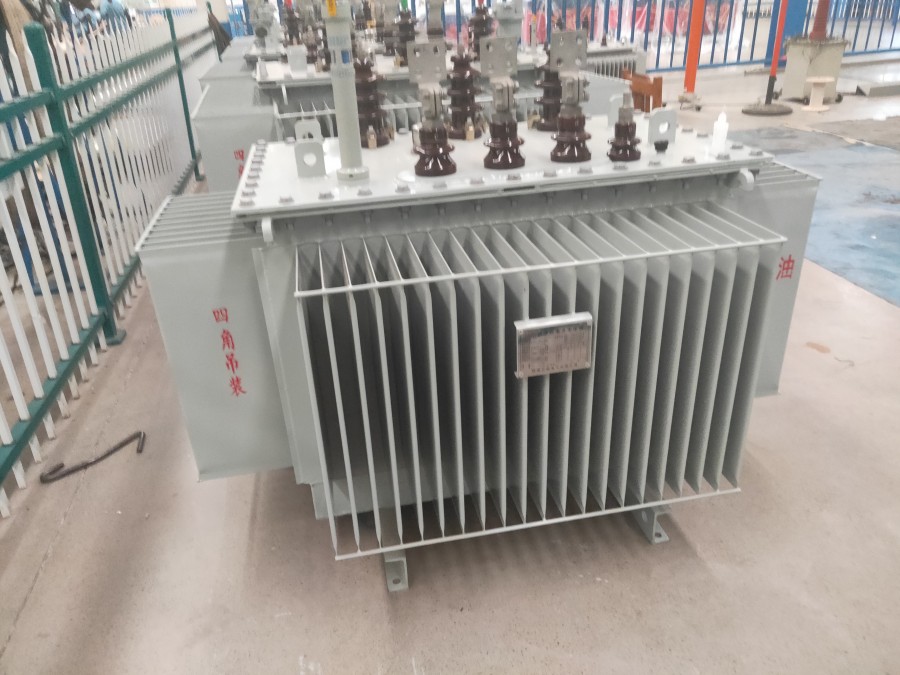
The 66 kV class is widely used in regional power grids, industrial parks, mining areas, railway and infrastructure projects, and renewable energy farms. It offers a practical balance: high enough to transmit power economically over medium distances, yet lower in cost and footprint than 110 kV or 220 kV equipment. For buyers, that means the 66kv transformer is often the single most influential item in a substation budget, and also the one where specification mistakes are most expensive to correct later.
Most projects meet the 66 kV requirement with one of the following families:
Specifications decide both the price and the service life of a 66kv transformer. A complete technical specification should state:
Confirming these items in writing before production avoids the most common and most expensive procurement problem: a unit that is technically sound but wrong for the application.
Two units with identical nameplate data can differ enormously in material quality, workmanship and after-sales support. Practical checks include:
As a reference point, Runsheng Transformer Co., Ltd. manufactures S22, S20, S11 and S13 oil-immersed transformers, SCB13, SCB14 and SCB18 dry-type transformers, SH15 amorphous alloy transformers, 13 series 10 kV three-dimensional magnetic path wound core transformers, and a broad range of special transformers, together with 35 kV and below preassembled substations, compact substations and high/low-voltage switchgear. Each unit is delivered with a manual, inspection report and test certificate, which makes comparison between offers far more objective.
Correct installation protects the investment. The foundation must be level and load-bearing, oil-immersed units need adequate oil level and silica gel condition checks, dry-type units need clean, well-ventilated enclosures, and the tap changer position must be recorded before energization. During operation, routine monitoring of oil temperature, winding temperature, oil level, partial discharge and gas-in-oil analysis helps detect developing faults early. For units with an on-load tap changer, periodic inspection of the diverter switch and contact wear is strongly recommended.
How much does a 66kv transformer cost? Price depends on capacity, voltage ratio, cooling method, loss level, tap changer type and whether the unit is standard or custom-designed. Factory-direct supply removes dealer margins, but the cheapest quotation is rarely the lowest total cost if losses or reliability are compromised.
How long is delivery? Standard configurations generally ship faster than custom designs, because special impedance, vector group or enclosure requirements add engineering and testing time.
Can a 66kv transformer be customized? Yes. Special transformers can be engineered for non-standard ratios, high ambient temperatures, high altitude, heavy harmonic loads or restricted installation space.
A 66kv transformer is a long-life asset that determines the reliability and efficiency of an entire substation. Define the electrical parameters clearly, verify the manufacturer's testing and documentation practices, and compare prices on a like-for-like basis. That approach delivers genuine savings without compromising quality.
For technical consultation or a quotation, contact Runsheng Transformer Co., Ltd. — phone: +86 13406394988, e-mail: runsheng@7813transformer.com, WhatsApp: 008613508930968.

Runsheng Transformer Co., Ltd. is a professional manufacturer of power transformers, specializing in oil-immersed transformers (S20, S11, S13), SH15 amorphous alloy transformers, S13 series 10KV 3D magnetic path wound-core transformers, D10 single-phase wound-core transformers, as well as mining transformers, rectifier transformers, surge arrestor transformers, load-tap-changing transformers, and custom-engineered special transformers.
WhatsApp & Wechat

No. 6, Intersection of Mount Huangshan Road and Changjiang Road, Liaocheng High tech Industrial Development Zone, Shandong, China


