
When you have coordination challenges, turn to Runsheng Transformer for help
It's all about making things easy, building partnerships, and providing a point of contact.
A 110kv power transformer is a transmission-class power transformer built to operate in a 110 kV (110,000 volt) power system. It normally sits between the high-voltage transmission grid and the regional distribution network, stepping voltage down from 110 kV to 35 kV, 10 kV or 6 kV so electricity can be delivered to industrial parks, urban substations, railways, data centers, mines and renewable energy plants. Unlike a small pole-mounted distribution transformer, a 110kv power transformer is designed for far larger capacity, commonly in the range of 10 MVA to 180 MVA, and is manufactured and tested against IEC 60076 and GB 1094 series standards.
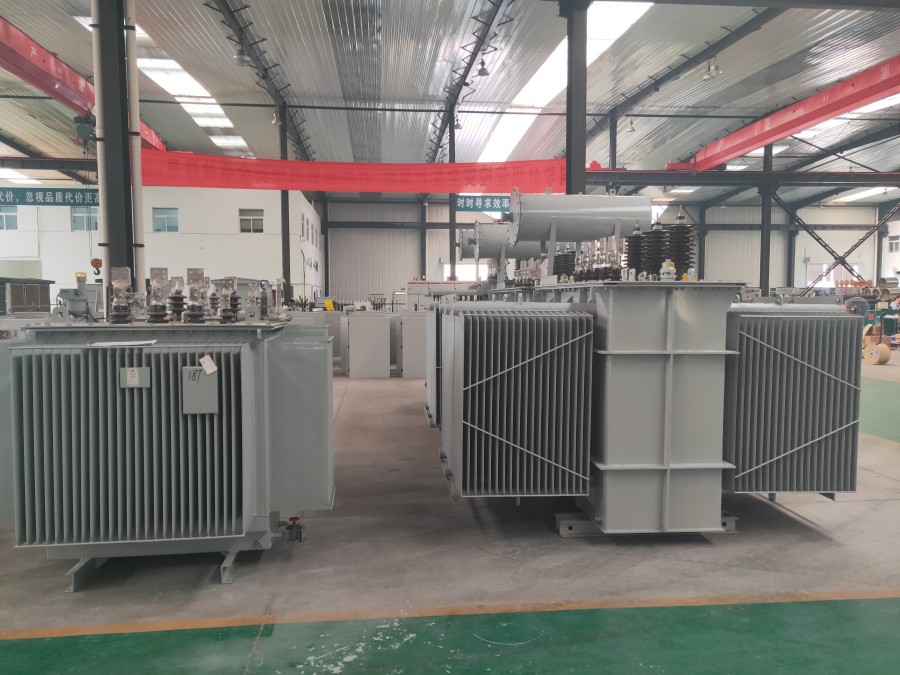
Because it is a critical node in the grid, the 110kv power transformer must combine high efficiency, low loss, strong short-circuit withstand capability and long service life. Getting the specification right at the procurement stage is the single most effective way to control lifetime cost.
Like all power transformers, the 110kv power transformer works on electromagnetic induction: an alternating current in the primary (high-voltage) winding creates a magnetic flux in the laminated core, and that flux induces a voltage in the secondary (low-voltage) winding. The ratio of turns determines the voltage ratio. The core and windings are the heart of the machine, while the surrounding structure keeps them cool, insulated and protected.
Although oil-immersed designs dominate this voltage class, buyers should still understand the main variants so quotations can be compared on equal terms.
Dry-type transformers such as the SCB10, SCB13, SCB14 and SCB18 series are widely used at distribution voltages, but at 110 kV the oil-immersed design remains the mainstream solution because of its superior insulation strength and heat dissipation.
An inaccurate parameter is one of the most expensive mistakes in transformer procurement. Always confirm the following on the datasheet and, where possible, on the type test report.
The 110kv power transformer is a workhorse of the modern grid. Typical applications include utility step-down substations, large industrial parks, steel and chemical plants, railway traction supply, metro systems, data centers, and renewable energy transformer projects where wind or solar farms connect to a 110 kV collection system. Mining transformers, rectifier transformers and custom special transformers are also built on similar core and winding technology, but with application-specific requirements.
Because a 110kv power transformer is a long-lead, high-value asset, the supplier matters as much as the specification.
For example, Runsheng Transformer Co., Ltd. is a power transformer manufacturer and China transformer supplier producing oil-immersed transformers (S11, S13, S20 and S22 series), dry-type transformers (SCB10, SCB13, SCB14 and SCB18 series), amorphous alloy transformers (SH15 and SCBH15), mining transformers, rectifier transformers, load tap changing transformers, distribution transformers and custom special transformers, together with 35KV and below preassembled substation equipment such as European-style and American-style compact substations and high and low voltage switchgear.
The cost of a 110kv power transformer is driven mainly by the price of copper and grain-oriented silicon steel, the winding and core design, the cooling arrangement, the brand of tap changer and bushings, the amount of testing required, and the delivery schedule. That is why two look-alike quotations can differ significantly.
Buying directly from a manufacturer removes distributor markups, shortens the communication chain on technical deviations, and gives the buyer a clearer view of what is actually being supplied. When comparing offers, never compare the total price alone: compare loss values, impedance, tap range, cooling class and the scope of accessories, otherwise a cheap quote may turn into an expensive lifetime decision.
A compliant 110kv power transformer should be accompanied by a complete documentation package: installation and operation manuals, inspection reports, routine test certificates, oil test reports and a quality tracking record. Ask for the loss measurement, impedance, temperature rise and insulation test data before shipment, and confirm that the manufacturing standards quoted in the contract match the nameplate.
Understanding the basics of the 110kv power transformer — its principle, construction, types, key parameters and price drivers — puts you in a much stronger position at the negotiating table. Focus on total lifetime cost, verify the test documentation, and work with a manufacturer that can support you through installation and decades of operation.
Contact: phone +86 13406394988 / e-mail runsheng@7813transformer.com / WhatsApp 008613508930968.

Runsheng Transformer Co., Ltd. is a professional manufacturer of power transformers, specializing in oil-immersed transformers (S20, S11, S13), SH15 amorphous alloy transformers, S13 series 10KV 3D magnetic path wound-core transformers, D10 single-phase wound-core transformers, as well as mining transformers, rectifier transformers, surge arrestor transformers, load-tap-changing transformers, and custom-engineered special transformers.
WhatsApp & Wechat

No. 6, Intersection of Mount Huangshan Road and Changjiang Road, Liaocheng High tech Industrial Development Zone, Shandong, China


