
When you have coordination challenges, turn to Runsheng Transformer for help
It's all about making things easy, building partnerships, and providing a point of contact.
An 11kv transformer is a medium-voltage power transformer built to operate on an 11,000-volt (11 kV) distribution network. Its job is straightforward but critical: take the 11 kV primary voltage and step it down to the low voltages that factories, commercial buildings and residential communities actually use, most commonly 400 V or 415 V three-phase and 230 V single-phase. In renewable energy and heavy industrial projects, the same equipment is often used in reverse, stepping low voltage up to 11 kV so that generated power can be fed into the grid. Because 11 kV is one of the most widely adopted medium-voltage levels across Asia, Africa, the Middle East and parts of Europe, the 11kv transformer sits at the heart of nearly every distribution substation.
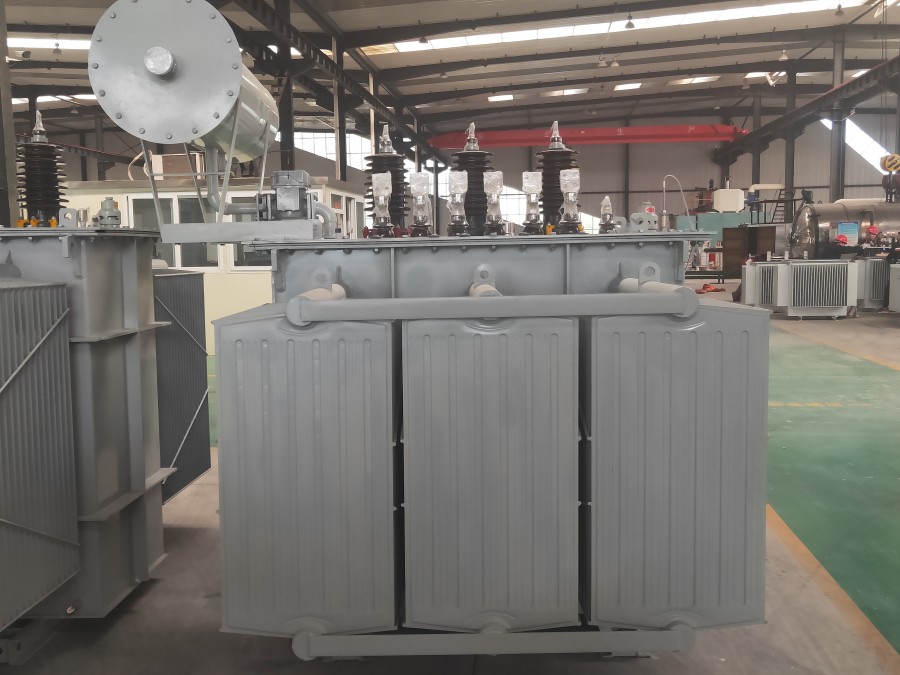
Voltage level selection is always a trade-off between transmission losses and equipment cost. Too low, and line losses and voltage drop become unacceptable over even modest distances. Too high, and insulation, switchgear and clearance requirements push costs up sharply. The 11 kV level hits a practical sweet spot: it carries power efficiently over several kilometres, it matches the insulation and switching technology available in economical high and low voltage switchgear, and it integrates cleanly with preassembled substation and compact substation designs. That is why utilities, industrial parks and commercial developments so often standardise on an 11kv distribution transformer as their interface between the medium-voltage network and the end user.
Industrial parks and manufacturing plants, mining transformer installations, commercial and residential developments, hospitals, water treatment plants, and renewable energy transformer projects including solar and wind farms all rely on the 11 kV level. In packaged solutions, the 11kv transformer is normally combined with high and low voltage switchgear inside a European-style or American-style compact substation, giving a compact, factory-tested unit that reduces on-site civil works and commissioning time.
Buyers often ask why quotations for the same nominal rating can vary so widely. The main reasons are capacity and voltage ratio; whether conductors are copper or aluminium; the loss grade and efficiency level; the type of core material; whether a load tap changing transformer is required; enclosure and cooling specification; and finally the number of intermediaries between the factory and the site. Two transformers with identical nameplate capacity can differ substantially in copper content and core quality, which is exactly why comparing on price alone is a common procurement mistake. Buying direct from a manufacturer removes distributor mark-up, and a factory that holds comprehensive inventory can usually shorten delivery compared with made-to-order channels.
Start with documentation: national standard compliance, type test and routine test reports, a manual, a certificate of inspection and a clear quality tracking commitment. Ask whether special designs are supported, since many projects need custom-designed special transformers or rectifier transformer units rather than catalogue items. It also helps to work with a supplier that can provide the whole package, including preassembled substation equipment, so that protection coordination and interface responsibility are not split between vendors.
As a power transformer manufacturer, Runsheng Transformer Co., Ltd. produces S22, S20, S11 and S13 oil-immersed transformers, SCB13, SCB14 and SCB18 dry-type transformers, SH15 amorphous alloy transformers, mining and rectifier transformers, plus 35KV and below preassembled substation equipment and high and low voltage switchgear. Units ship with manuals, inspection reports and test certificates, supported by lifelong quality tracking.
Correct installation matters as much as the equipment itself. Confirm adequate ventilation or clearance for the chosen cooling method, fit surge protection appropriate to the exposure level, verify earthing and protection relay settings, and check that the vector group and tap position match the network. For oil-immersed units, routine oil sampling and dielectric testing reveal developing faults long before failure; dry-type units instead need periodic cleaning of windings and checks of temperature sensors and ventilation. Keeping a simple log of load current and temperature will tell you early if a transformer is being run beyond its design duty.
For technical selection support or a direct factory quotation on an 11kv transformer, contact Runsheng Transformer Co., Ltd. by phone at +86 13406394988, e-mail at runsheng@7813transformer.com, or WhatsApp at 008613508930968.

Runsheng Transformer Co., Ltd. is a professional manufacturer of power transformers, specializing in oil-immersed transformers (S20, S11, S13), SH15 amorphous alloy transformers, S13 series 10KV 3D magnetic path wound-core transformers, D10 single-phase wound-core transformers, as well as mining transformers, rectifier transformers, surge arrestor transformers, load-tap-changing transformers, and custom-engineered special transformers.
WhatsApp & Wechat

No. 6, Intersection of Mount Huangshan Road and Changjiang Road, Liaocheng High tech Industrial Development Zone, Shandong, China


