
When you have coordination challenges, turn to Runsheng Transformer for help
It's all about making things easy, building partnerships, and providing a point of contact.
A 110kv power transformer is a high-voltage power transformer designed to operate on a 110 kV transmission-level system. Its core job is simple but critical: it steps voltage down (or up) between the 110 kV transmission grid and lower distribution levels such as 35 kV, 10 kV or 6 kV, so that bulk electricity can travel long distances efficiently and then be delivered safely to factories, cities and industrial parks.
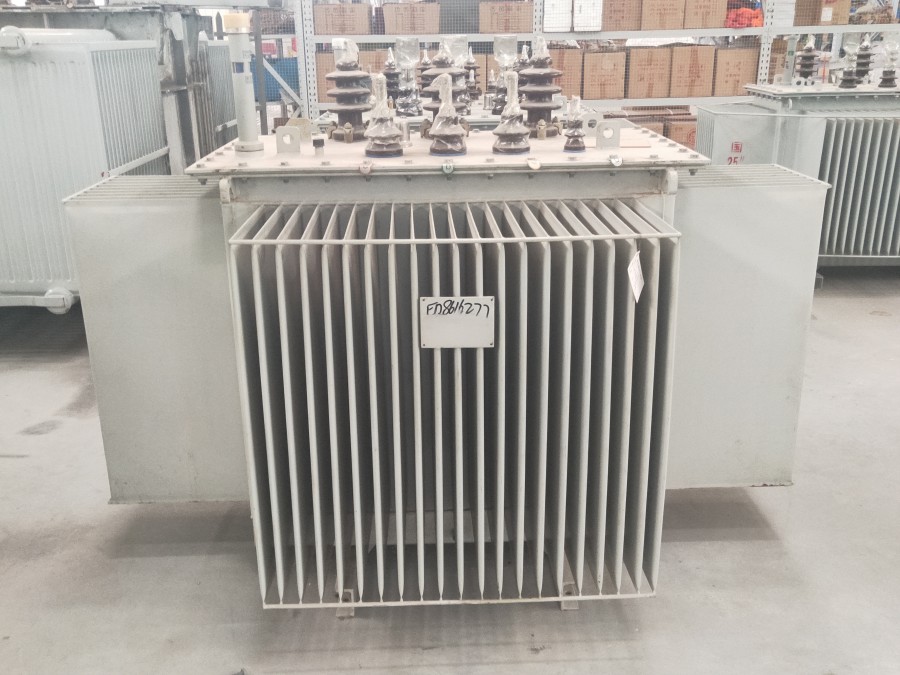
Because it sits at the boundary between transmission and distribution, a 110kv power transformer is usually a large, oil-immersed, three-phase unit rated from a few thousand kVA up to 240 MVA, often equipped with an on-load tap changer (OLTC) to keep secondary voltage stable as grid load swings through the day. It is one of the most expensive single assets in a substation, which is why procurement decisions deserve careful technical and commercial review.
For 110 kV class duty, oil-immersed transformers dominate because of their superior insulation strength, heat dissipation and cost per MVA. Dry-type units are generally used at lower voltage levels indoors, but they remain relevant where fire safety and oil-free operation are mandatory.
Specifications must always be written into the technical agreement, not left to assumption. The following parameters drive both performance and price:
Two identical-looking units can differ in price by tens of percent. The gap usually comes from these factors:
When you buy from a transformer manufacturer rather than a reseller, you get three advantages that directly affect your budget and schedule: direct technical communication with the engineers who build the unit, transparent material and loss-level choices instead of a fixed catalogue offer, and no intermediate markup. This is especially valuable for 110 kV class projects where customization of impedance, tapping range and cooling is common.
Runsheng Transformer Co., Ltd. is a power transformer manufacturer producing oil-immersed transformers, dry-type transformers and amorphous alloy transformers, along with 35 kV and below preassembled substation equipment, compact substations, and high/low-voltage switchgear. Every unit is supplied with manuals, inspection reports and test certificates, backed by lifelong quality tracking, which keeps procurement teams informed from order to commissioning.
A 110kv power transformer is a long-life asset that will operate for decades, so the smartest buying strategy combines accurate technical specification with factory-direct sourcing. Get the parameters right, demand full test documentation, and evaluate lifetime losses alongside the purchase price — that is how experienced buyers keep both capital and operating costs under control.
For technical consultation, quotations or custom solutions, contact Runsheng Transformer Co., Ltd. — Phone/WhatsApp: +86 13406394988 / 008613508930968, E-mail: runsheng@7813transformer.com.

Runsheng Transformer Co., Ltd. is a professional manufacturer of power transformers, specializing in oil-immersed transformers (S20, S11, S13), SH15 amorphous alloy transformers, S13 series 10KV 3D magnetic path wound-core transformers, D10 single-phase wound-core transformers, as well as mining transformers, rectifier transformers, surge arrestor transformers, load-tap-changing transformers, and custom-engineered special transformers.
WhatsApp & Wechat

No. 6, Intersection of Mount Huangshan Road and Changjiang Road, Liaocheng High tech Industrial Development Zone, Shandong, China


