
When you have coordination challenges, turn to Runsheng Transformer for help
It's all about making things easy, building partnerships, and providing a point of contact.
A two winding transformer is the classic and most widely used transformer configuration in power systems: one primary winding connected to the supply side and one secondary winding feeding the load, both wound around a shared magnetic core. There is no electrical connection between the two windings, so energy is transferred purely by electromagnetic induction. This galvanic separation is the reason the two winding transformer can step 10 kV or 35 kV down to 0.4 kV while keeping the secondary side safely isolated from the high voltage network.
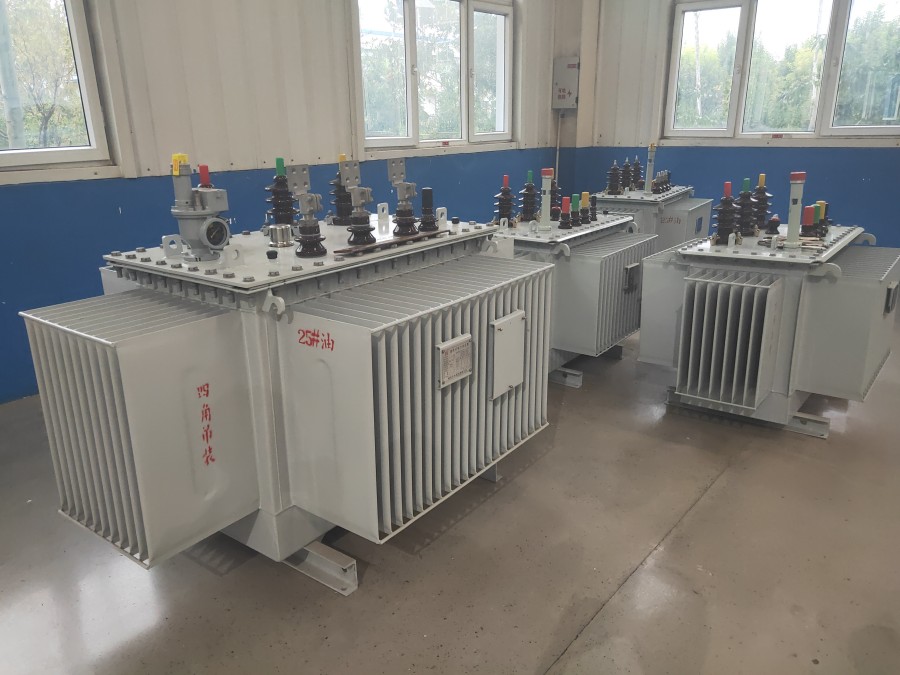
Compared with three-winding units or autotransformers, the two winding transformer is simpler, cheaper to build, more efficient and easier to protect. That is why it dominates distribution networks, industrial plants and commercial buildings.
Performance and price both come down to a handful of materials and processes. Knowing them makes it much easier to judge whether a quotation is reasonable.
A serious supplier will put all of the following on the nameplate and in the test report. If a quotation is vague here, that is the first warning sign.
Buyers often compare only the purchase price, yet the loss difference between an entry-level S11 and a high-efficiency S22 or an amorphous SH15 unit can repay the price gap within a few years on a heavily loaded distribution point. Conversely, on a lightly loaded rural feeder, a low no-load loss amorphous unit saves more than an expensive low load loss design. Run the numbers on your actual load curve instead of buying blindly on price or on the highest specification.
The practical answer is to buy factory direct and ask for the loss data, winding material and test reports in writing. Manufacturers such as Runsheng Transformer Co., Ltd. supply oil-immersed and dry-type units with full documentation and lifelong quality tracking, which removes the guesswork from that comparison.
A short factory audit or a video walk-through of the winding, core stacking and test bay tells you more than any catalogue.
Oil-immersed or dry-type? Choose dry-type where fire safety and indoor installation rule; choose oil-immersed for outdoor distribution and better cost per kVA.
How long does delivery take? Standard ratings from stock move in days; custom special transformers need engineering and production time.
Can a two winding transformer be customised? Yes, voltage ratio, impedance, tapping range, enclosure and vector group are all adjustable at the design stage.
A two winding transformer is a mature product, so the difference between a good and a bad purchase is rarely the technology, it is the specification discipline and the supply chain behind it. Compare loss data, verify winding material and test reports, then buy from the source. Runsheng Transformer Co., Ltd. builds S11, S13, S20 and S22 oil-immersed units, SCB10, SCB13, SCB14 and SCB18 dry-type units, SH15 amorphous alloy models and custom special transformers at factory-direct prices, with all products compliant with national standards and delivered with manuals, inspection reports and test certificates.
Contact for quotations and technical selection: phone +86 13406394988, e-mail runsheng@7813transformer.com, WhatsApp 008613508930968.

Runsheng Transformer Co., Ltd. is a professional manufacturer of power transformers, specializing in oil-immersed transformers (S20, S11, S13), SH15 amorphous alloy transformers, S13 series 10KV 3D magnetic path wound-core transformers, D10 single-phase wound-core transformers, as well as mining transformers, rectifier transformers, surge arrestor transformers, load-tap-changing transformers, and custom-engineered special transformers.
WhatsApp & Wechat

No. 6, Intersection of Mount Huangshan Road and Changjiang Road, Liaocheng High tech Industrial Development Zone, Shandong, China


