
When you have coordination challenges, turn to Runsheng Transformer for help
It's all about making things easy, building partnerships, and providing a point of contact.
A three winding transformer is a single magnetic circuit that carries three separate windings — normally high voltage, medium voltage and low voltage — wound on one core and housed in one tank or one enclosure. Instead of installing two independent two-winding transformers to feed two distribution voltage levels, one three winding transformer does the whole job. That single design decision cascades into real savings: one foundation, one HV bay, one set of protection relays, one cooling system to maintain, and a far smaller substation footprint.
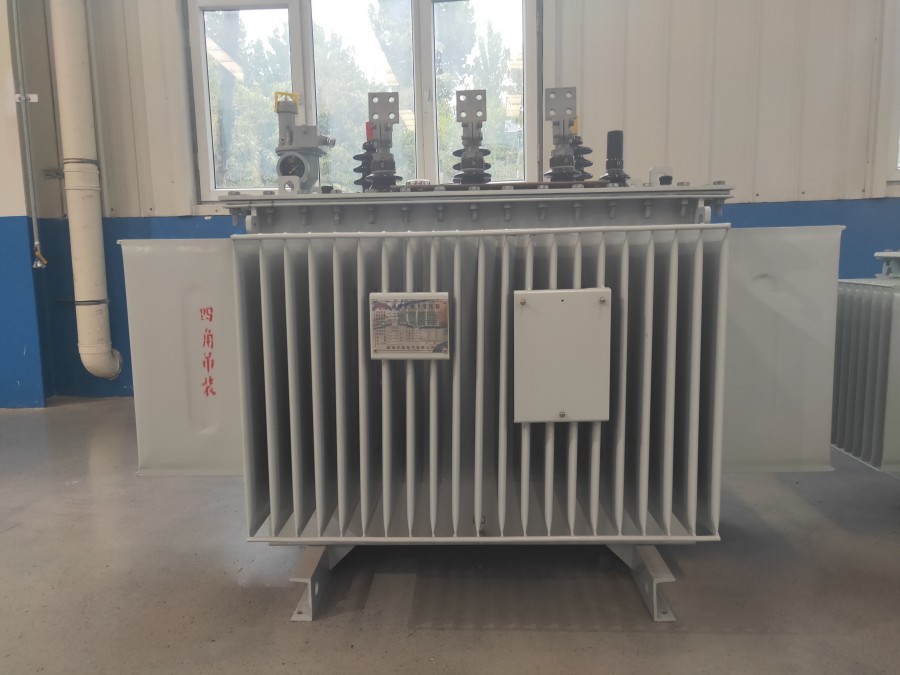
The concept is simple; the engineering is not. Because all three windings share a common core, their magnetic fields interact. Load on the medium voltage winding changes the voltage seen by the low voltage winding, and vice versa. Understanding how that interaction behaves under load — and under fault — is what separates a well-specified unit from an expensive headache five years down the line.
Unlike a two-winding unit, a three winding transformer is defined by three short-circuit impedances, measured pairwise between the windings: HV–MV, HV–LV and MV–LV. These three values are not independent of each other, and the designer must balance them so that voltage regulation on both secondary windings stays acceptable across the full load range. A common procurement mistake is dictating an impedance for one pair without checking what it does to the other two.
Both constructions exist in three winding form, and the choice usually comes down to location rather than price.
For renewable energy projects, an oil-immersed unit with a delta tertiary is frequently used to step down from a 35 kV collection system to two separate auxiliary and distribution voltages. Runsheng Transformer Co., Ltd. builds three winding units alongside its standard oil-immersed and cast-resin ranges, including S11, S13, S20 and S22 oil-immersed transformers, SCB10, SCB13, SCB14 and SCB18 dry-type transformers, and SH15 and SCBH15 amorphous alloy transformers.
Every parameter on a three winding transformer datasheet drives cost, so it pays to know which ones actually matter:
Routine tests should include winding resistance, ratio, no-load loss and current, load loss and impedance, applied and induced voltage dielectric tests, and oil tests for liquid-filled units. Impulse tests, temperature rise tests and short-circuit withstand are type tests — always ask for the reports rather than take them on trust.
1. Undersizing the medium voltage winding. Buyers often size the HV winding correctly and then trim the MV rating to save money. Two years later, extra feeders appear and the winding runs hot for the rest of its life.
2. Getting the vector group or impedance wrong. A unit that cannot be paralleled with its neighbour, or that produces unacceptable voltage drop on one secondary, is scrap metal with a nameplate.
3. Buying on first cost alone. Losses are billed every hour for thirty years. Evaluating total owning cost — purchase price plus capitalised no-load and load losses — regularly shows that a slightly dearer, lower-loss unit wins.
Three winding transformers are rarely off-the-shelf catalogue items, so the specification conversation matters as much as the price. Buying direct from the manufacturer removes the trading layers that add margin without adding engineering value, and it puts you in contact with the people who actually wind the coils. As a transformer manufacturer with comprehensive inventory and factory-direct pricing, Runsheng Transformer Co., Ltd. supplies every unit with a manual, inspection report and test certificate, backed by lifelong quality tracking — so a query about a serial number ten years from now still gets a real answer.
Get those seven points right and the rest of the project usually runs smoothly. Get them wrong and no discount will rescue the schedule.
For specifications, drawings or a factory-direct quotation on a three winding transformer or any custom special transformer, contact us at phone: +86 13406394988, e-mail: runsheng@7813transformer.com, or WhatsApp: 008613508930968.

Runsheng Transformer Co., Ltd. is a professional manufacturer of power transformers, specializing in oil-immersed transformers (S20, S11, S13), SH15 amorphous alloy transformers, S13 series 10KV 3D magnetic path wound-core transformers, D10 single-phase wound-core transformers, as well as mining transformers, rectifier transformers, surge arrestor transformers, load-tap-changing transformers, and custom-engineered special transformers.
WhatsApp & Wechat

No. 6, Intersection of Mount Huangshan Road and Changjiang Road, Liaocheng High tech Industrial Development Zone, Shandong, China


