
When you have coordination challenges, turn to Runsheng Transformer for help
It's all about making things easy, building partnerships, and providing a point of contact.
A three winding transformer is a power transformer with one primary winding and two secondary windings wound on the same magnetic core. Instead of using two separate two-winding transformers to supply two different voltage levels, one three winding transformer handles three voltage systems in a single unit. This is common in substations where, for example, power enters at 110 kV or 35 kV and must be distributed at two lower levels such as 10 kV and 0.4 kV. By combining duties in one tank or one enclosure, the design saves footprint, reduces total no-load loss, cuts associated switchgear and busbar costs, and simplifies site layout.
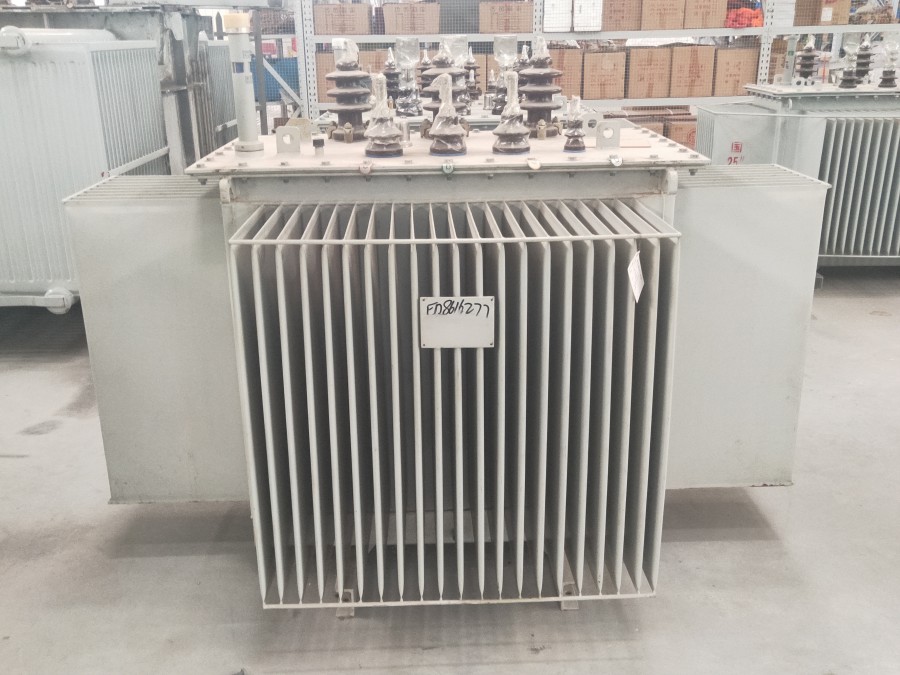
The keyword phrase is a complete technical term: a three winding transformer is not simply a transformer with extra cable terminations. The three windings are magnetically coupled, and their capacities, impedances, and connection groups must be engineered together. That is why the procurement process should focus on the design sheet, test report, and manufacturer capability rather than price alone.
Most three winding transformers use a core-type construction with the windings arranged concentrically. A typical arrangement places the low-voltage winding nearest the core, the medium-voltage winding in the middle, and the high-voltage winding on the outside, although the exact order depends on impedance targets and insulation coordination. Each winding has its own rated voltage, rated capacity, tapping range, and insulation level.
Important design details include:
Oil-immersed three winding transformers are the mainstream choice for outdoor substations, industrial plants, and distribution networks. They offer strong overload capability, mature insulation systems, and competitive cost at medium and high capacity. Standard families such as the S11, S13, S20, and S22 oil-immersed transformer series are widely used for 35 kV and below applications, with capacities typically ranging from 30 kVA to 6300 kVA. Lower-loss designs, including amorphous alloy transformers such as the SH15 series, can reduce no-load loss where energy cost and carbon targets matter.
Dry-type three winding transformers are preferred for indoor installations where fire safety, environmental protection, and maintenance access are priorities. Cast-resin designs from the SCB10, SCB13, SCB14, and SCB18 dry-type transformer families are common in commercial buildings, hospitals, data centers, and industrial workshops. They avoid oil leakage risk and simplify fire protection, although the initial cost per kVA is usually higher than an oil-immersed unit.
Both types can be engineered as a custom special transformer when the project requires non-standard voltages, multiple secondary levels, high altitude operation, seismic requirements, or harsh environmental protection. A capable transformer manufacturer will confirm the design basis before quoting.
A reliable quotation for a three winding transformer should state the rated capacity of each winding, rated voltages and tapping range, connection group, impedance values, cooling method, insulation level, temperature rise, loss guarantees, and applicable standards. For China projects, GB 1094 and GB/T 6451 are typical references; for export projects, IEC 60076 is commonly specified. Buyers should also confirm the short-circuit withstand capability, sound pressure level, enclosure protection degree, cable or busbar termination details, and whether a neutral terminal is required on each winding.
Do not accept a quotation that lists only total capacity. The third winding capacity and its impedance are central to the design. A mismatch here can cause unexpected voltage drop, protection miscoordination, or inability to carry the intended load.
For projects at 35 kV and below, working directly with an experienced transformer manufacturer usually gives buyers better control over design review, material selection, test witnessing, and delivery scheduling. Runsheng Transformer Co., Ltd. produces oil-immersed transformers, dry-type transformers, amorphous alloy transformers, mining transformers, rectifier transformers, preassembled substations, and high/low-voltage switchgear, and supports custom special transformer designs. The company maintains comprehensive inventory and provides manuals, inspection reports, test certificates, and lifelong quality tracking so that procurement teams can verify compliance and plan maintenance with confidence.
Factory-direct pricing is not only about the purchase price. It also shortens the feedback loop when a winding configuration, impedance value, or connection group needs adjustment. That matters in three winding transformer projects, where a small design clarification can prevent a costly site change later.
Before issuing a purchase order, prepare a data sheet covering system voltages, grounding method, load profile per winding, required impedance, tap range, cooling, installation environment, altitude, ambient temperature, enclosure rating, and applicable standards. Ask the manufacturer to confirm the design and provide a preliminary drawing. Compare quotations on the same technical basis, then review test capability and documentation. If the project includes renewable energy, mining, or rectifier duty, state the harmonic and load cycle conditions clearly so the transformer can be engineered for the real operating profile.
A three winding transformer is a long-life asset. The right choice balances first cost, loss performance, reliability, and after-sales support. With a clear specification and a factory-direct supplier, buyers can avoid the common pitfalls and secure a unit that performs as expected for decades.
For technical selection and quotations, contact Runsheng Transformer Co., Ltd. by phone at +86 13406394988, e-mail at runsheng@7813transformer.com, or WhatsApp at 008613508930968.

Runsheng Transformer Co., Ltd. is a professional manufacturer of power transformers, specializing in oil-immersed transformers (S20, S11, S13), SH15 amorphous alloy transformers, S13 series 10KV 3D magnetic path wound-core transformers, D10 single-phase wound-core transformers, as well as mining transformers, rectifier transformers, surge arrestor transformers, load-tap-changing transformers, and custom-engineered special transformers.
WhatsApp & Wechat

No. 6, Intersection of Mount Huangshan Road and Changjiang Road, Liaocheng High tech Industrial Development Zone, Shandong, China


