
When you have coordination challenges, turn to Runsheng Transformer for help
It's all about making things easy, building partnerships, and providing a point of contact.
A two winding transformer sits between the grid and almost every load you can name — a production line, a commercial building, a wind farm collector circuit or a mine hoist. Because it is so common, it is also the item most often overpaid for or under-specified. This overview explains what a two winding transformer is, how it is built, which series suit which duty, and how to source one directly from a manufacturer without paying distributor margin.
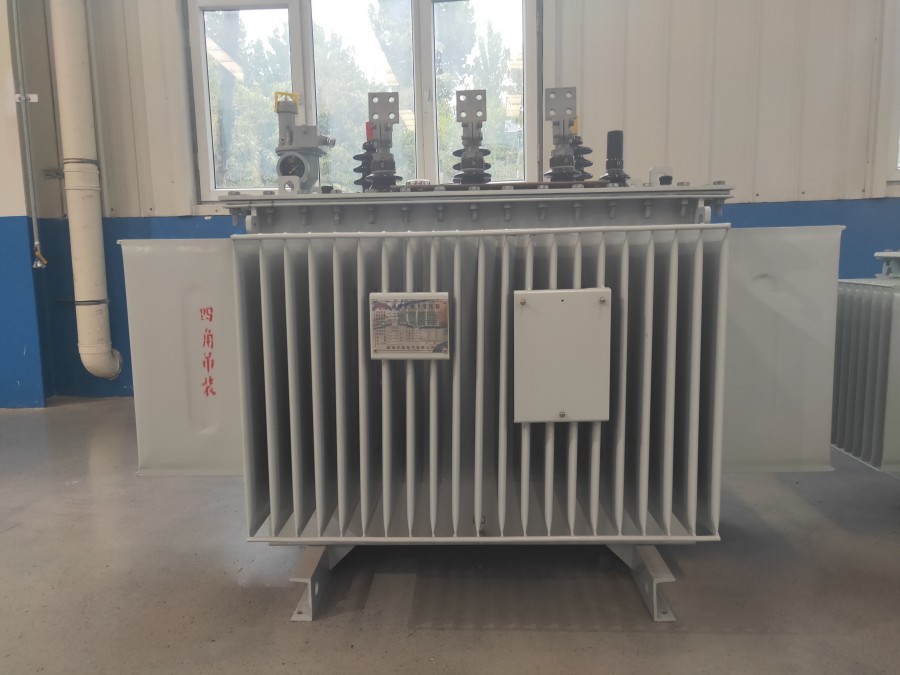
In its simplest form, a two winding transformer has one primary winding connected to the supply and one secondary winding connected to the load, both wound on a shared magnetic core. Energy is transferred by electromagnetic induction, with no rotating parts and no change in frequency. The turns ratio sets the voltage ratio: the primary-to-secondary voltage follows the primary-to-secondary turns count, which is why a 10 kV/0.4 kV unit can step a distribution feeder down to a usable utilisation voltage in a single stage.
The name is a structural description, not a product grade. A three-winding transformer handles three voltage levels on one core (for example 110/35/10 kV), while an autotransformer uses a single tapped winding. Most distribution transformers in the 30–6300 kVA range are two winding designs with a 10 kV or 35 kV primary and a 0.4 kV secondary, and this is the configuration specified for the vast majority of industrial and commercial projects.
The cooling medium and core material are the two decisions that drive cost, footprint and loss performance. A professional transformer manufacturer will normally offer all three families so the specification is driven by the site rather than by what happens to be in stock.
Typical duty includes distribution networks and ring-main units, industrial plants and process lines, commercial and residential buildings, and renewable energy projects where a unit steps generator voltage up to a collector level. Mining, rectifier and load tap changing variants cover heavy-duty and voltage-sensitive applications, and preassembled substations package the transformer with high/low-voltage switchgear so the site work is reduced to cable termination.
Runsheng Transformer Co., Ltd. manufactures S11, S13, S20 and S22 oil-immersed transformers, SCB10/SCB13/SCB14/SCB18 dry-type transformers and SH15 amorphous alloy units, holding comprehensive inventory and quoting oil-immersed transformers at factory-direct prices, with every unit shipped with manuals, inspection reports and test certificates under a lifelong quality tracking system.
Match the series to the installation environment, confirm the loss level against your energy target, lock the vector group and impedance with your switchgear designer, and verify the documentation package before the unit leaves the factory. Get those four points right and the two winding transformer becomes the least troublesome item on the project — exactly as it should be.
For specifications, quotations or a technical review of your existing schedule, contact Runsheng Transformer Co., Ltd. at +86 13406394988, e-mail runsheng@7813transformer.com, or WhatsApp 008613508930968.

Runsheng Transformer Co., Ltd. is a professional manufacturer of power transformers, specializing in oil-immersed transformers (S20, S11, S13), SH15 amorphous alloy transformers, S13 series 10KV 3D magnetic path wound-core transformers, D10 single-phase wound-core transformers, as well as mining transformers, rectifier transformers, surge arrestor transformers, load-tap-changing transformers, and custom-engineered special transformers.
WhatsApp & Wechat

No. 6, Intersection of Mount Huangshan Road and Changjiang Road, Liaocheng High tech Industrial Development Zone, Shandong, China


