
When you have coordination challenges, turn to Runsheng Transformer for help
It's all about making things easy, building partnerships, and providing a point of contact.
A 66kv transformer is a power transformer designed to operate on 66 kV system voltage. In most projects it works as a step-down unit, converting 66 kV from a sub-transmission line into 35 kV or 10 kV for distribution networks, industrial parks and large plants. In renewable energy projects it often works the other way, stepping up generator or collector voltage before the power is delivered to the grid.
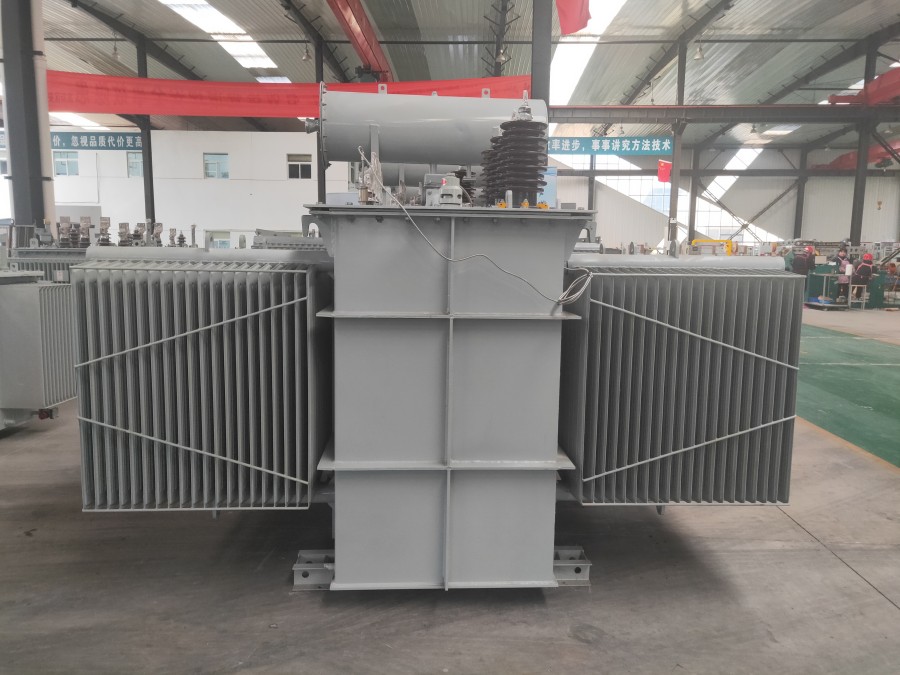
The 66 kV class sits in an interesting position: it is higher than ordinary distribution voltages but lower than the main 110 kV, 220 kV and 500 kV transmission tiers. That makes it a favourite for regional grids, heavy industrial loads and offshore wind collection systems, where 66 kV reduces cable current and losses compared with lower-voltage collection designs.
Buyers usually meet several construction types, and the right choice depends on installation environment, load profile and budget:
Overlooking one parameter is the most common cause of delays and rework. Confirm at least the following:
66kv transformer units appear in regional step-down substations, industrial parks, steel and chemical plants, mining sites, railway traction supply points, and increasingly in onshore and offshore wind farms where 66 kV collector systems are specified. Each application changes the specification: a wind farm transformer must tolerate cyclic loading and harmonics, while a mining transformer needs enhanced enclosure protection and mechanical robustness.
Price is driven by more than capacity. Core material (cold-rolled grain-oriented silicon steel versus amorphous alloy), winding conductor (copper or aluminium), insulation structure, tap changer brand, tank design, loss level and test requirements all move the number. A cheaper quotation is often cheaper for a reason: reduced copper section, lower efficiency grade, or omitted type tests.
Factory-direct purchasing removes distributor margins, but the real savings come from specifying losses correctly. On a unit that runs 8,000 hours a year, one efficiency grade step can offset a meaningful part of the initial price difference over the service life.
Reliable suppliers build to recognised standards such as GB 1094 for power transformers, GB/T 6451 for three-phase oil-immersed power transformer parameters, and IEC 60076 for international projects. A complete delivery should include an instruction manual, inspection report, test certificate and drawings, plus traceable quality records. Routine tests normally cover winding resistance, ratio and vector group, insulation resistance, no-load loss and current, load loss and impedance, applied voltage and induced overvoltage.
Correct installation protects the investment: check foundation and clearances, verify oil level and tightness, confirm the breather and cooling controls work, and commission protection settings against the actual vector group. In service, monitor oil temperature, oil level, dissolved gas trends and tap changer operation. Scheduled oil testing and infrared scanning catch most developing faults early.
Runsheng Transformer Co., Ltd. is a power transformer manufacturer producing oil-immersed transformers (S11, S13, S20 and S22 series), dry-type transformers (SCB10, SCB13, SCB14 and SCB18 series), SH15/SCBH15 amorphous alloy transformers, mining and rectifier transformers, custom-designed special transformers, and 35 kV and below preassembled substations with high and low voltage switchgear. Units are supplied factory-direct with manuals, inspection reports, test certificates and lifelong quality tracking, which makes it practical to compare specifications line by line rather than by headline price.
Whatever the project, buy on specification, not on rumour: fix the parameters, require test data, and keep the efficiency grade in the contract. That approach saves more money than any discount negotiation.
Contact for technical data and quotations: phone +86 13406394988, e-mail runsheng@7813transformer.com, WhatsApp 008613508930968.

Runsheng Transformer Co., Ltd. is a professional manufacturer of power transformers, specializing in oil-immersed transformers (S20, S11, S13), SH15 amorphous alloy transformers, S13 series 10KV 3D magnetic path wound-core transformers, D10 single-phase wound-core transformers, as well as mining transformers, rectifier transformers, surge arrestor transformers, load-tap-changing transformers, and custom-engineered special transformers.
WhatsApp & Wechat

No. 6, Intersection of Mount Huangshan Road and Changjiang Road, Liaocheng High tech Industrial Development Zone, Shandong, China


