What Is an 11kv Transformer?
An 11kv transformer is a distribution-class power transformer built to step 11 kV (11,000 volts) down to a usable low voltage, most commonly 400/230 V or 433/250 V. It is the last transformation stage in a radial or ring-main distribution system, sitting between the medium-voltage network and the low-voltage switchgear, motor control centers, and building loads that actually consume the power.
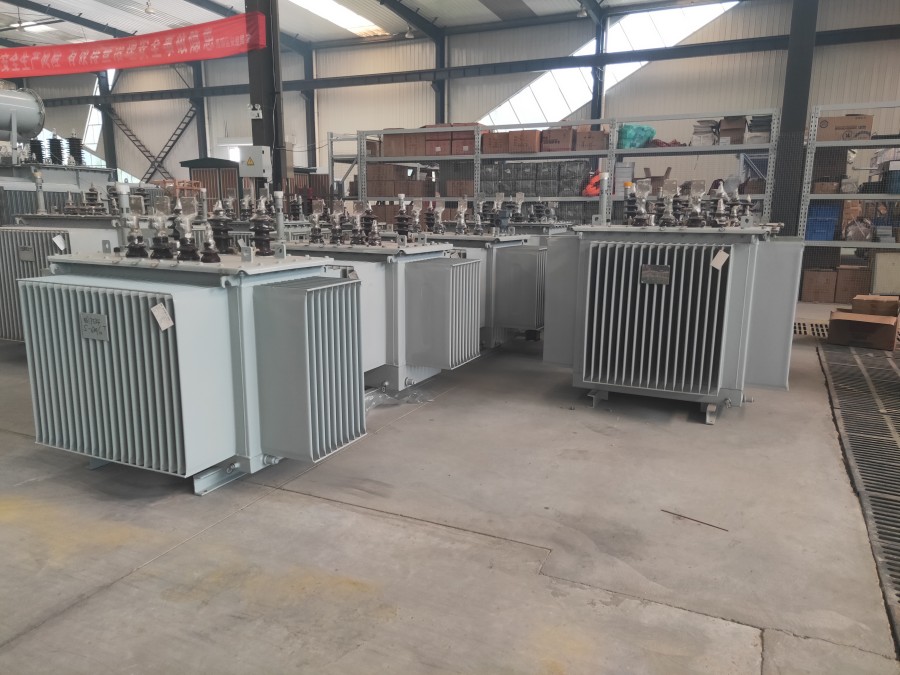
Because this unit runs continuously for 20 to 30 years, its efficiency class, thermal design, and build quality directly affect your electricity bill, downtime risk, and maintenance budget. Understanding the basics before you request a quotation is the fastest way to avoid overpaying or buying the wrong unit.
Main Types of 11kv Transformer
- Oil-immersed 11kv transformer – Available in S11, S13, S20, and S22 series designs. The core and windings are immersed in insulating oil, which provides both insulation and cooling. These units are cost-effective, robust, and well suited to outdoor installations, industrial sites, and utility substations.
- Dry-type 11kv transformer – SCB10, SCB13, SCB14, and SCB18 series cast-resin designs. No oil means no fire load and no oil containment, which makes dry-type units the usual choice for indoor rooms, basements, hospitals, data centers, and commercial buildings.
- Amorphous alloy 11kv transformer – SH15 and SCBH15 series. The amorphous metal core produces very low no-load loss, which pays back quickly on lightly loaded or continuously energized distribution circuits.
- Wound-core and 3D magnetic-path designs – Lower no-load loss, tighter tolerances, and quieter operation than conventional stacked-core construction, also available in single-phase versions for specialized distribution duties.
- Preassembled and compact substations – European-style and American-style compact substations integrate the 11kv transformer with high-voltage and low-voltage switchgear in one enclosure, cutting civil work and installation time.
- Special-purpose units – Mining transformers, rectifier transformers, lightning arrester transformers, capacity-regulating transformers, and on-load tap changing transformers for applications where a standard distribution unit will not do.
Key Parameters to Verify Before Ordering
- Rated capacity – 30 kVA to 2500 kVA covers most 11 kV distribution duties; larger ratings up to 6300 kVA are available for heavier industrial loads.
- Voltage ratio and vector group – For example 11/0.433 kV with a Dyn11 vector group. Confirm the ratio against your actual network voltage, not just the nameplate standard.
- No-load loss and load loss – These two figures decide the efficiency class and your long-term energy cost. This is where cheap quotations usually hide their savings.
- Impedance voltage – Affects short-circuit current and protection coordination.
- Cooling method – ONAN for oil-immersed units, AN or AN/AF for dry-type, depending on load profile and ambient temperature.
- Tap changer – Off-circuit (no-load) taps for occasional adjustment, or a load tap changing transformer where voltage must be regulated under load.
- Insulation level, temperature rise, and IP enclosure rating – Must match the installation environment and local code.
- Standards – IEC 60076 for oil-immersed power transformers, IEC 60076-11 for dry-type, and GB 1094 / GB/T 6451 series for standard Chinese designs.
Typical Applications
- Utility distribution feeders and secondary substations
- Industrial plants, steel mills, cement and chemical facilities
- Mining operations and other harsh, high-dust environments
- Solar farms, wind farms, and other renewable energy transformer duties
- Commercial towers, hospitals, data centers, and underground substations
- Temporary power and packaged substations for construction projects
What Really Drives the Price of an 11kv Transformer
- Winding material – Copper windings cost more than aluminium but carry higher overload capability and lower losses.
- Core material – Grain-oriented silicon steel versus amorphous alloy, which changes no-load loss and price.
- Efficiency class – Moving from an older loss level to S13, S20, or S22 grade raises the purchase price but lowers operating cost every hour of the year.
- Capacity and voltage ratio – Larger kVA ratings and non-standard ratios carry higher material and engineering cost.
- Accessories – Tap changer type, temperature control, Buchholz relay, pressure relief, cooling fans, and enclosure all add to the total.
- Testing and documentation – Routine tests, type tests, and third-party witness testing are a real part of the cost, and skipping them is a false economy.
Buying directly from a manufacturer instead of a trading company removes at least one layer of margin from this list. Runsheng Transformer Co., Ltd. manufactures S11, S13, S20, and S22 oil-immersed transformers, SCB13, SCB14, and SCB18 dry-type transformers, and SH15 amorphous alloy transformers, with every unit supplied alongside its manual, inspection report, test certificate, and lifelong quality tracking.
Common Buying Mistakes to Avoid
- Comparing only the purchase price and ignoring no-load and load loss figures.
- Accepting a nameplate rating without an inspection report or test certificate.
- Choosing an oil-immersed unit for an indoor room where fire separation is impractical, instead of a dry-type design.
- Undersizing capacity and running the transformer above its rated load, which shortens insulation life.
- Forgetting to confirm the tap range needed for the actual site voltage.
- Ignoring future load growth, which forces an early and expensive replacement.
Installation and Maintenance Basics
For oil-immersed units, monitor oil level and oil temperature, replace silica gel in the breather before it saturates, check bushings and gaskets for leakage, and schedule periodic oil dielectric and dissolved gas analysis testing. For dry-type units, keep coils clean and dust-free, verify temperature controllers and cooling fans, and re-torque connections at recommended intervals. Both types benefit from good ventilation, humidity control, infrared thermography surveys, and correctly set protective relays.
Getting the Right 11kv Transformer for Your Project
To receive an accurate quotation, provide the rated capacity, voltage ratio, vector group, frequency, installation environment, required efficiency or loss level, and any applicable standard or certification. A short technical specification list is far more useful than a price request alone, and it lets the manufacturer propose the most economical design rather than a generic unit.
Contact us for factory-direct pricing and technical support: phone +86 13406394988, e-mail runsheng@7813transformer.com, WhatsApp 008613508930968.