
When you have coordination challenges, turn to Runsheng Transformer for help
It's all about making things easy, building partnerships, and providing a point of contact.
A step up transformer is one of the most important pieces of equipment in any power generation, transmission, or industrial distribution system. Its job is simple to describe and critical to get right: it raises the output voltage of a power source to a higher level so electricity can travel long distances efficiently, or so the voltage matches the input requirement of downstream equipment. Because this unit sits at the heart of so many renewable energy, mining, and manufacturing projects, the choice of product and supplier has a direct effect on safety, efficiency, and total project cost.
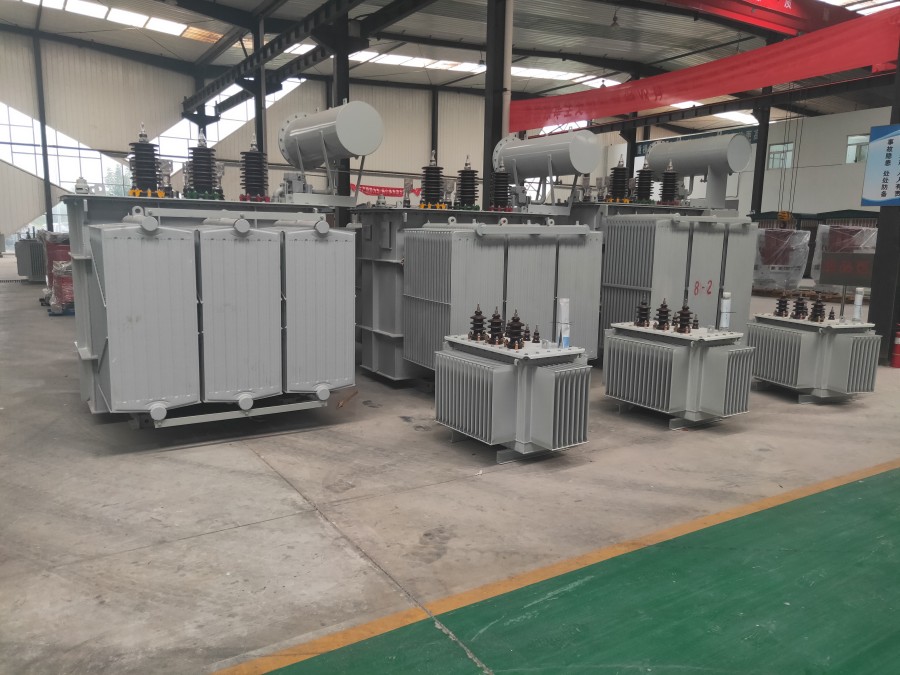
This overview explains what a step up transformer does, how it is built, which parameters actually drive price and loss, and how to avoid the procurement mistakes that quietly drain budgets.
A step up transformer increases voltage from the primary (input) winding to the secondary (output) winding. It works on the principle of electromagnetic induction: the secondary winding has more turns than the primary winding, so the voltage ratio follows the turns ratio. Current is reduced in proportion, which keeps power transfer roughly constant apart from losses.
Typical duties include generator step-up at power plants, wind and solar farms where inverter output at 0.4 kV must be raised to 10 kV or 35 kV for grid connection, industrial processes that need a high-voltage feed, and test or rectifier installations that require a specific secondary voltage.
Oil-immersed transformers such as the S11, S13, S20, and S22 series are the workhorse choice for outdoor and high-capacity applications. They offer strong overload capability, efficient heat dissipation, and a mature supply chain. The S13 series 10KV three-dimensional magnetic path wound core transformer is widely used where low no-load loss is a priority, while the 35KV transformer class serves larger renewable energy and industrial projects.
Dry-type transformers including SCB10, SCB13, SCB14, and SCB18 models use cast-resin insulation, contain no oil, and are preferred for indoor installations such as commercial buildings, substations inside factories, and fire-sensitive areas. They are fire-resistant, easy to maintain, and suited to places where an oil containment pit is not practical.
Amorphous alloy transformers such as the SH15 and SCBH15 series use amorphous alloy cores with very low no-load loss, making them attractive for distribution networks that run continuously at light load.
Special-purpose units include mining transformers, rectifier transformers, load tap changing transformers, lightning arrester transformers, capacity-regulating transformers, and custom special transformers built to a project specification.
Renewable energy transformer installations are the fastest-growing application, because solar and wind farms generate at low voltage and must export at medium voltage. Mining transformer units step up supply for conveyors, hoists, and processing lines. Rectifier transformer units feed electrolysis, plating, and DC drive systems. Integrated packages combine the transformer with high low voltage switchgear, preassembled substation equipment, and compact substations in a European-style or American-style enclosure, reducing site work and commissioning time.
Ask for the factory audit trail, not just a catalogue. Confirm that the manufacturer produces the core, windings, and tank in-house, that routine and type test reports are available, and that the quoted losses are guaranteed rather than typical. Confirm lead time, packing standard for export, and whether the supplier can provide the full package including switchgear and substation equipment.
Runsheng Transformer Co., Ltd. is a power transformer manufacturer producing oil-immersed, dry-type, and amorphous alloy transformers alongside 35KV and below preassembled substation equipment and high low voltage switchgear. The company maintains a comprehensive inventory with assured quality and offers oil-immersed transformers at factory-direct prices, with every unit shipped with a manual, inspection report, test certificate, and lifelong quality tracking.
Correct installation protects the investment. Verify foundation level and ventilation, check oil level and tightness before energising, confirm tap position matches the site voltage, and record baseline temperature and loss readings at commissioning. After that, a simple routine of oil testing or insulation resistance checks, cleaning of bushings and cooling surfaces, and inspection of breathers and seals will keep a step up transformer operating reliably for decades.
Buying factory-direct removes distributor markups and shortens the communication chain between your engineers and the people who actually build the transformer. When you specify capacity, voltage ratio, impedance, loss limits, cooling, and environment clearly, a qualified manufacturer can quote accurately and deliver a unit that matches the project rather than a compromise from a stock list.
To discuss a step up transformer requirement, request a quotation, or ask about custom special transformer designs, contact Runsheng Transformer Co., Ltd. at phone: +86 13406394988, e-mail: runsheng@7813transformer.com, or WhatsApp: 008613508930968.

Runsheng Transformer Co., Ltd. is a professional manufacturer of power transformers, specializing in oil-immersed transformers (S20, S11, S13), SH15 amorphous alloy transformers, S13 series 10KV 3D magnetic path wound-core transformers, D10 single-phase wound-core transformers, as well as mining transformers, rectifier transformers, surge arrestor transformers, load-tap-changing transformers, and custom-engineered special transformers.
WhatsApp & Wechat

No. 6, Intersection of Mount Huangshan Road and Changjiang Road, Liaocheng High tech Industrial Development Zone, Shandong, China


