
When you have coordination challenges, turn to Runsheng Transformer for help
It's all about making things easy, building partnerships, and providing a point of contact.
Every power system, from a 10 kV distribution room to a 35 kV renewable energy collection line, depends on voltage being raised efficiently and safely before it travels long distances or feeds a heavy load. A step up transformer is the device that makes this happen. Choose the wrong model and you pay twice: once for a unit that is oversized or unsuitable, and again for years of higher no-load losses, overheating, and premature replacement.
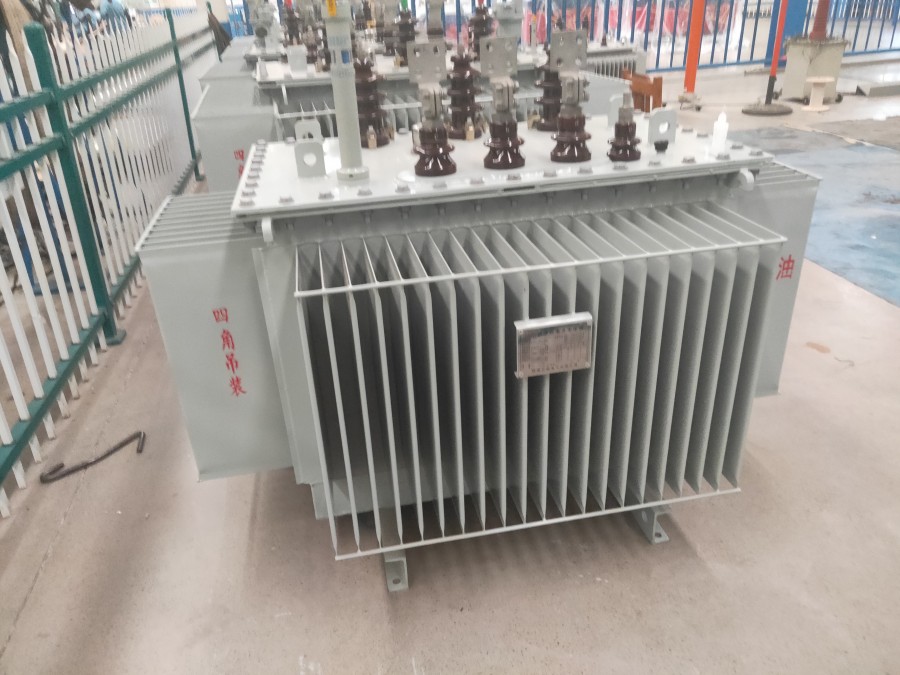
This overview explains what a step up transformer is, how it works, the main types on the market, the specifications you must confirm before ordering, and where real money is saved when you buy direct from the factory.
A step up transformer is a static electrical device that raises AC voltage from a lower level on its primary winding to a higher level on its secondary winding, while current is reduced in the same proportion. It works on the principle of electromagnetic induction: two or more windings share a common magnetic core, and the voltage ratio is determined by the turns ratio. If the secondary winding has more turns than the primary, the output voltage rises.
No energy is created in the process. Losses are limited to core loss (iron loss) and copper loss (load loss), which is why a well-designed step up transformer can achieve efficiency above 98% under normal load conditions.
The difference is simple but critical. A step up transformer increases voltage and decreases current; a step down transformer does the opposite. In a typical generation and transmission chain, a step up transformer sits right after the generator or inverter to push voltage up to the transmission level, while step down transformers bring it back down for industrial and commercial use.
Because the two are not interchangeable, always confirm the rated voltage on both sides, the vector group, and the direction of power flow before placing an order.
Most of the price gap between suppliers is not the copper or the steel — it is the layers of trading in between. Buying directly from a manufacturer removes distributor margins, shortens the delivery chain, and gives you a single point of responsibility for design, testing and after-sales service.
Runsheng Transformer Co., Ltd. is a power transformer manufacturer producing S11, S13, S20 and S22 oil-immersed transformers, SCB10, SCB13, SCB14 and SCB18 dry-type transformers, SH15 and SCBH15 amorphous alloy transformers, along with 35 kV and below preassembled substation equipment and high/low voltage switchgear. Units are supplied with manuals, inspection reports, test certificates and lifelong quality tracking — so the specification you agree on is the specification you receive.
Can a step up transformer be used in reverse? Many distribution transformers can operate in reverse within their design limits, but the tap range, cooling and protection settings must be reviewed, and it should never be assumed without confirmation from the manufacturer.
How long does delivery take? Standard models are usually available from stock; custom-designed special transformers require a production cycle based on the agreed technical specification.
What documents should come with the unit? A manual, routine test report, inspection certificate and nameplate data are standard, and they should match the ordered parameters exactly.
For step up transformer selection advice, factory-direct pricing or a custom special transformer quotation, contact: phone +86 13406394988, e-mail runsheng@7813transformer.com, WhatsApp 008613508930968. Our engineering team can match capacity, voltage class and cooling method to your actual load profile before you commit.

Runsheng Transformer Co., Ltd. is a professional manufacturer of power transformers, specializing in oil-immersed transformers (S20, S11, S13), SH15 amorphous alloy transformers, S13 series 10KV 3D magnetic path wound-core transformers, D10 single-phase wound-core transformers, as well as mining transformers, rectifier transformers, surge arrestor transformers, load-tap-changing transformers, and custom-engineered special transformers.
WhatsApp & Wechat

No. 6, Intersection of Mount Huangshan Road and Changjiang Road, Liaocheng High tech Industrial Development Zone, Shandong, China


