What Is a step down transformer?
A step down transformer is a static electrical device that converts a higher input voltage into a lower, usable output voltage. It is one of the most widely installed pieces of equipment in any power system: the familiar 10 kV / 0.4 kV unit that feeds a workshop, an office building or a residential community is a classic step down transformer in daily service.
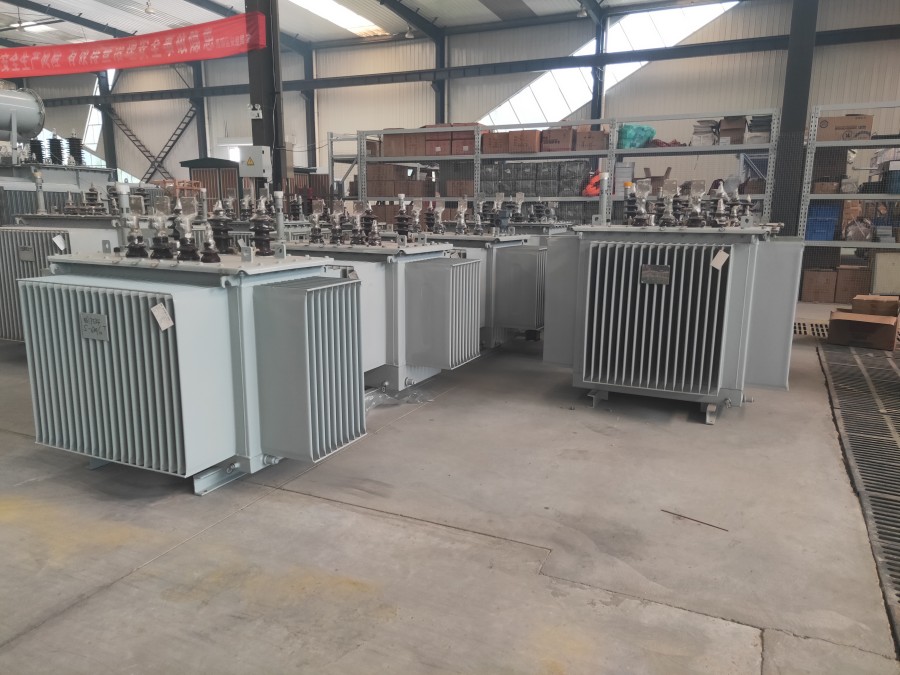
Because it has no rotating parts, a step down transformer operates with very high efficiency, typically above 98% for distribution-class units, and requires relatively simple routine maintenance. That combination of reliability, efficiency and long service life is why it remains the standard solution for voltage reduction from transmission or sub-transmission levels down to the voltages that machines, lighting and control systems actually use.
How a step down transformer Works
The working principle is electromagnetic induction. Two or more windings are wound around a common magnetic core; the winding connected to the higher-voltage supply is the primary, and the winding delivering the lower voltage is the secondary. Alternating current in the primary creates an alternating magnetic flux in the core, and that flux induces a lower voltage in the secondary.
- The ratio between primary and secondary voltage follows the turns ratio of the two windings.
- The core material - laminated silicon steel or amorphous alloy - determines no-load loss and noise level.
- Windings of copper or aluminium conductor determine load loss, short-circuit strength and thermal behaviour.
- Insulation and cooling design determine the permissible temperature rise and the continuous loading capability.
In practice, engineers also consider impedance voltage, vector group, tapping range and harmonic behaviour, because these factors decide how the step down transformer interacts with switchgear, cables and downstream loads.
Main Types of step down transformer
- Oil-immersed transformers - Models such as S11, S13, S20 and S22 oil-immersed transformers dominate outdoor distribution networks. The oil provides both insulation and heat dissipation, giving excellent overload capability, low loss and strong performance in humid, dusty or high-altitude environments.
- Dry-type transformers - SCB10, SCB13, SCB14 and SCB18 dry-type transformers, along with SGB10 units, use air and solid insulation instead of oil. They are preferred indoors: commercial buildings, hospitals, data centres, subway stations and other locations where fire safety and oil leakage are concerns.
- Amorphous alloy transformers - SH15 and SCBH15 series amorphous alloy transformers use a metallic glass core that dramatically lowers no-load loss, making them a strong choice for energy-saving projects and 24-hour lightly loaded duty.
- Special-purpose units - Mining transformers, rectifier transformers, lightning arrester transformers, capacity-regulating transformers, single-phase D10 wound core transformers and S13 series 10 kV three-dimensional magnetic path wound core transformers are engineered for specific duty cycles, load profiles or installation constraints.
Key Parameters Buyers Should Verify
Whether you are procuring a single unit or a batch for a project, these technical points decide whether the step down transformer fits the job:
- Rated capacity - commonly 30-6300 kVA for distribution duty; over-sizing wastes money, under-sizing causes overheating.
- Voltage ratio and tapping range - for example 10 kV / 0.4 kV with ±5% or ±2 x 2.5% taps to handle supply voltage variation.
- Vector group - Dyn11, Yyn0 and similar configurations must match system grounding and protection design.
- Impedance voltage - typically 4%-6% for distribution transformers; it affects short-circuit current and voltage regulation.
- No-load loss and load loss - the deciding factors for energy efficiency grade and long-term operating cost.
- Cooling method, temperature rise and insulation class - ONAN for oil units, AN/AF for dry-type units.
- Compliance - GB 1094 and IEC 60076 series standards, plus verified routine and type test reports.
Where step down transformer Are Used
- Distribution networks and utility substations
- Industrial plants, production lines and large motor loads
- Mining, metallurgy and heavy-duty environments
- Solar and wind renewable energy projects
- Preassembled substations and compact substations integrating high and low voltage switchgear
- Commercial buildings, hospitals, tunnels and infrastructure projects
How to Choose the Right step down transformer
- Define the real load. Estimate simultaneous demand, future expansion and starting current of motors rather than simply adding nameplate ratings.
- Match the environment. Choose oil-immersed equipment for outdoor or harsh sites and dry-type equipment for indoor or fire-sensitive areas.
- Compare total cost of ownership. A cheaper unit with higher losses can cost more in electricity over ten years than a higher-efficiency model.
- Confirm documentation. Require manuals, inspection reports, test certificates and traceable quality records with every delivery.
Common Pitfalls and How to Avoid Them
- Buying on price alone. Thin conductors, substandard silicon steel and reduced oil volume cut cost but raise losses and shorten life.
- Ignoring efficiency grade. Local energy regulations increasingly require minimum efficiency levels; a non-compliant unit may fail acceptance.
- Skipping the site check. Weight, dimensions, clearances, ventilation and cable entry must be confirmed before delivery.
- Missing protection coordination. Vector group, impedance and relay settings must be coordinated with upstream switchgear.
Why Factory-Direct Supply Matters
As a power transformer manufacturer, Runsheng Transformer Co., Ltd. supplies S22, S20, S11 and S13 oil-immersed transformers, SCB13, SCB14 and SCB18 dry-type transformers, SH15 amorphous alloy transformers, mining and rectifier transformers, plus 35 kV and below preassembled substation equipment including European-style and American-style compact substations and high and low voltage switchgear. Buyers who purchase direct from the production line avoid distributor margins, receive factory-direct pricing on oil-immersed transformers, and gain a single point of contact for technical clarification, custom design and after-sales tracking.
Maintenance Essentials
- Check oil level, oil colour and sealing condition periodically for oil-immersed units.
- Clean ventilation ducts and inspect winding temperature for dry-type units.
- Record temperature rise, load current and any abnormal noise or vibration.
- Test insulation resistance and conduct preventive testing on a fixed schedule.
Final Thoughts
Choosing a step down transformer is a technical decision with a financial consequence. Correct capacity, voltage ratio, efficiency grade and construction type protect your equipment, reduce electricity costs and keep the plant running. Sourcing from a manufacturer with full inventory, assured quality, national-standard compliance and lifelong quality tracking turns that decision into a low-risk one.
Contact us for specifications, drawings or a quotation: phone +86 13406394988, e-mail runsheng@7813transformer.com, WhatsApp 008613508930968.