
When you have coordination challenges, turn to Runsheng Transformer for help
It's all about making things easy, building partnerships, and providing a point of contact.
An electrical transformer is a static piece of equipment that transfers electrical energy between two or more circuits through electromagnetic induction, raising or lowering voltage and current while keeping frequency unchanged. Because it has no moving parts, it is one of the most reliable and long-lived assets in a power system. From the step-up unit at a generating station to the small distribution unit on a factory floor, the electrical transformer is what makes economical long-distance power transmission possible.
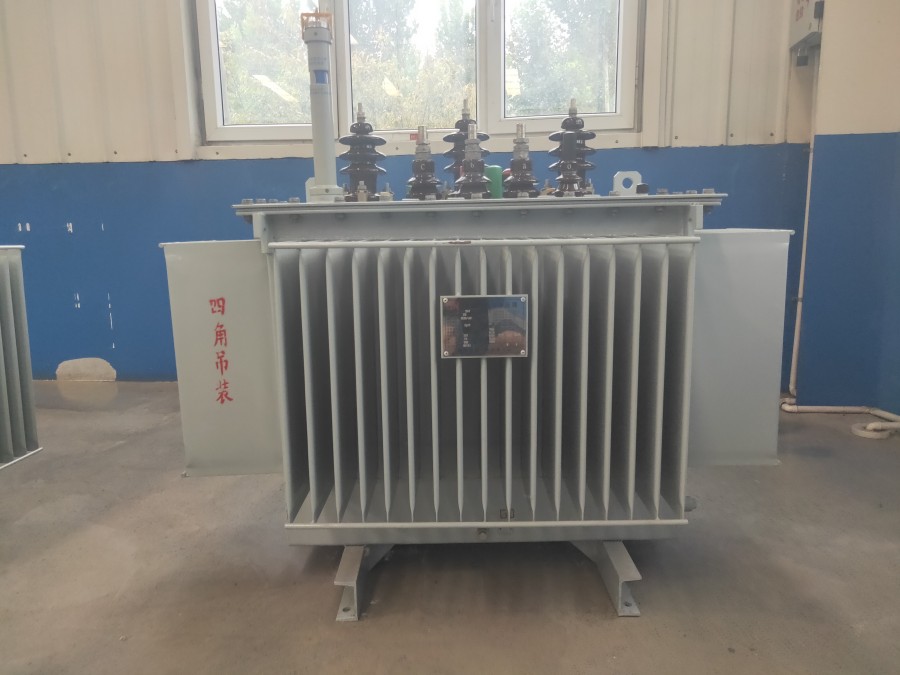
The basic structure is straightforward: a magnetic core, primary and secondary windings, insulation and a cooling system. The engineering behind it is not. Loss levels, temperature rise, insulation aging, harmonic behavior and short-circuit withstand capability decide whether a unit runs quietly for 20 years or fails within three.
In practice, buyers meet the electrical transformer in one of the following forms:
Around these core products, a complete supply chain has developed: 35KV and below preassembled substation equipment, European-style and American-style compact substations, and high low voltage switchgear.
Distribution networks, industrial plants, commercial complexes, renewable energy projects, mining sites, railways, metro systems and data centers all depend on it. Wind and solar farms rely on the electrical transformer to step up inverter or generator output to grid voltage, while industrial users rely on it to step down to motor and process voltage. Mining transformer and rectifier transformer designs handle harsh, dusty or high-harmonic conditions that a standard unit cannot survive.
Start with the load, not the price tag. Calculate the maximum demand, the average load factor and any future expansion, then add a sensible margin. Next, match the voltage class and vector group to the existing grid. Then compare loss figures rather than nameplate price alone: a slightly more expensive low-loss unit can save more than its price difference within a few years of operation.
Finally, confirm the documentation package. A serious supplier delivers manuals, inspection reports, test certificates and traceable quality records, not just a shipping note.
Buying through several trading layers raises price without adding technical value. Working directly with a manufacturer such as Runsheng Transformer Co., Ltd. keeps the spec under your control and removes the middleman margin. As a China transformer supplier, the company produces S22, S20, S11 and S13 oil-immersed transformers, SCB13, SCB14 and SCB18 dry-type transformers, SH15 amorphous alloy transformers, mining transformers, rectifier transformers and load tap changing transformers, alongside preassembled substations and switchgear. All products comply with national standards and ship with manuals, inspection reports, test certificates and lifelong quality tracking.
An electrical transformer is not install-and-forget equipment. Oil-immersed units need periodic oil testing, silica gel replacement and leak inspection. Dry-type units need dust removal, terminal tightening and partial discharge checks. Recording temperature and load data lets you catch abnormal trends early and plan replacement before a forced outage.
Purchasing from a manufacturer that offers lifelong quality tracking means spare parts, technical support and test data remain available years after delivery, which protects resale value and reduces downtime risk.
Whether you need a 30-6300 kVA distribution transformer, a 35kv transformer, a renewable energy transformer or a custom special transformer, request the technical datasheet and a factory-direct quotation first. Compare losses, materials and documentation before comparing prices — that is how you avoid buying pitfalls and keep more of your budget. Phone: +86 13406394988. E-mail: runsheng@7813transformer.com. WhatsApp: 008613508930968.

Runsheng Transformer Co., Ltd. is a professional manufacturer of power transformers, specializing in oil-immersed transformers (S20, S11, S13), SH15 amorphous alloy transformers, S13 series 10KV 3D magnetic path wound-core transformers, D10 single-phase wound-core transformers, as well as mining transformers, rectifier transformers, surge arrestor transformers, load-tap-changing transformers, and custom-engineered special transformers.
WhatsApp & Wechat

No. 6, Intersection of Mount Huangshan Road and Changjiang Road, Liaocheng High tech Industrial Development Zone, Shandong, China


