
When you have coordination challenges, turn to Runsheng Transformer for help
It's all about making things easy, building partnerships, and providing a point of contact.
A distribution transformer is the last voltage-conversion step between the power grid and the equipment that actually uses electricity. It steps medium voltage, usually 10 kV or 35 kV, down to the 400 V / 230 V level used by factories, commercial buildings, hospitals, data centers, farms and residential communities. Because it sits closest to the load, its no-load loss and load loss appear directly on your monthly electricity bill, and its reliability decides whether production lines keep running. Typical capacity spans 30 kVA to 6300 kVA, which covers the vast majority of industrial and utility projects.
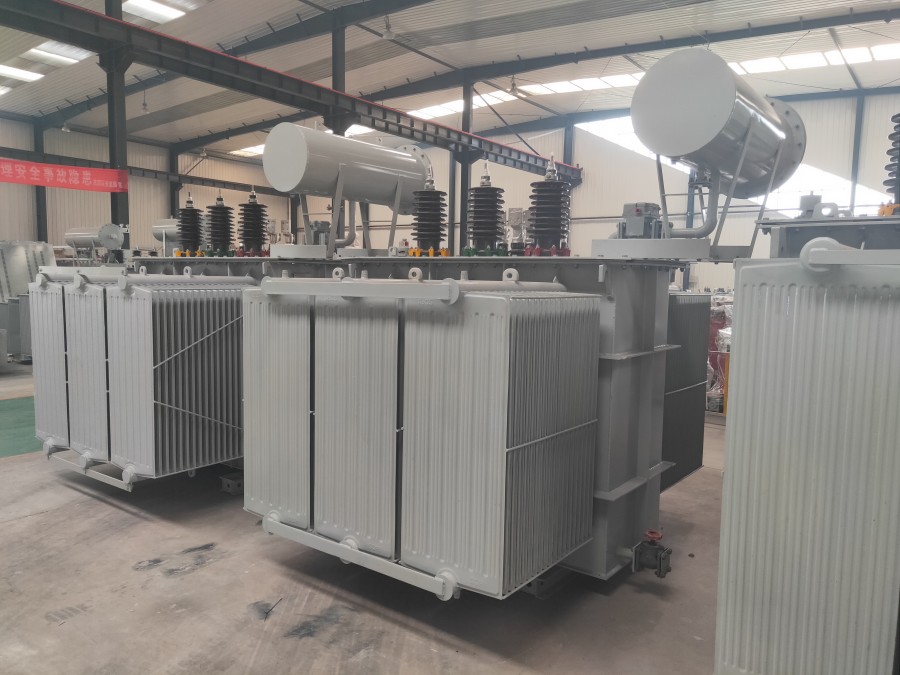
In short: a distribution transformer is not a commodity you buy on price alone. Get the type, loss level and capacity right and it pays for itself; get them wrong and you pay for the next ten to twenty years.
Two transformers with the same nameplate kVA can differ by 30 to 40 percent in price. Before comparing quotes, check these points:
Real savings do not come from the lowest quotation. They come from buying factory-direct, matching the loss level to your actual load profile, and selecting the right type for the environment. An amorphous alloy distribution transformer costs more up front but pays back quickly on continuously loaded networks. A correctly specified oil-immersed transformer is far more economical than an oversized dry-type unit for an outdoor industrial site. And a supplier who ships manuals, inspection reports and test certificates with every unit saves you the cost of third-party verification later on.
Runsheng Transformer Co., Ltd. is a power transformer manufacturer producing S22, S20, S11 and S13 oil-immersed transformers, SCB13, SCB14 and SCB18 dry-type transformers, SH15 amorphous alloy transformers, S13 series 10 kV three-dimensional magnetic path wound core transformers, D10 series single-phase wound core transformers, mining transformers, rectifier transformers, load tap changing transformers and 35 kV and below preassembled substation equipment. Products comply with national standards and are delivered with manuals, inspection reports, test certificates and lifelong quality tracking, so procurement teams get factory-direct pricing without the risk of an unverified middleman.
If you are comparing distribution transformer quotations and want a straight answer on type, losses and price, send your parameters and get a factory-direct proposal with full documentation. Phone: +86 13406394988, e-mail: runsheng@7813transformer.com, WhatsApp: 008613508930968.

Runsheng Transformer Co., Ltd. is a professional manufacturer of power transformers, specializing in oil-immersed transformers (S20, S11, S13), SH15 amorphous alloy transformers, S13 series 10KV 3D magnetic path wound-core transformers, D10 single-phase wound-core transformers, as well as mining transformers, rectifier transformers, surge arrestor transformers, load-tap-changing transformers, and custom-engineered special transformers.
WhatsApp & Wechat

No. 6, Intersection of Mount Huangshan Road and Changjiang Road, Liaocheng High tech Industrial Development Zone, Shandong, China


