
When you have coordination challenges, turn to Runsheng Transformer for help
It's all about making things easy, building partnerships, and providing a point of contact.
A step down transformer is one of the most widely used pieces of electrical equipment in any power system. It takes a higher-voltage AC supply and delivers a lower-voltage output, which is what makes long-distance transmission and safe end-use possible at the same time. For anyone sourcing one, the decision is not only technical but commercial: the right unit runs quietly for decades, while a poorly specified one creates losses, downtime, and unexpected replacement costs. This overview explains the basics, the parameters that matter, and how to buy factory direct without paying for middlemen.
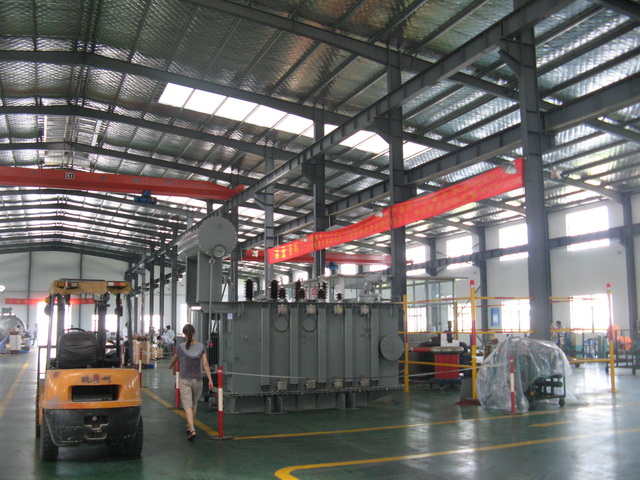
A step down transformer works on electromagnetic induction. Two or more windings share a magnetic core; when AC flows through the primary winding, it induces a voltage in the secondary winding. Because the primary has more turns than the secondary, the output voltage is lower while current is higher, keeping power roughly constant minus losses. A typical distribution step down transformer converts 10kV or 35kV down to 0.4kV for industrial plants, commercial buildings, and residential networks, while larger units may step 35kV down to 10kV.
The same physical device can be described as a step up or step down transformer depending on which side is used as the input, so the term describes function rather than a separate product family.
Reputable units are designed and tested to recognized standards such as GB 1094, GB/T 6451, IEC 60076, and IEEE C57.12.00, depending on the target market. Routine tests normally cover winding resistance, voltage ratio, no-load loss and current, load loss and impedance, dielectric tests, and oil testing for oil-immersed designs. Always request type test reports, factory inspection reports, test certificates, and an operation manual, and keep them with the equipment records for lifecycle tracing.
Correct installation extends service life: adequate foundations and ventilation, specified clearances, reliable earthing, and protection coordination. For oil-immersed units, monitor oil level, oil temperature, and silica gel condition, and perform periodic dissolved gas analysis. For dry-type units, keep windings clean and check the cooling path and temperature controller. Regular infrared scanning and insulation resistance tests help catch loose connections and moisture ingress early.
Runsheng Transformer Co., Ltd. manufactures S22, S20, S11, and S13 oil-immersed transformers, SCB13, SCB14, and SCB18 dry-type transformers, SH15 amorphous alloy transformers, and specialized units for mining, rectification, and custom applications, along with 35kV and below preassembled substations and high and low voltage switchgear. Products comply with national standards and ship with manuals, inspection reports, test certificates, and lifelong quality tracking.
To discuss specifications, drawings, or a quotation for your step down transformer project, contact Runsheng Transformer Co., Ltd. at phone +86 13406394988, e-mail runsheng@7813transformer.com, or WhatsApp 008613508930968.

Runsheng Transformer Co., Ltd. is a professional manufacturer of power transformers, specializing in oil-immersed transformers (S20, S11, S13), SH15 amorphous alloy transformers, S13 series 10KV 3D magnetic path wound-core transformers, D10 single-phase wound-core transformers, as well as mining transformers, rectifier transformers, surge arrestor transformers, load-tap-changing transformers, and custom-engineered special transformers.
WhatsApp & Wechat

No. 6, Intersection of Mount Huangshan Road and Changjiang Road, Liaocheng High tech Industrial Development Zone, Shandong, China


