
When you have coordination challenges, turn to Runsheng Transformer for help
It's all about making things easy, building partnerships, and providing a point of contact.
A 110kv power transformer is the workhorse of sub-transmission networks. It steps voltage down from 110 kV to 35 kV, 10 kV or 6 kV so that power can be distributed to city grids, industrial parks, renewable energy sites and large factories. Because it sits exactly at the interface between transmission and distribution, its efficiency, reliability and purchase price directly shape the total cost of ownership of an entire project. This overview explains what the equipment is, how it works, which parameters actually matter, and how to buy it without paying for unnecessary middleman markups.
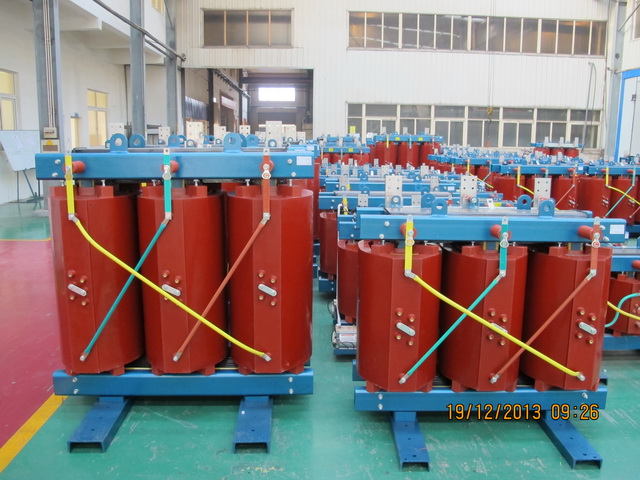
In simple terms, a 110kv power transformer is a static electrical device that transfers energy between two or more circuits at different voltage levels through electromagnetic induction. On the high-voltage side it is connected to a 110 kV transmission or sub-transmission line; on the low-voltage side it feeds 35 kV, 10 kV or 6 kV distribution networks. Typical characteristics of this voltage class include:
The working principle is straightforward but the engineering is not. Alternating current in the primary winding creates a varying magnetic flux in the laminated core. That flux induces a voltage in the secondary winding, and the ratio between the two voltages is set by the turns ratio of the windings. Because no rotating parts are involved, efficiency of modern units commonly reaches 99% or higher at rated load.
The core is built from grain-oriented silicon steel laminations, often step-lap or wound-core construction, to reduce eddy current and hysteresis losses. Windings are normally copper, arranged in concentric layers or discs with oil ducts for cooling. The active part is immersed in insulating oil inside a tank that may be corrugated, radiator-fitted or bell-type, with bushings, a tap changer, a Buchholz relay, a conservator and a control cabinet completing the assembly.
At 110 kV, oil-immersed transformers dominate the market. Oil provides both insulation and heat transfer, which makes high-voltage, high-capacity designs compact and economical. Dry-type transformers are generally limited to lower voltage classes and indoor applications such as commercial buildings, hospitals and metro stations, where fire safety and oil containment are the deciding factors. For a 110 kV substation, the realistic choice is an oil-immersed unit with an appropriate fire protection and oil containment design.
Most procurement mistakes on this equipment are not technical failures, they are specification and sourcing failures. Buyers should watch for undersized capacity quoted to win the bid, unclear loss values that hide long-term energy cost, aluminum windings presented as copper, missing routine and type test reports, and no defined spare parts or after-sales commitment. Each of these turns a low quotation into an expensive decision within a few years of operation.
When a transformer is purchased through one or more trading layers, each layer adds margin, delays delivery and blurs responsibility for quality. Buying directly from the manufacturing plant removes those layers, keeps a single point of accountability for design, testing and after-sales, and usually shortens the production lead time. On a medium-sized substation project, the saving can easily reach 20% to 30% of the equipment budget, which is often more than the annual maintenance cost of the whole station.
Runsheng Transformer Co., Ltd. is a power transformer manufacturer supplying oil-immersed transformers, dry-type transformers and amorphous alloy transformers at factory-direct prices, including S11, S13, S20 and S22 oil-immersed units, SCB10, SCB13, SCB14 and SCB18 dry-type units, SH15 and SCBH15 amorphous alloy units, mining transformers, rectifier transformers and 35KV preassembled substations. All products comply with national standards and are delivered with manuals, inspection reports, test certificates and lifelong quality tracking.
A 110kv power transformer is a long-life asset that should be specified on total cost of ownership rather than headline price. Understand the basics, insist on verifiable test data, and source from a manufacturer that can stand behind the design for the next three decades. Buyers who do this consistently pay less, wait less and worry less.
For product selection, technical data sheets or a quotation on oil-immersed and dry-type transformers, contact Runsheng Transformer Co., Ltd. at phone +86 13406394988, e-mail runsheng@7813transformer.com or WhatsApp 008613508930968.

Runsheng Transformer Co., Ltd. is a professional manufacturer of power transformers, specializing in oil-immersed transformers (S20, S11, S13), SH15 amorphous alloy transformers, S13 series 10KV 3D magnetic path wound-core transformers, D10 single-phase wound-core transformers, as well as mining transformers, rectifier transformers, surge arrestor transformers, load-tap-changing transformers, and custom-engineered special transformers.
WhatsApp & Wechat

No. 6, Intersection of Mount Huangshan Road and Changjiang Road, Liaocheng High tech Industrial Development Zone, Shandong, China


