
When you have coordination challenges, turn to Runsheng Transformer for help
It's all about making things easy, building partnerships, and providing a point of contact.
A 400kv power transformer is a three-phase, oil-immersed unit built to operate on a 400 kV extra-high-voltage transmission network. Its job is simple to describe and difficult to engineer: convert voltage and current at very high power levels with minimum loss, so that bulk electricity can travel hundreds of kilometres from generation to load centres and then step down to the sub-transmission grid. Typical nominal system voltage is 400 kV, with a highest system voltage of 420 kV, which is why the insulation design is far more demanding than that of a 110 kV or 220 kV transformer.
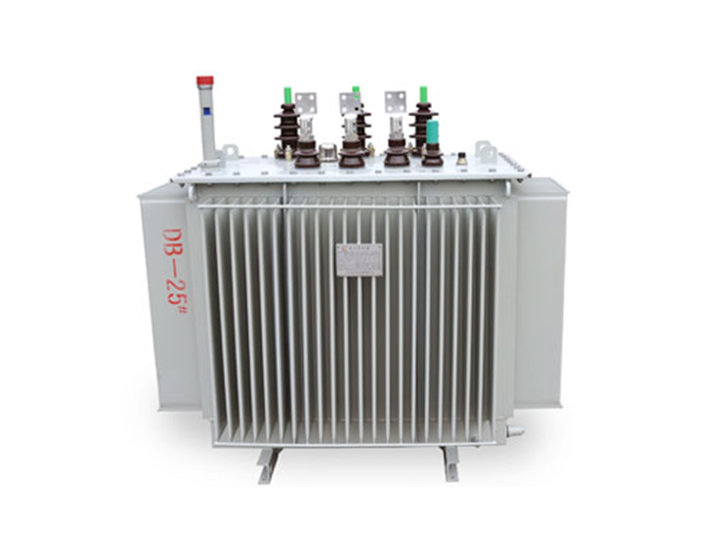
Because a single unit can cost from several hundred thousand to several million US dollars, two identical-looking 400kv power transformers can differ enormously in lifetime cost. Understanding the basics before you issue an enquiry is the simplest way to protect your budget.
The first decision in any 400 kV project is configuration, and it changes both price and performance:
When you compare quotations for a 400kv power transformer, make sure every supplier is quoting against the same parameter set. The items below account for most of the cost difference between offers:
A modern 400kv power transformer is an assembly of tightly matched systems, and each one should be specified and inspected:
For international projects, design and testing are normally referenced to the IEC 60076 series, with IEEE C57.12.00/C57.12.10 as an alternative for North American procurement. Routine tests include ratio, winding resistance, insulation resistance, power-frequency withstand, induced overvoltage, partial discharge and oil tests. Type tests — lightning impulse, temperature rise and short-circuit withstand — should be supported by valid reports from an accredited laboratory. A complete delivery file includes the routine test report, type test certificates, quality plan, inspection and test plan, weld and paint records, plus installation, operation and maintenance manuals.
Procurement is where most of the money is won or lost. A few practical rules:
A 400 kV substation is never a single transformer. It is a chain of equipment: high-voltage switchgear, the 400kv power transformer itself, and then medium-voltage distribution assets on the low side. Suppliers such as Runsheng Transformer Co., Ltd. cover that lower tier with S11, S13, S20 and S22 oil-immersed transformers, SCB10, SCB13, SCB14 and SCB18 dry-type transformers, SH15 amorphous alloy units, mining and rectifier transformers, plus 35 kV and below preassembled compact substations and high/low-voltage switchgear. Sourcing the whole low-voltage package from one quality-controlled factory simplifies interface management and shortens site delivery schedules.
Even a perfectly built 400kv power transformer depends on how it is installed and maintained. Oil processing and vacuum filling, bushing installation under controlled humidity, and correct commissioning tests determine whether the unit survives its first years. After energisation, periodic DGA sampling, oil quality checks, infrared scanning of bushings and cooling circuits, and OLTC inspection keep availability high. Most 400 kV transformers are designed for 30–40 years of service; that lifespan is decided by maintenance discipline as much as by design.
If you remember only three things about buying a 400kv power transformer, let them be these: define the configuration (autotransformer or two-winding) before comparing prices, evaluate losses instead of first cost alone, and verify tests and references directly with the manufacturer. Doing so converts a high-risk procurement into a predictable, well-priced project.
For enquiries on 35 kV and below transformers, compact substations and switchgear, contact Runsheng Transformer Co., Ltd.: phone +86 13406394988, e-mail runsheng@7813transformer.com, WhatsApp 008613508930968.

Runsheng Transformer Co., Ltd. is a professional manufacturer of power transformers, specializing in oil-immersed transformers (S20, S11, S13), SH15 amorphous alloy transformers, S13 series 10KV 3D magnetic path wound-core transformers, D10 single-phase wound-core transformers, as well as mining transformers, rectifier transformers, surge arrestor transformers, load-tap-changing transformers, and custom-engineered special transformers.
WhatsApp & Wechat

No. 6, Intersection of Mount Huangshan Road and Changjiang Road, Liaocheng High tech Industrial Development Zone, Shandong, China


