
When you have coordination challenges, turn to Runsheng Transformer for help
It's all about making things easy, building partnerships, and providing a point of contact.
A step down transformer is a static electrical device that lowers an incoming voltage to a safer, more usable level. It works on electromagnetic induction: an alternating current in the primary winding creates a changing magnetic flux in the laminated core, and that flux induces a lower voltage in the secondary winding. The ratio between the two voltages follows the turns ratio, so a unit with 10,000 primary turns and 400 secondary turns converts 10 kV into 400 V.
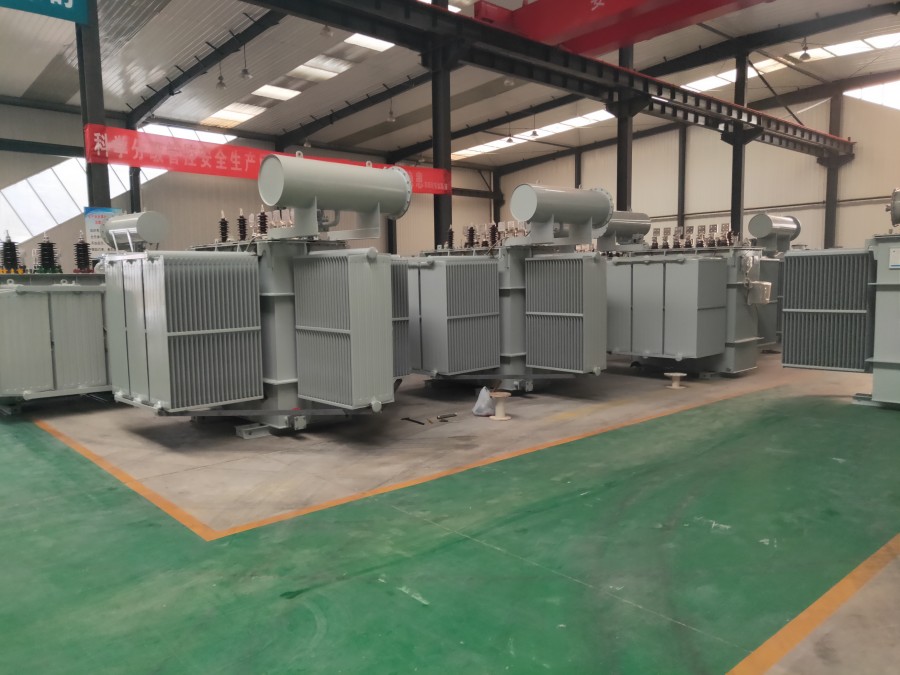
In real power systems, the step down transformer is the link between the transmission or distribution network and the equipment that actually uses electricity. A 35 kV or 10 kV feeder is stepped down to 400 V / 230 V for factories, commercial buildings, data centers, and renewable energy projects. Because it runs continuously for decades, the quality of its design, materials, and manufacturing decides whether you pay a little now or a lot later in energy losses and downtime.
Understanding the product families helps you match the right unit to the environment, load profile, and budget.
Price alone tells you nothing about value. These are the figures a competent supplier will confirm in writing before quoting:
No-load loss is consumed every hour of every day, whether the plant is running or not. Over a 20-year service life, the difference between a standard unit and a low-loss step down transformer can easily exceed the original purchase price. That is why modern specifications increasingly call for S13, S20, S22 oil-immersed units, SCB14 or SCB18 dry-type units, or amorphous alloy SH15 and SCBH15 models. Choosing the right loss level is one of the few decisions in a project that saves money continuously without any operational effort.
As a power transformer manufacturer, Runsheng Transformer Co., Ltd. produces S22, S20, S11 and S13 oil-immersed transformers, SCB13, SCB14 and SCB18 dry-type transformers, SH15 amorphous alloy transformers, 10 kV three-dimensional magnetic path wound core units, and custom special transformers. Buying from the source removes distributor markups, and every unit ships with a manual, inspection report, test certificate, and lifelong quality tracking, so the specification on paper is the specification you receive.
Prepare these details before requesting a price, and you will avoid both over-specification and unpleasant surprises:
With this information, a step down transformer can be quoted accurately and delivered on schedule, whether you need a single distribution unit or a complete preassembled substation. Contact us for technical support and factory-direct pricing: phone +86 13406394988, e-mail runsheng@7813transformer.com, WhatsApp 008613508930968.

Runsheng Transformer Co., Ltd. is a professional manufacturer of power transformers, specializing in oil-immersed transformers (S20, S11, S13), SH15 amorphous alloy transformers, S13 series 10KV 3D magnetic path wound-core transformers, D10 single-phase wound-core transformers, as well as mining transformers, rectifier transformers, surge arrestor transformers, load-tap-changing transformers, and custom-engineered special transformers.
WhatsApp & Wechat

No. 6, Intersection of Mount Huangshan Road and Changjiang Road, Liaocheng High tech Industrial Development Zone, Shandong, China


