
When you have coordination challenges, turn to Runsheng Transformer for help
It's all about making things easy, building partnerships, and providing a point of contact.
A medium voltage transformer usually sits quietly in a substation room or on a pole, far from the showroom floor, which is exactly why so many buyers choose it with less care than they give to the machinery it feeds. That single decision can cost a plant tens of thousands in energy losses, downtime and early replacement. This overview explains what a medium voltage transformer is, how it works, which types exist, which parameters actually drive the price, and how to buy a factory-direct unit without being taken advantage of.
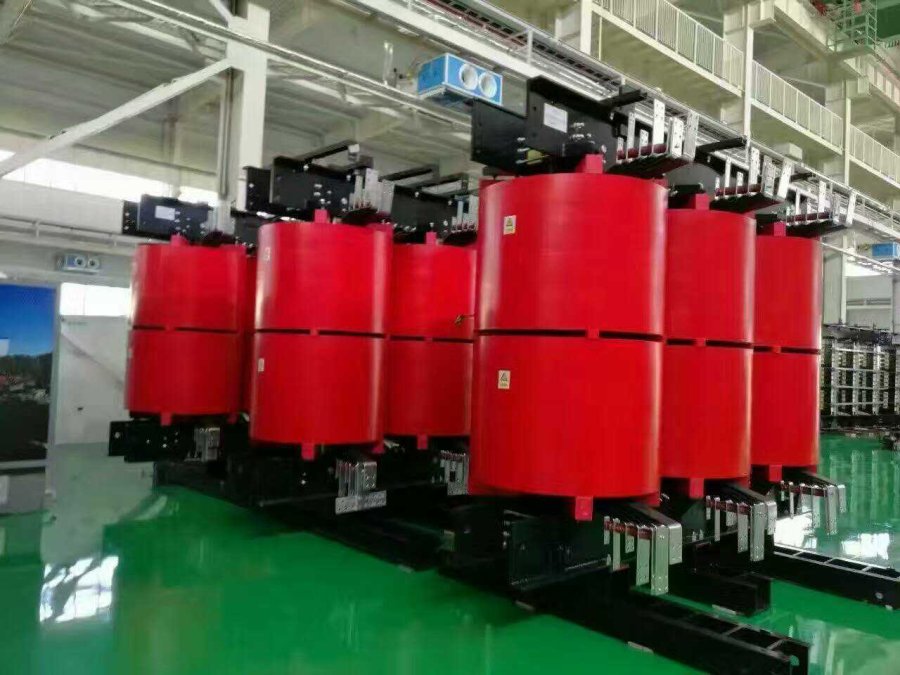
A medium voltage transformer is a static electrical device that steps voltage up or down inside the medium voltage range, generally from 1 kV to 36 kV. In distribution work, the two dominant classes are the 10 kV class and the 35 kV class. The transformer takes the voltage delivered by the grid and converts it to the low voltage used by end equipment, commonly 400 V or 230 V, or works in reverse as a step-up unit in renewable energy collection systems.
Rated capacities typically span 30 kVA to 6300 kVA, with smaller units serving commercial buildings and larger units feeding industrial plants, mining operations and solar or wind farms. Because it operates continuously, even a small efficiency difference compounds over a service life of twenty years or more.
Inside the tank or enclosure sit two windings wound around a laminated magnetic core. Alternating current in the primary winding creates a changing magnetic flux in the core, and that flux induces a voltage in the secondary winding. There are no moving parts, so reliability comes down to design margin, material quality and manufacturing discipline rather than mechanical wear.
Two loss categories matter. No-load loss, also called iron loss or core loss, is present whenever the transformer is energised, even with no load connected. Load loss, or copper loss, grows with current. The sum determines efficiency and temperature rise. This is why lower-loss designs such as the S13, S20 and S22 oil-immersed series and the SCB14 and SCB18 dry-type series cost more upfront but often pay for themselves within a few years of operation.
Distribution networks, industrial production lines, water treatment plants, mines, tunnels, ports, charging infrastructure, and renewable energy projects all depend on them. Solar farms and wind projects use step-up units to raise inverter output to collection voltage, while process industries may require rectifier transformers to feed DC drives. Preassembled substations and compact substations package the transformer together with high and low voltage switchgear to shorten installation time on site.
Price differences rarely come from thin air. The gap usually reflects copper versus aluminium windings, the grade and thickness of core steel, whether the core is stacked or wound, loss levels, tank steel thickness and anti-corrosion treatment, and the quality of bushings, gaskets and pressure relief devices. A cheaper quote often hides material substitution that only becomes visible after several years of heat cycling and oil leakage.
Buying directly from the manufacturer removes distributor margins. Runsheng Transformer Co., Ltd., for example, supplies oil-immersed units at factory-direct prices with manuals, inspection reports, test certificates and lifelong quality tracking, so the savings come from the supply chain rather than from cutting materials.
Good installation protects the investment. Keep the unit well ventilated, maintain required clearances, ensure correct earthing, and verify oil level, silica gel condition and sealing before energising. During operation, monitor temperature, sound level, oil level and terminal connections. A simple annual inspection covering oil testing, cleaning of bushings and tightening of connections prevents most failures. For dry-type units, keep the windings free of dust and confirm that cooling fans operate correctly.
A medium voltage transformer is a long-term asset, not a commodity. Comparing quotes on price alone is the fastest way to lose money. Compare losses, materials, test documentation and service instead, then negotiate on supply chain efficiency. Sourced well, a single unit can serve reliably for decades while quietly lowering your electricity bill every month.
For specifications, drawings or a quotation, contact Runsheng Transformer Co., Ltd. at phone +86 13406394988, e-mail runsheng@7813transformer.com, or WhatsApp 008613508930968.

Runsheng Transformer Co., Ltd. is a professional manufacturer of power transformers, specializing in oil-immersed transformers (S20, S11, S13), SH15 amorphous alloy transformers, S13 series 10KV 3D magnetic path wound-core transformers, D10 single-phase wound-core transformers, as well as mining transformers, rectifier transformers, surge arrestor transformers, load-tap-changing transformers, and custom-engineered special transformers.
WhatsApp & Wechat

No. 6, Intersection of Mount Huangshan Road and Changjiang Road, Liaocheng High tech Industrial Development Zone, Shandong, China


