
When you have coordination challenges, turn to Runsheng Transformer for help
It's all about making things easy, building partnerships, and providing a point of contact.
A dry cast resin transformer is a dry-type power transformer whose windings are encapsulated in epoxy resin under vacuum casting. Instead of mineral oil, the dielectric and cooling medium is solidified resin combined with air circulation. That single design decision changes almost everything downstream: where the unit can be installed, how often it must be serviced, how safe it is in a fire, and what it truly costs across a 20 to 30 year service life.
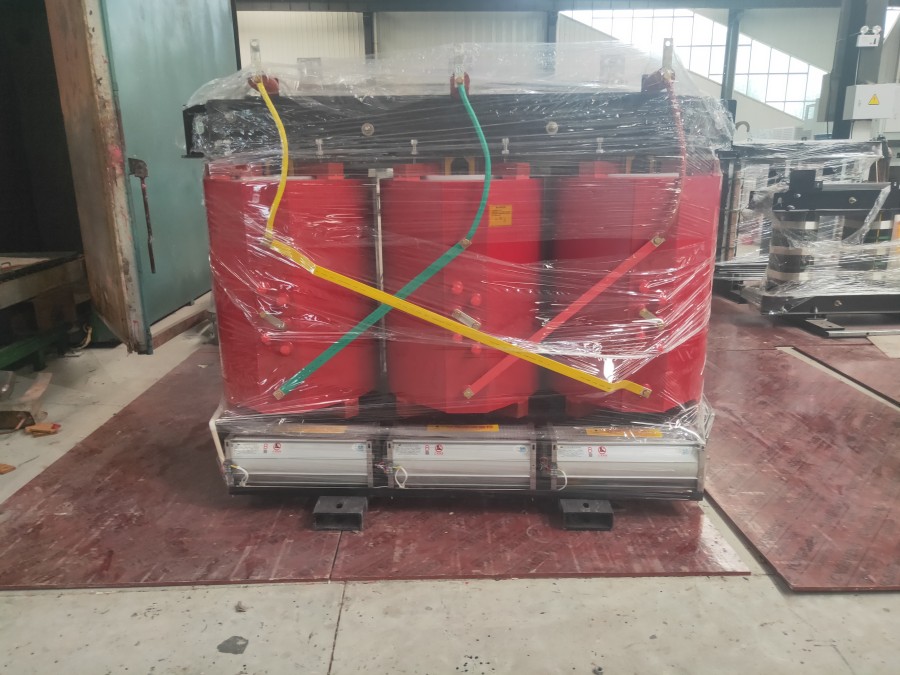
For engineers specifying distribution equipment for a commercial building, a hospital, a metro station, a data centre, or a solar and wind project, understanding the fundamentals is the difference between a straightforward installation and an expensive retrofit later.
Although the concept is simple, the quality gap between manufacturers comes from materials and process control. A well-made unit typically consists of the following:
Because the resin cures around the winding as a single solid body, the coil resists moisture, dust, salt spray, and most chemical vapours far better than an open oil-immersed design.
The model code tells you a lot about performance and price. SCB10 is the older, lower-cost baseline. SCB13 lowers losses further and is widely accepted as the current mainstream choice. SCB14 and SCB18 push efficiency higher again, which matters most where the transformer runs close to full load for long hours, such as in factories, data centres, and charging stations. Choosing the right loss level is a financial calculation, not just a technical one: a higher initial price is often recovered through lower operating losses within a few years.
In short, anywhere fire risk, oil containment, or maintenance access is a constraint, the dry cast resin transformer is usually the default answer.
Before requesting a quotation, collect the following parameters. Any competent manufacturer will ask for them, and a supplier who does not is a warning sign.
Buying through trading layers adds cost without adding quality. A direct manufacturer controls the casting process, the core stacking, and the final routine testing, so parameters on the nameplate reflect what is actually inside the tank-less enclosure. Runsheng Transformer Co., Ltd., for example, produces SCB13, SCB14, and SCB18 dry-type transformers alongside oil-immersed, amorphous alloy, mining, rectifier, and custom special transformers, and supplies 35 kV and below preassembled substations and high and low voltage switchgear. Every unit ships with a manual, inspection report, test certificate, and lifelong quality tracking.
With reasonable care, a dry cast resin transformer can serve 20 to 30 years. Practical routines include annual cleaning of coils and insulators, torque checks on busbar and cable connections, verification of the temperature controller and fan operation, and periodic infrared scanning to detect hot spots. Because there is no oil to test or replace, the annual maintenance burden is a fraction of that of an oil-immersed equivalent.
If you are comparing suppliers for an upcoming project, send your capacity, voltage ratio, vector group, and loss-level requirements and ask for a delivered price plus test documentation. Phone: +86 13406394988, email: runsheng@7813transformer.com, WhatsApp: 008613508930968. Clear specifications and verified test data are the fastest way to secure a competitive price without compromising quality.

Runsheng Transformer Co., Ltd. is a professional manufacturer of power transformers, specializing in oil-immersed transformers (S20, S11, S13), SH15 amorphous alloy transformers, S13 series 10KV 3D magnetic path wound-core transformers, D10 single-phase wound-core transformers, as well as mining transformers, rectifier transformers, surge arrestor transformers, load-tap-changing transformers, and custom-engineered special transformers.
WhatsApp & Wechat

No. 6, Intersection of Mount Huangshan Road and Changjiang Road, Liaocheng High tech Industrial Development Zone, Shandong, China


