
When you have coordination challenges, turn to Runsheng Transformer for help
It's all about making things easy, building partnerships, and providing a point of contact.
A dry cast resin transformer is a distribution or power transformer whose windings are encapsulated in solid epoxy cast resin instead of being immersed in insulating oil. The core and coils sit in open air, cooled by natural or forced air circulation, which is why this family is also described as air-cooled or dry-type equipment. Nothing inside the unit is flammable, nothing can leak, and no oil containment pit, fire wall, or oil filtration system is required at the installation site.
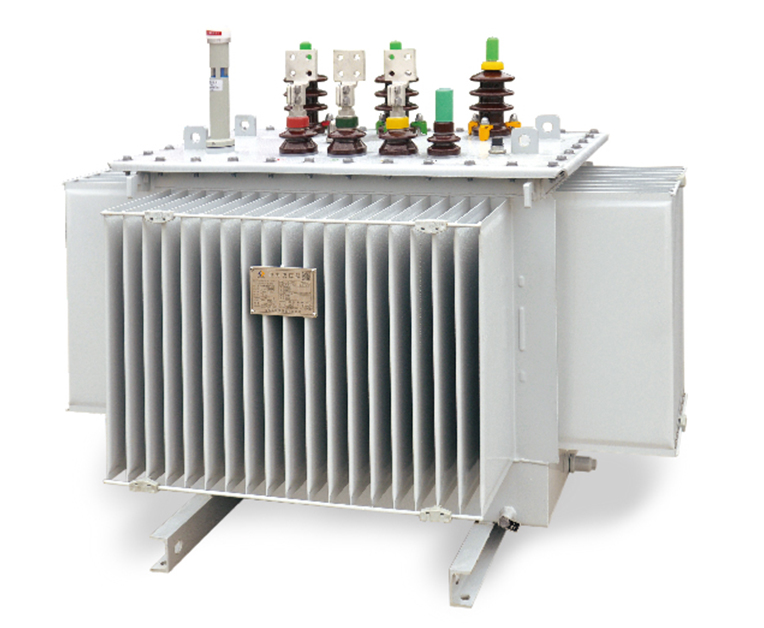
That single design decision changes almost everything about how the transformer is specified, installed, and maintained. For anyone sourcing equipment for an indoor substation, a commercial building, a hospital, a data centre, or a renewable energy project, understanding the basics of a dry cast resin transformer is the fastest way to buy correctly the first time.
The manufacturing sequence is what gives the product its name. Copper or aluminium conductor is wound into low-voltage and high-voltage coils, then placed in a vacuum casting mould. Epoxy resin is introduced under vacuum so that air pockets and moisture are expelled from the insulation, and the coil is cured into a rigid, homogeneous block. The result is a winding with high dielectric strength, strong mechanical rigidity, and excellent resistance to moisture, dust, and industrial contamination.
Buyers are usually offered a range of models rather than a single product. Higher numbers in the same series generally indicate newer, lower-loss, more energy-efficient designs, which directly affects operating cost over the transformer's 20–30 year service life.
Runsheng Transformer Co., Ltd. manufactures SCB10, SCB13, SCB14, and SCB18 dry-type transformers alongside its oil-immersed and amorphous alloy lines, so quotations can be compared across technologies rather than from a single supplier catalogue.
The gap between a cheap offer and a correctly built unit is usually hidden in a handful of parameters. Ask for each of these in writing:
The product is specified wherever safety, cleanliness, and proximity to people or sensitive equipment matter more than first cost: high-rise offices and hotels, shopping centres, hospitals and laboratories, data centres, metro and rail stations, water treatment plants, industrial workshops, and the low-voltage side of wind and solar renewable energy farms. It is also the default choice for indoor substations and compact substations that feed commercial loads directly.
Price differences of 20–30% between suppliers for the same nameplate rating are common, and they rarely come from nowhere. Copper versus aluminium windings, single-core versus step-lap cores, efficiency grade, enclosure quality, and testing depth all move the number. Buying factory direct removes distributor mark-ups and, more importantly, keeps the technical discussion with the people who actually build the unit.
When comparing offers, insist on a like-for-like specification sheet, verify the certified test reports against the nameplate, and confirm after-sales support in writing. A slightly higher quoted price on an SCB14 or SCB18 unit with genuine copper windings and documented losses is frequently the cheaper transformer over a 25-year service life.
As a transformer manufacturer covering 30–6300 kVA distribution equipment, Runsheng Transformer Co., Ltd. supplies dry-type and oil-immersed transformers at factory-direct prices, with units produced to national standards and delivered with manuals, inspection reports, test certificates, and lifelong quality tracking. Standard inventory keeps lead times short, and custom or special transformer designs can be engineered for non-standard voltage ratios, mining, rectifier, or renewable energy duty.
A dry cast resin transformer replaces oil with vacuum-cast epoxy insulation, delivering indoor-safe, leak-free, low-maintenance operation. Choose the correct capacity and efficiency grade, verify materials and losses in writing, and buy from a manufacturer who can show you the test data. Get the specification right at the quotation stage and the rest of the project becomes straightforward.
For technical selection support, quotations, or drawings: phone +86 13406394988, e-mail runsheng@7813transformer.com, WhatsApp 008613508930968.

Runsheng Transformer Co., Ltd. is a professional manufacturer of power transformers, specializing in oil-immersed transformers (S20, S11, S13), SH15 amorphous alloy transformers, S13 series 10KV 3D magnetic path wound-core transformers, D10 single-phase wound-core transformers, as well as mining transformers, rectifier transformers, surge arrestor transformers, load-tap-changing transformers, and custom-engineered special transformers.
WhatsApp & Wechat

No. 6, Intersection of Mount Huangshan Road and Changjiang Road, Liaocheng High tech Industrial Development Zone, Shandong, China


