
When you have coordination challenges, turn to Runsheng Transformer for help
It's all about making things easy, building partnerships, and providing a point of contact.
A medium voltage transformer is the workhorse that links the medium voltage network to the equipment people actually use. In practice, the term covers transformers designed to operate at voltage levels from roughly 1 kV up to 35 kV, with 10 kV, 20 kV and 35 kV systems being by far the most common in industrial, commercial and utility distribution networks. Its job is straightforward but critical: step voltage down from the medium voltage feeder to a usable low voltage supply, or step it up on the generation side so power can travel efficiently to the grid.
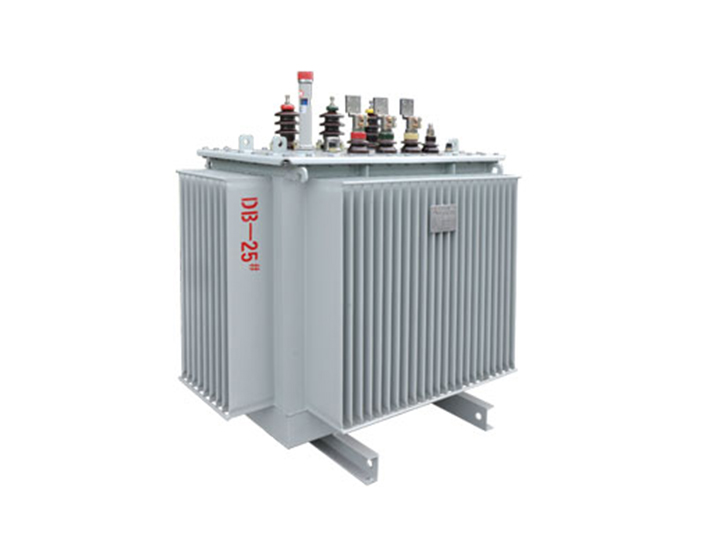
Almost every facility you can think of relies on one or more of these units: a manufacturing plant, a shopping complex, a mine, a metro station, a solar farm, a wind turbine string, or a data centre. Because of that, the buying decision is rarely about a single transformer. It is about matching capacity, losses, cooling method and protection to the real load profile of the site.
In short, a medium voltage transformer is the point where utility-style power becomes usable facility power, which is why its efficiency, reliability and protection scheme have such a large effect on operating cost.
Three construction families dominate real-world procurement, and each has clear strengths.
Specialised variants also exist for demanding duty: mining transformers, rectifier transformers, lightning arrester transformers, capacity-regulating transformers and load tap changing transformers, plus fully custom special transformers built to a project drawing.
Choose an oil-immersed medium voltage transformer when you need high capacity, outdoor installation, lower first cost per kVA and proven performance in harsh environments. Choose a dry-type transformer when the unit goes inside a building, when fire and environmental risk must be minimal, or when maintenance access is difficult. For sites running 24/7 at low load, such as street lighting or light industrial duty, an amorphous alloy transformer usually wins on lifetime cost because its no-load loss is so much lower.
Modern procurement is driven by efficiency regulation. Core standards such as GB 1094, GB/T 6451 and GB 20052 in China and IEC 60076 internationally define rating, testing and loss limits, while efficiency grades move from older S11 designs toward S13, S20 and S22 levels for liquid-immersed units. Every compliant unit should arrive with a nameplate matching the order, a routine test report covering ratio, resistance, no-load loss, load loss, impedance and dielectric tests, plus an inspection certificate and user manual. If a supplier cannot produce those documents, the price difference is not a saving.
Three habits protect your budget. First, buy from the manufacturing source rather than a trading chain, so you are not paying layered margins on the same design. Second, ask for the loss figures in writing and calculate ten-year energy cost, not just purchase price, because the cheapest unit on paper is often the most expensive to run. Third, verify quality evidence: type test reports, routine test data, material specifications for copper windings and core grade, and a traceable quality record for each serial number.
As a power transformer manufacturer, Runsheng Transformer Co., Ltd. produces S22, S20, S11 and S13 oil-immersed transformers, SCB13, SCB14 and SCB18 dry-type transformers, SH15 amorphous alloy transformers, mining and rectifier transformers, and 35 kV and below preassembled substation equipment including compact substations and high and low voltage switchgear. Factory-direct supply, verified inventory and lifelong quality tracking keep both the purchase price and the running cost predictable.
A medium voltage transformer is a long-life asset, not a commodity line item. Get the capacity, voltage ratio, loss level and cooling method right, insist on documented testing, and buy from a manufacturer who stands behind the unit after delivery. Do that, and the transformer will quietly do its job for decades while your energy and maintenance costs stay under control.
For specifications, drawings or a quotation: phone +86 13406394988, e-mail runsheng@7813transformer.com, WhatsApp 008613508930968.

Runsheng Transformer Co., Ltd. is a professional manufacturer of power transformers, specializing in oil-immersed transformers (S20, S11, S13), SH15 amorphous alloy transformers, S13 series 10KV 3D magnetic path wound-core transformers, D10 single-phase wound-core transformers, as well as mining transformers, rectifier transformers, surge arrestor transformers, load-tap-changing transformers, and custom-engineered special transformers.
WhatsApp & Wechat

No. 6, Intersection of Mount Huangshan Road and Changjiang Road, Liaocheng High tech Industrial Development Zone, Shandong, China


